
I often have a handful of figs for breakfast during the second half of summer. It's great to walk barefoot the short distance from my bed to the garden and start the day with sweet, juicy fruits.
That's all today's post is about and is surprisingly long when you take into consideration that the thing is basically about me eating some figs.
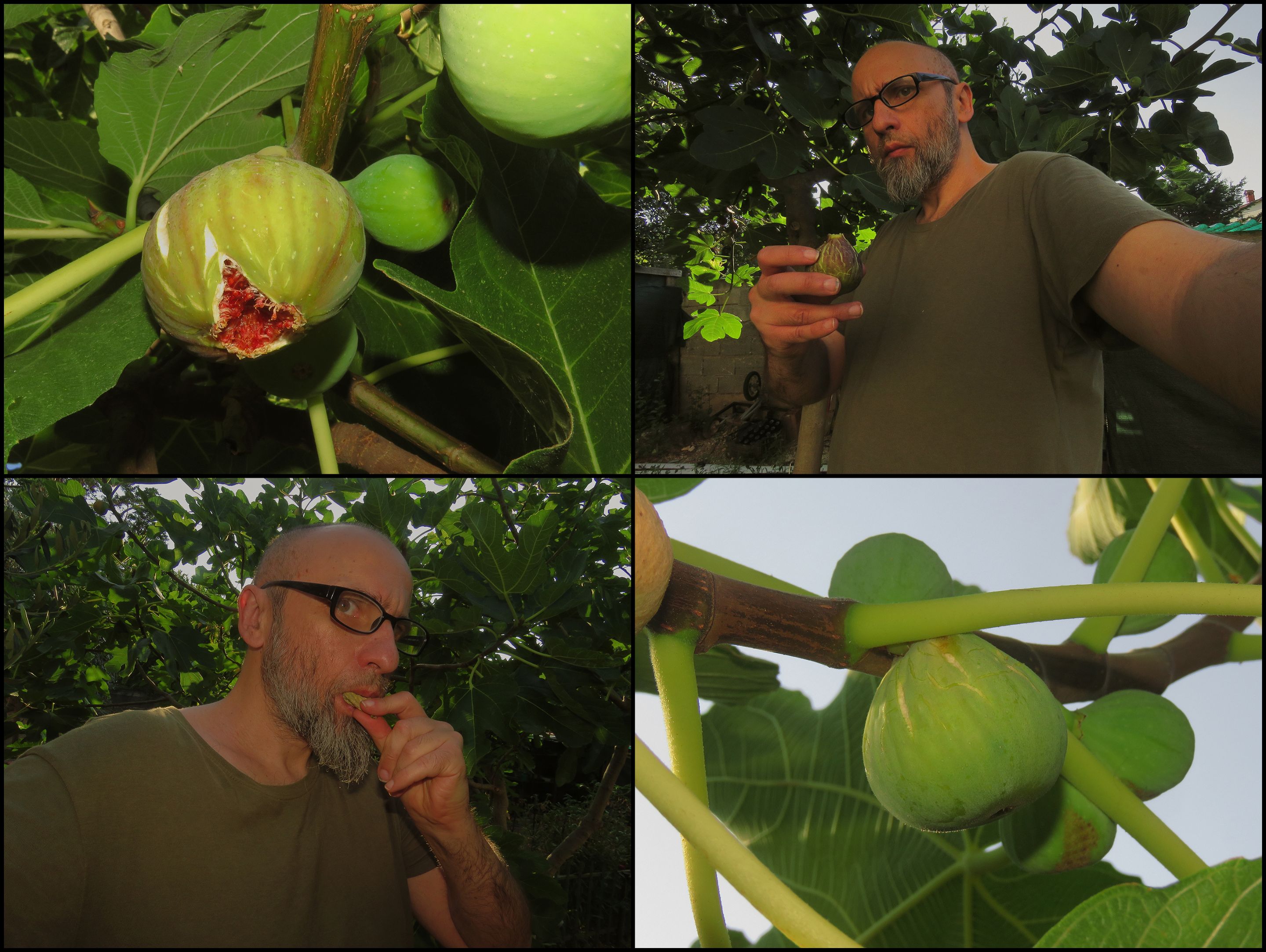
Here you can see an ordinary, well-matured fruit ready to be eaten. In the following photograph ...
... the fig is in the palm of my hand.
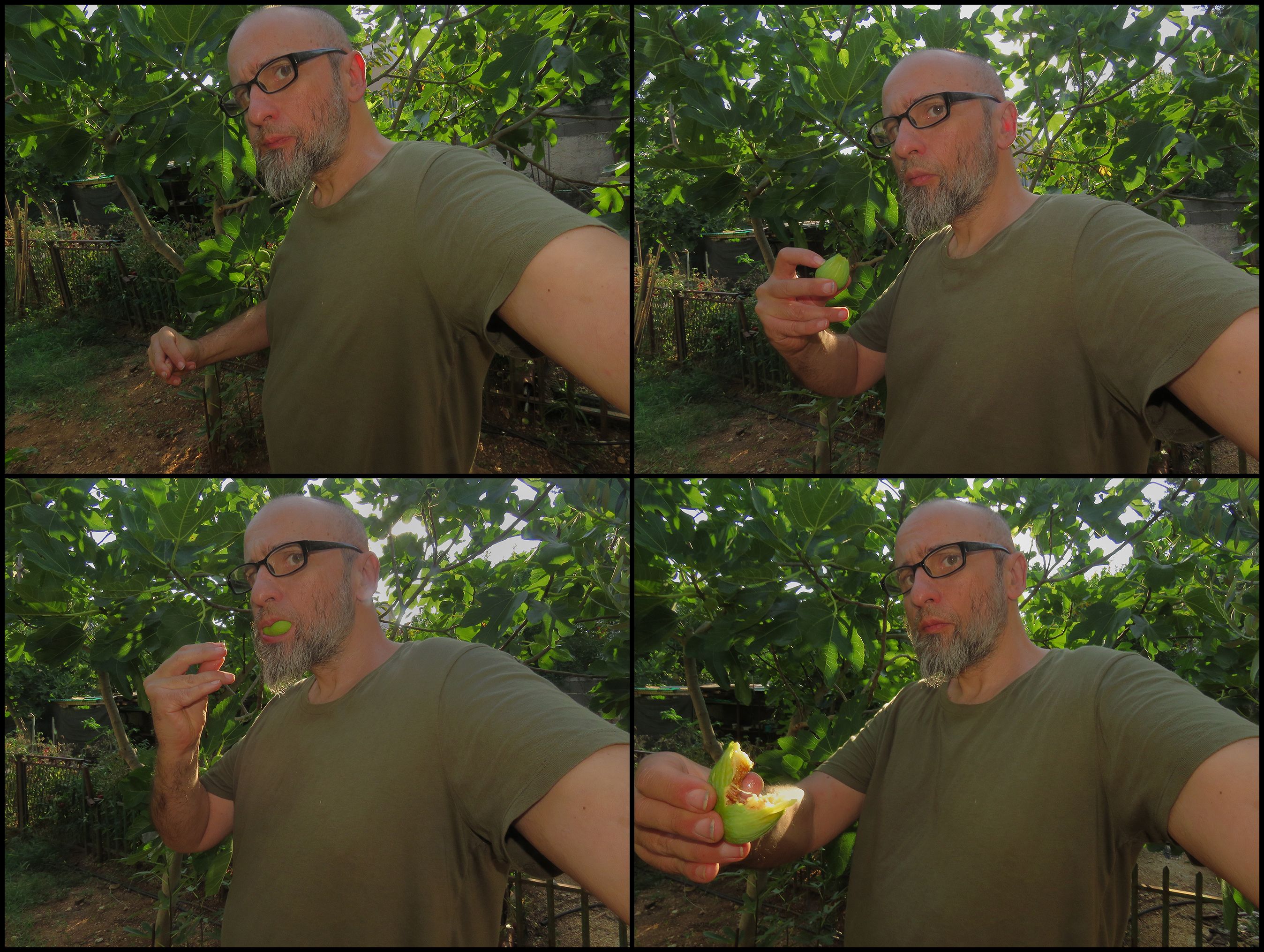
In this set of four photographs, the fruit is slowly getting eaten. The fruit, shown in the following shot ...
... doesn't look as good but it tastes even better.
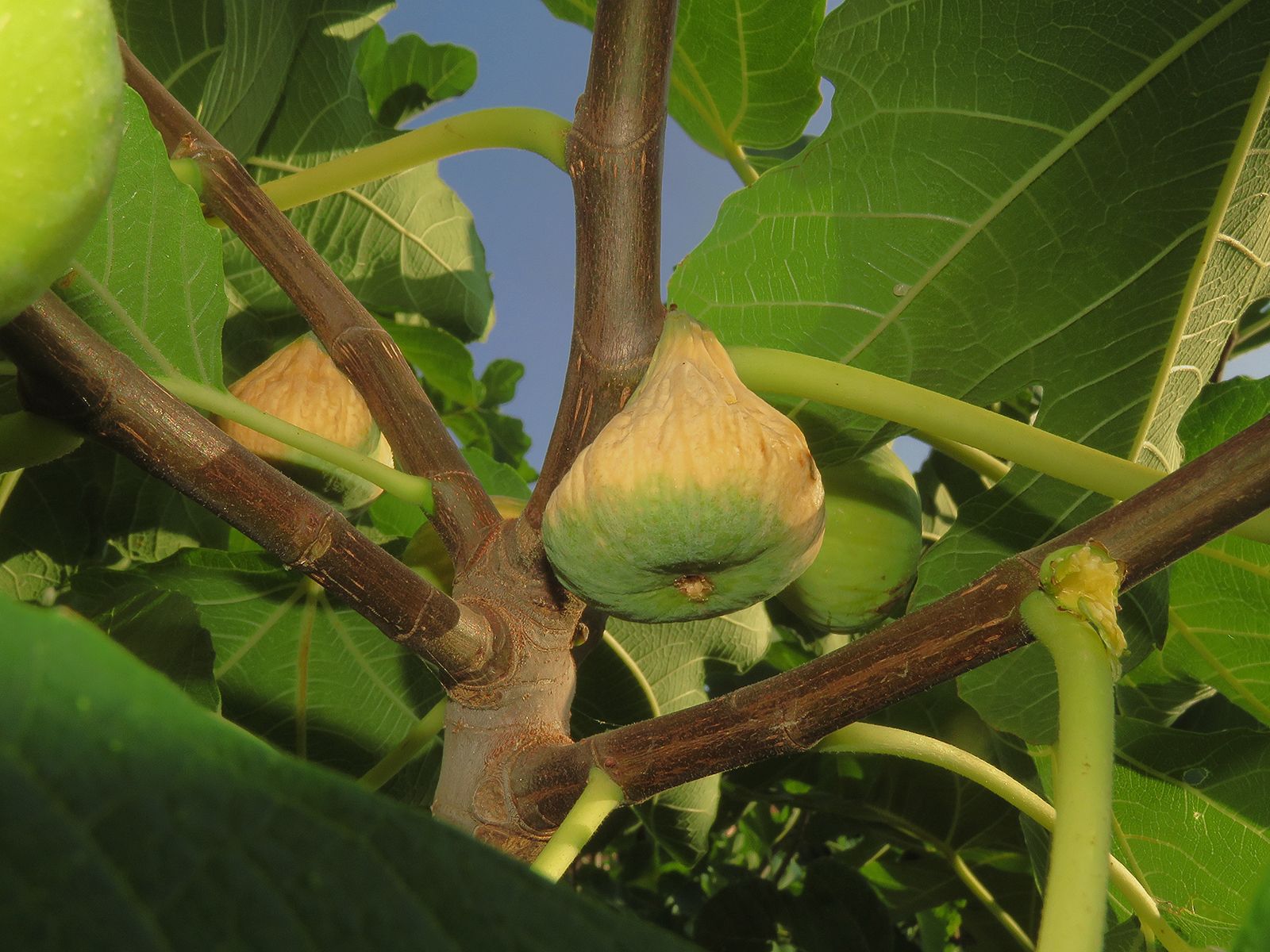
When the summer is especially hot and dry, like this current one that is slowly coming to its end, the fruits desiccate on the tree fairly quickly and become very similar to the dry figs one can buy in local grocery stores.
The semi-dry fruit is in the palm of my hand here, while in the following set of four photographs ...
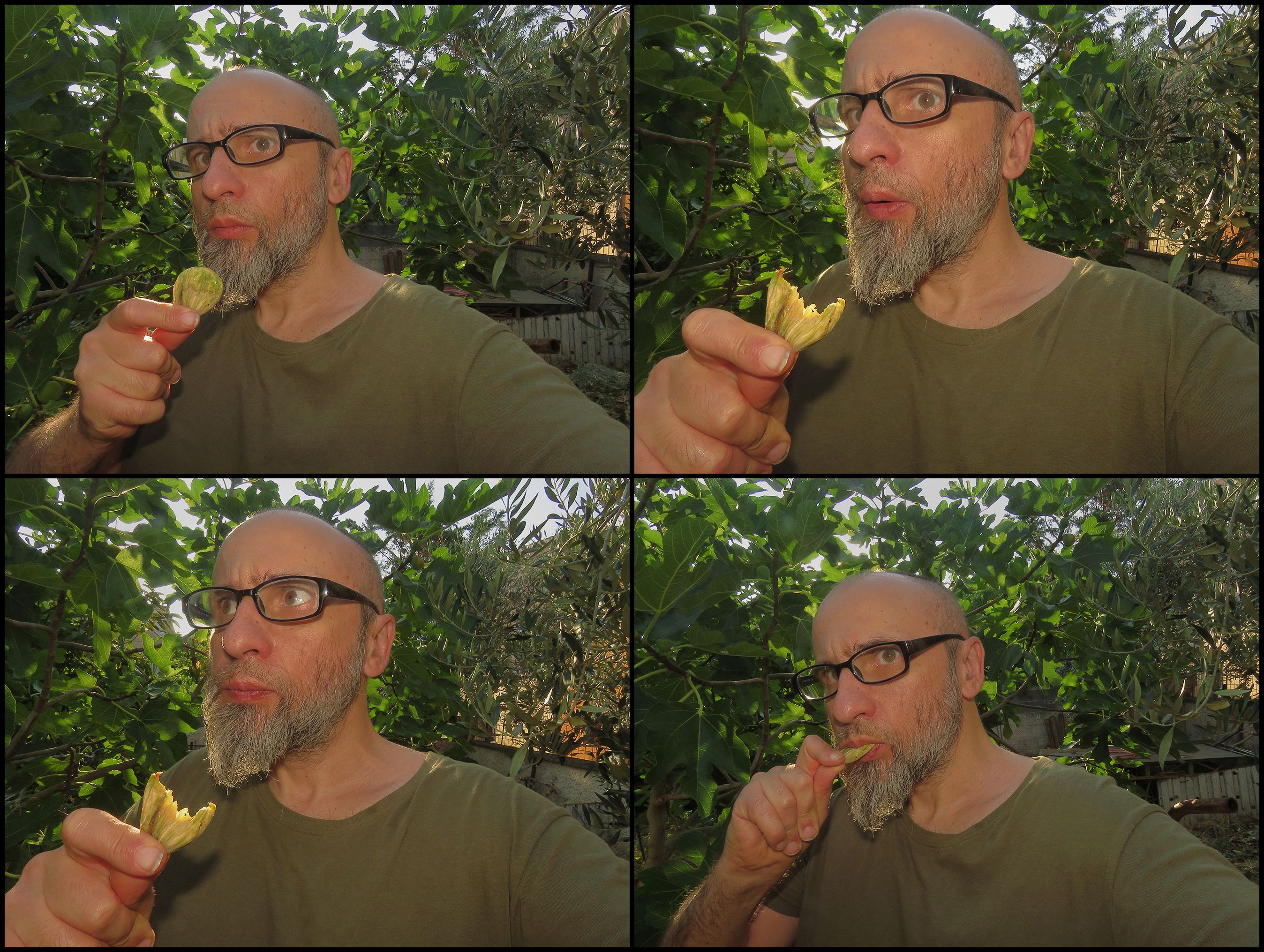
... I'm enjoying my sweet, semi-dry breakfast in the garden.
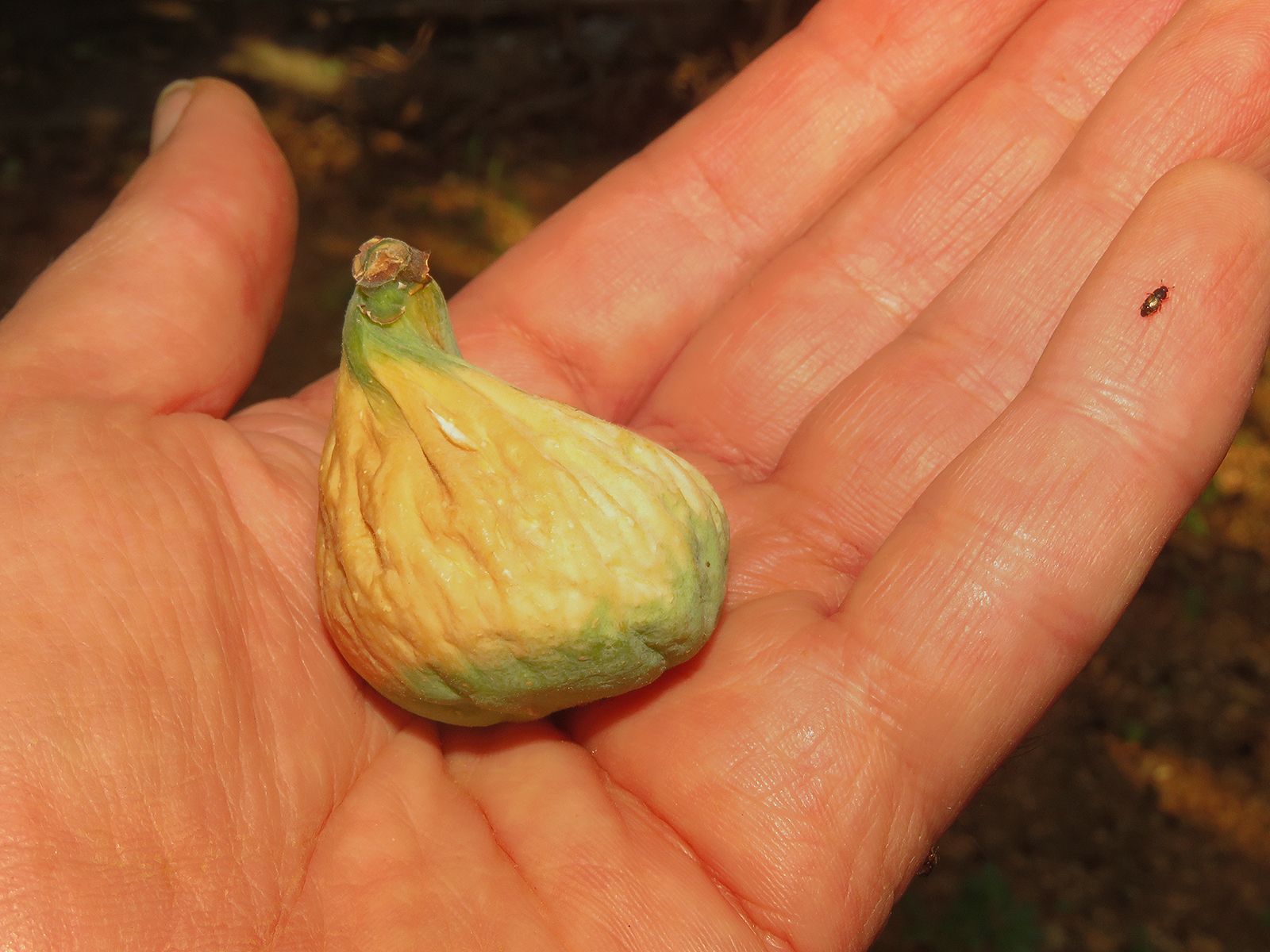
The aroma of these partially desiccated figs is very similar to the intense taste of those properly dry ones I sometimes get from the grocery stores in winter, but since my semi-dry figs are less dry, the meal is juicier and therefore better. On the smallest of my five fingers shown in the above photograph, especially if you enlarge the picture by clicking on it, you'll notice a very small beetle that probably came out of the fruit.
In this crop of the previous photograph, you can take a better look at the tiny insect. I never saw it before, and I can't tell you the name or anything else about this species. The family is probably Nitidulidae but I could be wrong. If the beetle came from the fruit's interior, I probably ate quite a few of these insects this summer.
Here you can see the other side of the same fruit on the palm of my hand.
The fig-eating beetle shown in this photograph is much bigger.
The name of the species is Protaetia aeruginosa. The family is Scarabaeidae.
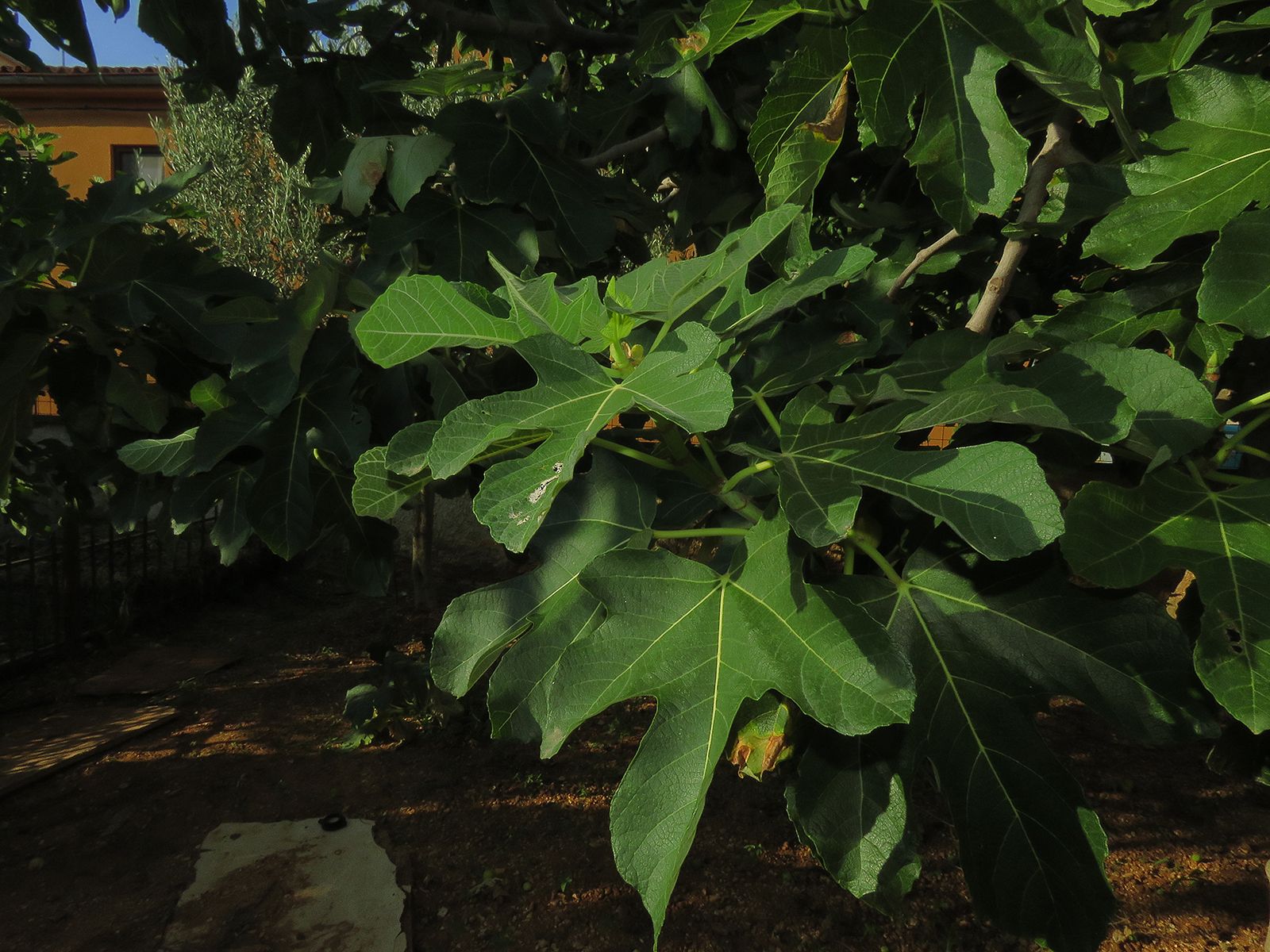
Here you can take a look at the foliage that can make your skin itchy if you spend too much time in contact with these large leaves. I saw Adam and Eve wearing these kinds of leaves in some Bible-inspired artworks. Those poor people must have gone through an itchy hell the next day or just a couple of hours later.

One of the trees in my garden produces beautiful indigo-violet figs. One of those fruits is posing on the palm of my hand in this shot. In the following set of six photographs ...

... I'm eating the fruit.
Here you can see the partially desiccated version of the indigo-violet fig that will be eaten in the following set of four photographs.
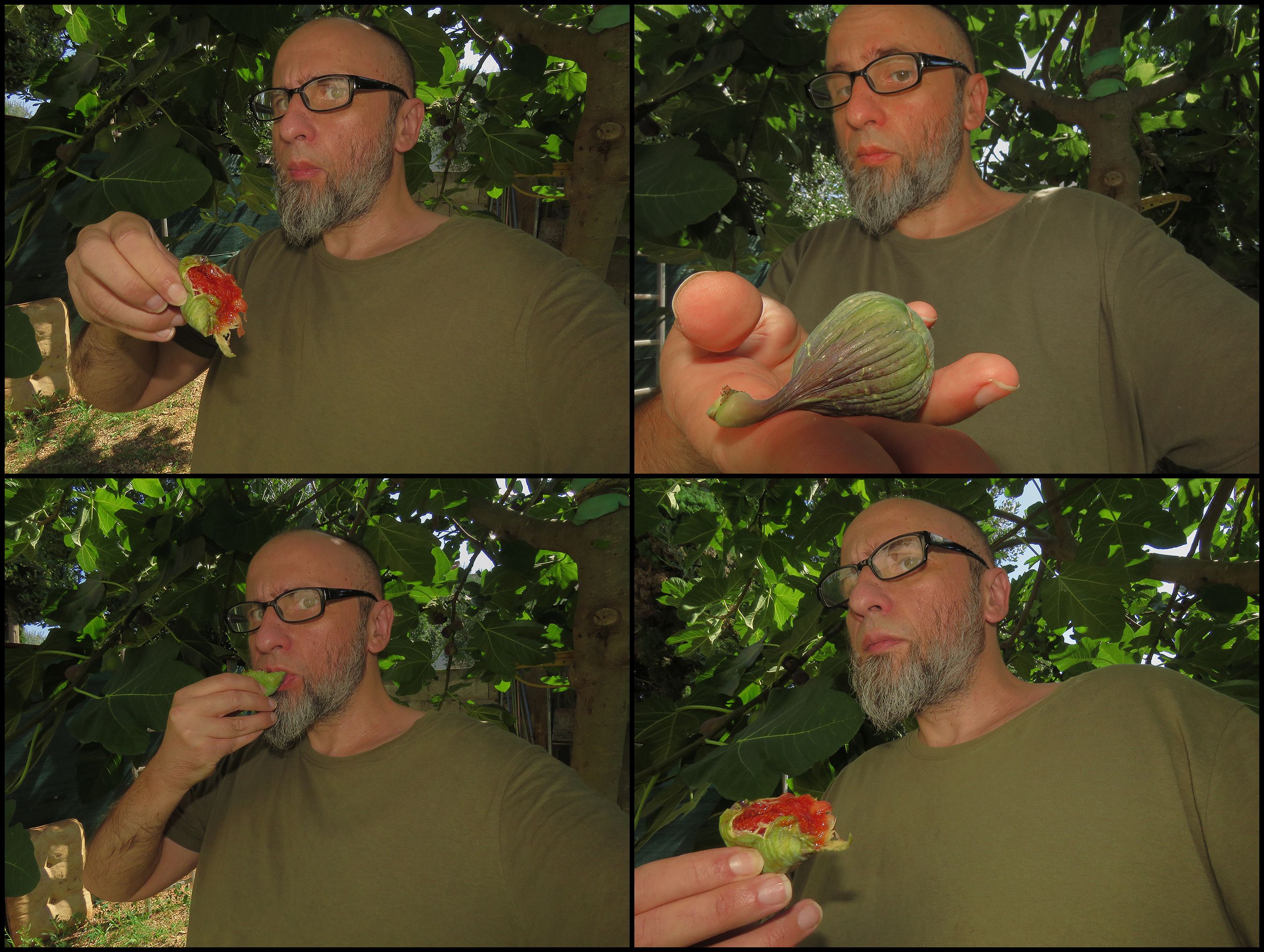
Yep. You can see me eating the fruit here.
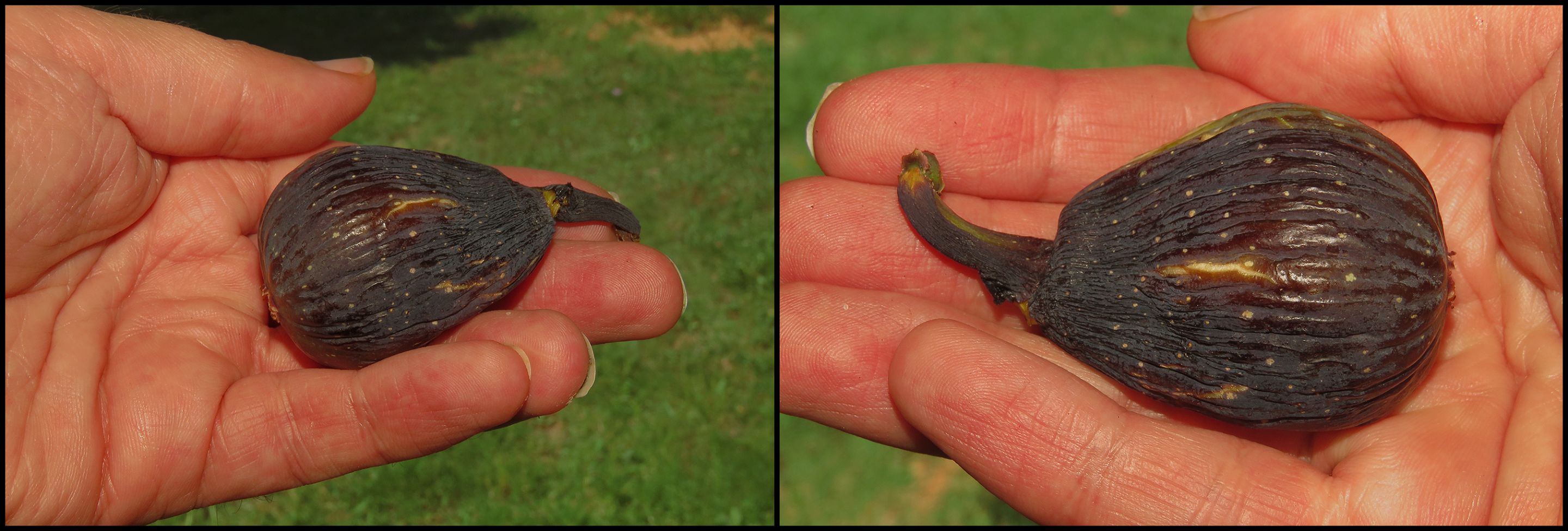
A couple of days ago, while eating and photographing the dark violet figs ...
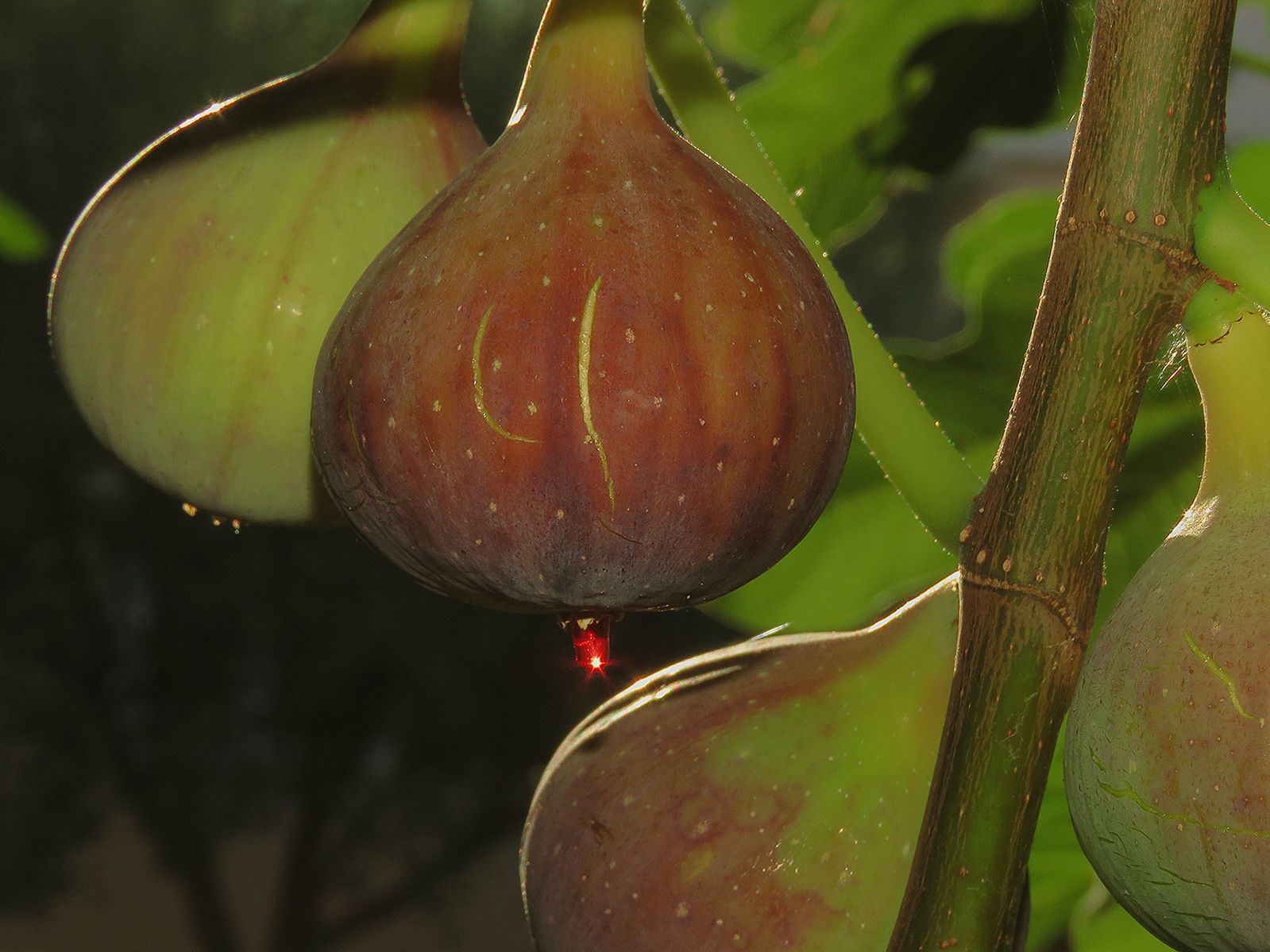
... I noticed a beautiful jewel hanging from the center of one of the ripe fruits.
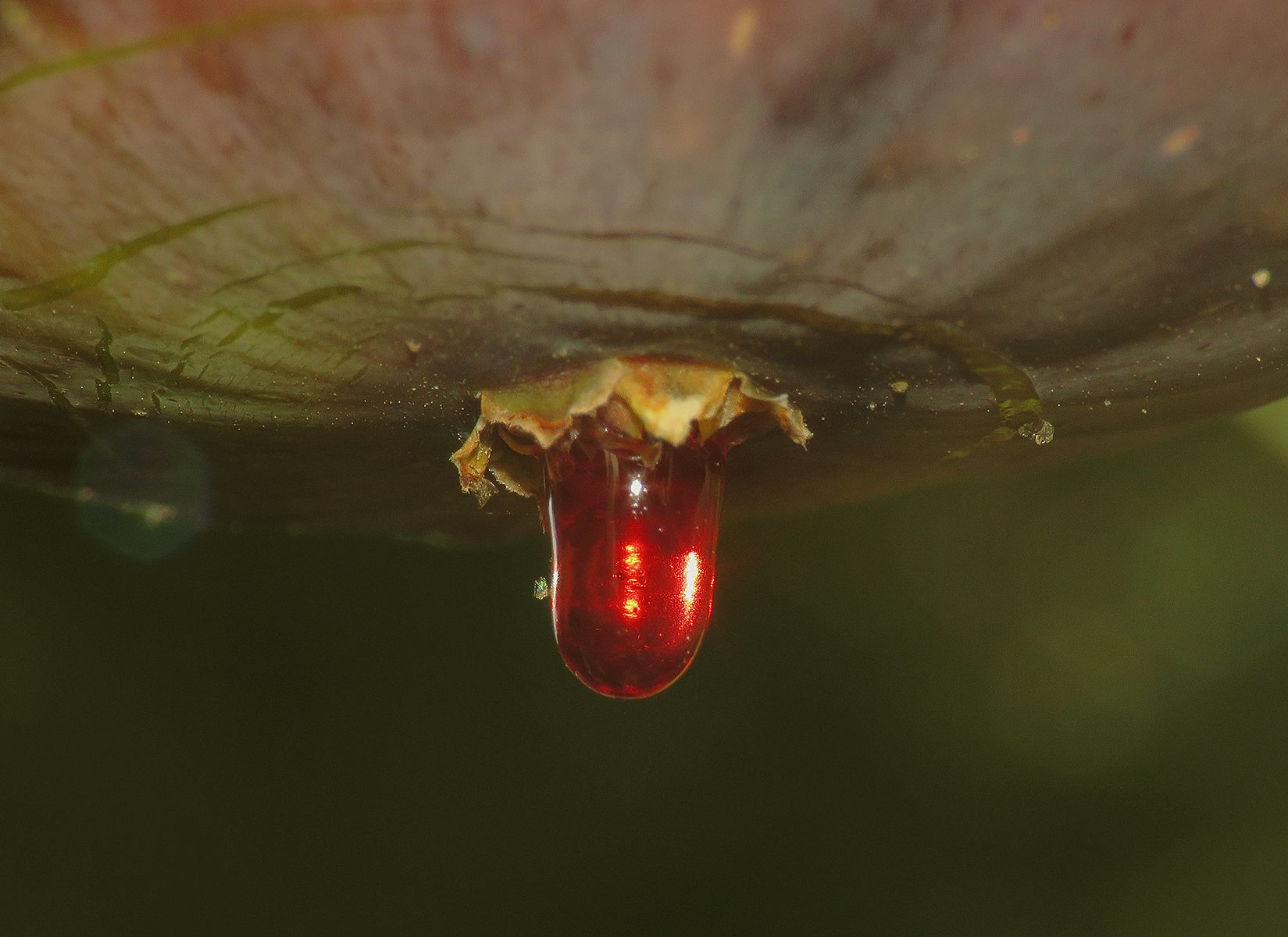
The red juice looked great illuminated by the morning light.
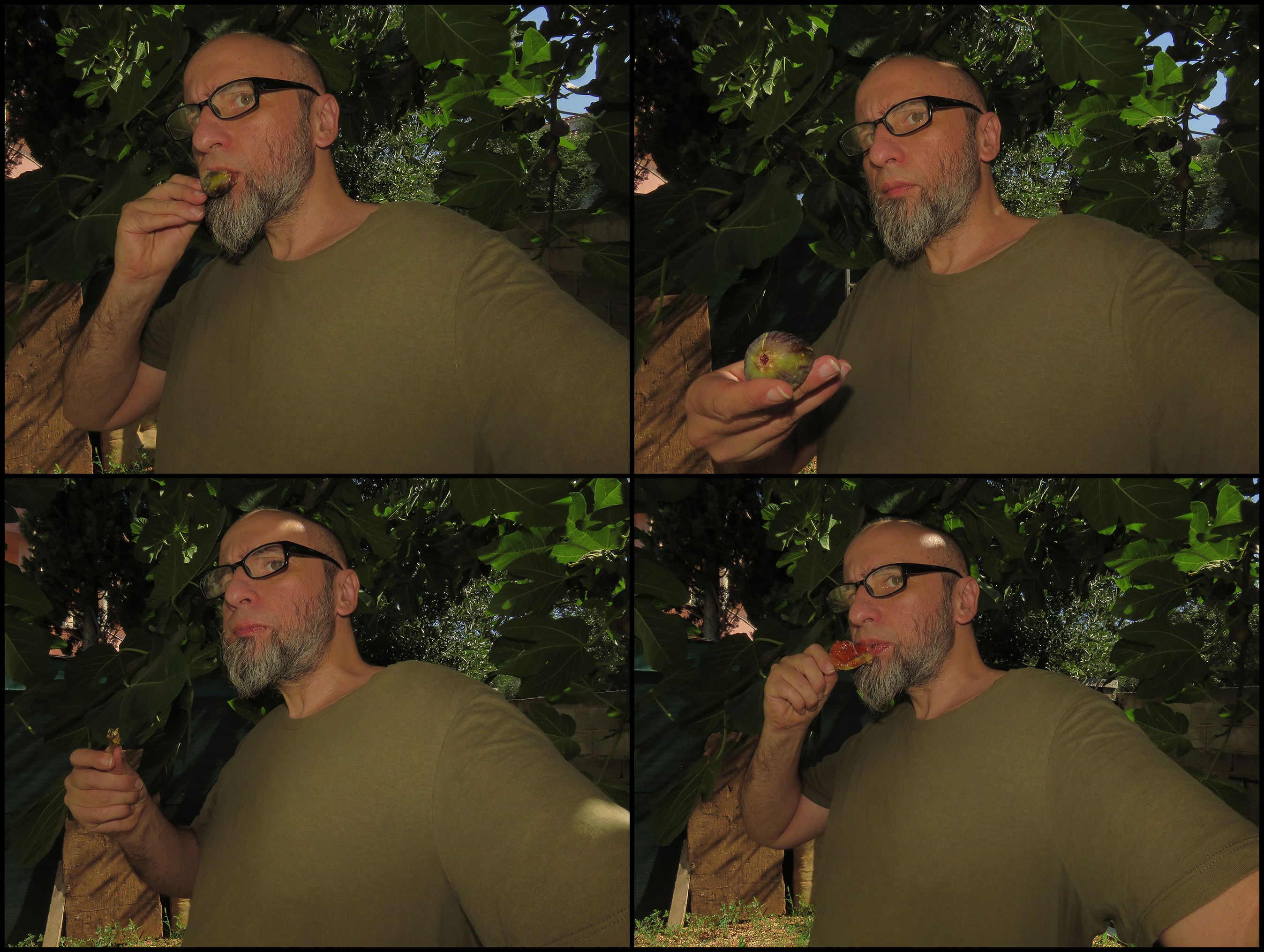
I'm eating another indigo-violet fig in this set of four photographs.
I'm just one of the creatures that eat these fruits in my garden.
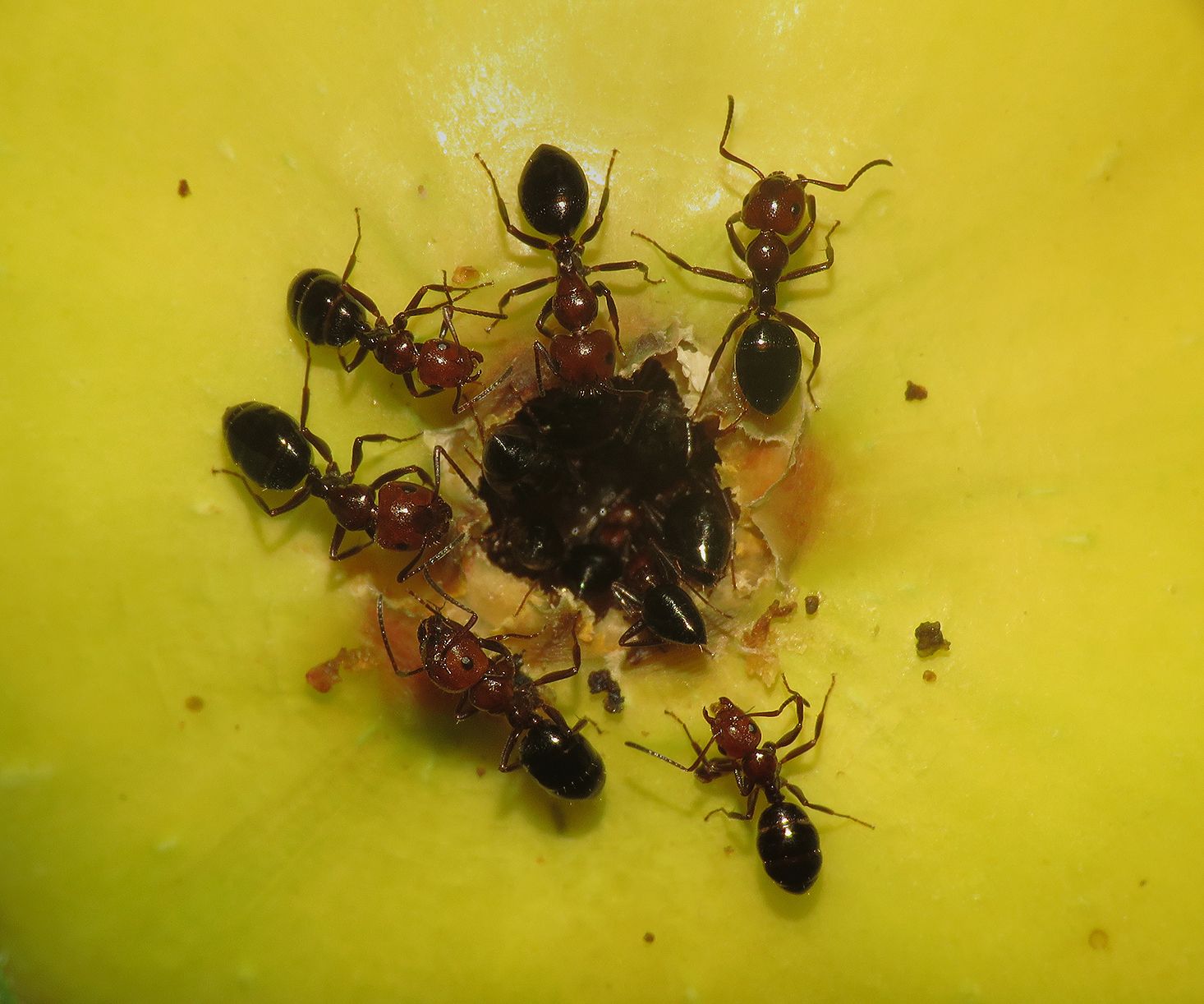
Here you can see a group of Camponotus lateralis ants around the hole that leads into the fruit.
I'm pretty sure I ate quite a few ants during my summer breakfasts.
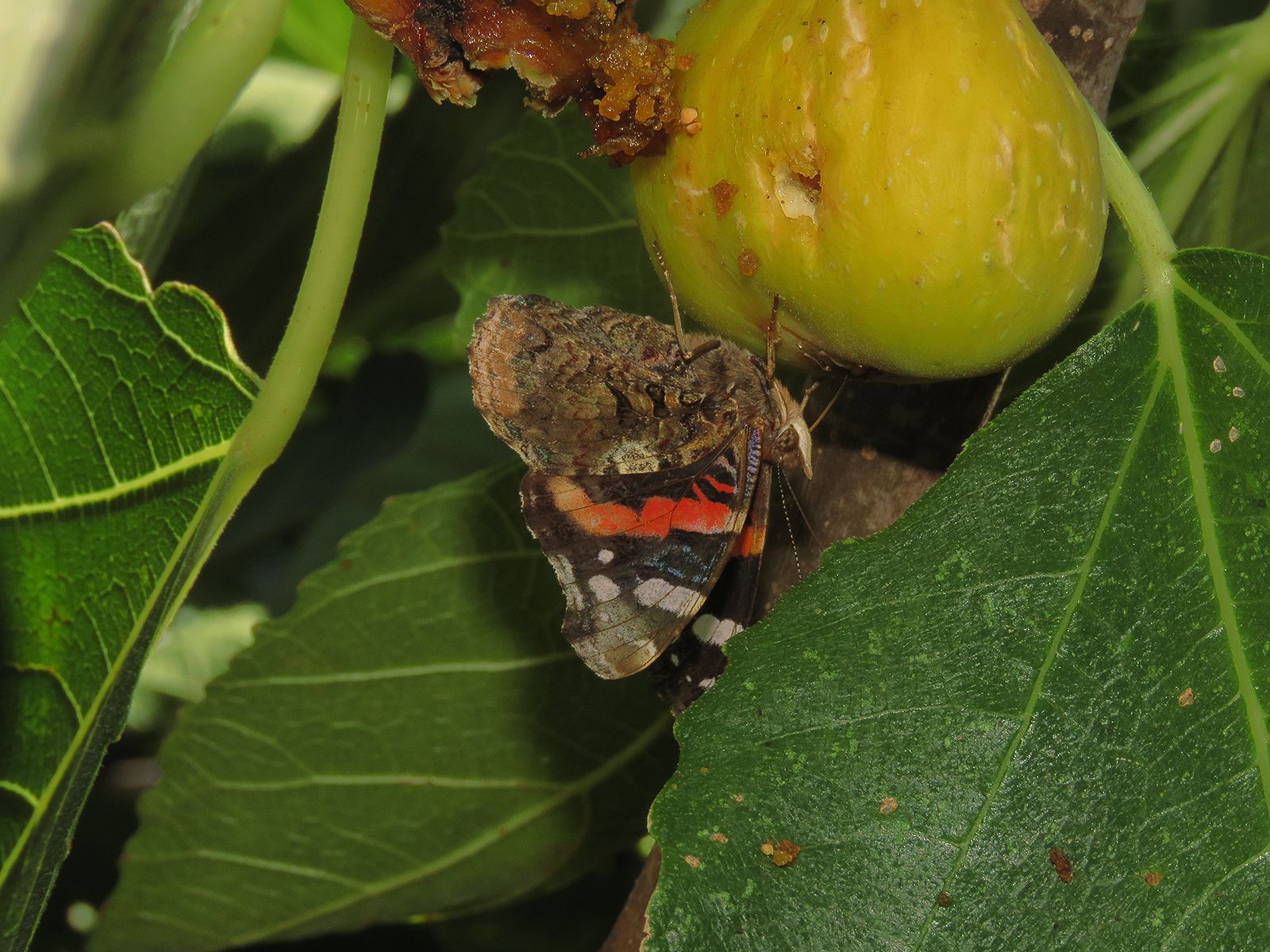
Here you can see the lovely Vanessa atalanta butterfly feeding on the sweet juice that's pouring out of the slightly overripe fruit.

AND THAT'S IT. HAVE A GREAT DAY, OR NIGHT, WHEREVER IN THE WORLD YOU ARE. AS ALWAYS HERE ON HIVE, THE PHOTOGRAPHS ARE MY WORK - THE END