
Today, while frying the sardines for lunch ...

... I noticed what looked like a swarm of fairies or minuscule snowflakes out in the yard. So I took a series of photographs through the kitchen window. Here you can see the GIF made of those consecutive shots.

A minute or two later, I was outside the house, trying to zoom in from there, and get a better shot that could reveal the real shape of those little flying particles.
In this cropped image, you can take a better look at the fairies in my yard.

It was soon clear that I wouldn't be able to get better photographs without the macro lens, so I walked back into the house. After taking another series of consecutive shots from the kitchen window, I took the macro equipment from the bedroom.
All the details of the minuscule insects were now visible.

This one took a rest on the piece of wood in the garden.
I'm not sure about the species, but it looks like a woolly aphid or a flying male of some mealybug. The one in this photograph was ready to continue its flight after a short rest on the ear of the grass. I can't tell you why exactly these insects were swarming today, but my intuition tells me that it probably has something to do with reproduction. It could be some kind of mating behavior. A seasonal mating dance. Something like that. Since I don't use any repellents or poisons in my garden, I'm cultivating more insects than fruits and vegetables, and many kinds of aphids, scale insects & mealybugs can be found all around my yard.
I watched them flying around for half an hour or so ...
... and then the swarm somehow disappeared.
After the event, I found quite a few dead insects caught in the spider webs ...

... and only a couple of living ones, resting on the large leaf of the fig tree. If you enlarge this photograph by clicking on it, you may notice a minuscule green creature near the aforementioned fairy-like insect, the main protagonist of this post.
The little green thing is a larval stage of another pest that lives a prosperous life in my garden.
These are the larvae of the fig psylla (Homotoma ficus).
They spend most of their time attached to the veins of the leaf, bussy sucking the sap. While I was photographing the larvae ...
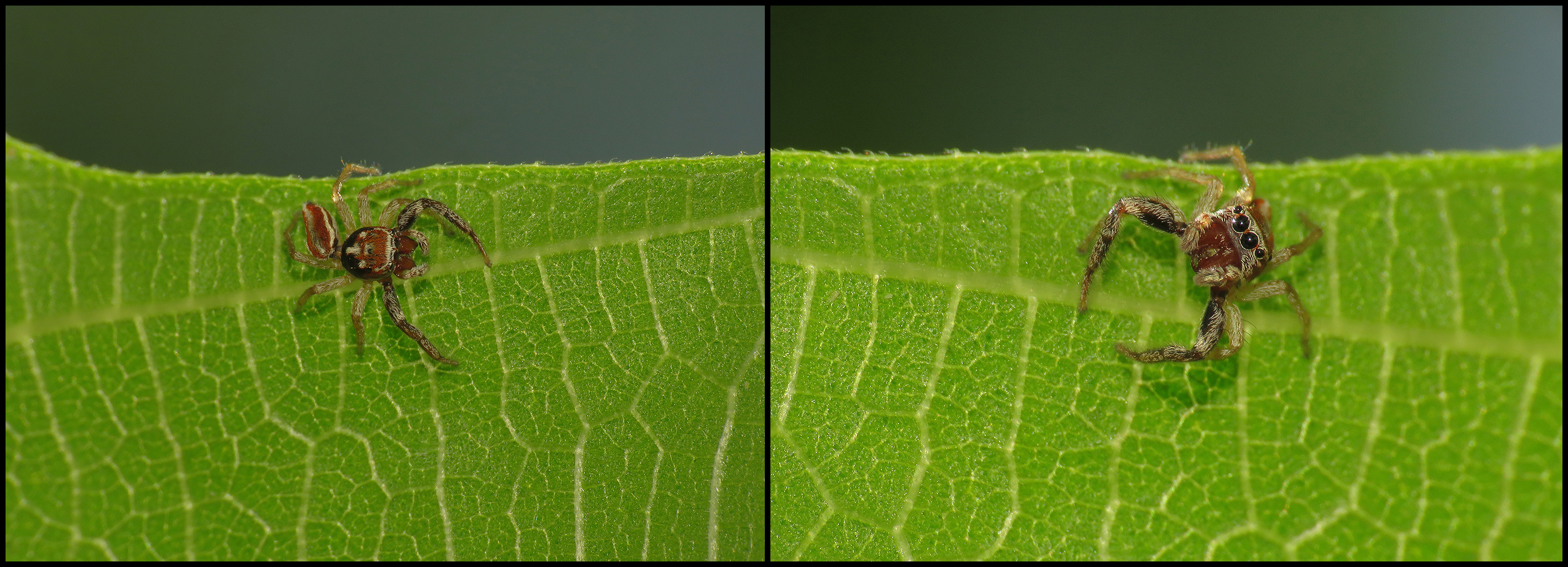
... a jumping spider entered the scene.

Soon the spider grabbed one of those larvae.
Here you can take a better look at the minuscule green thing in its fangs.
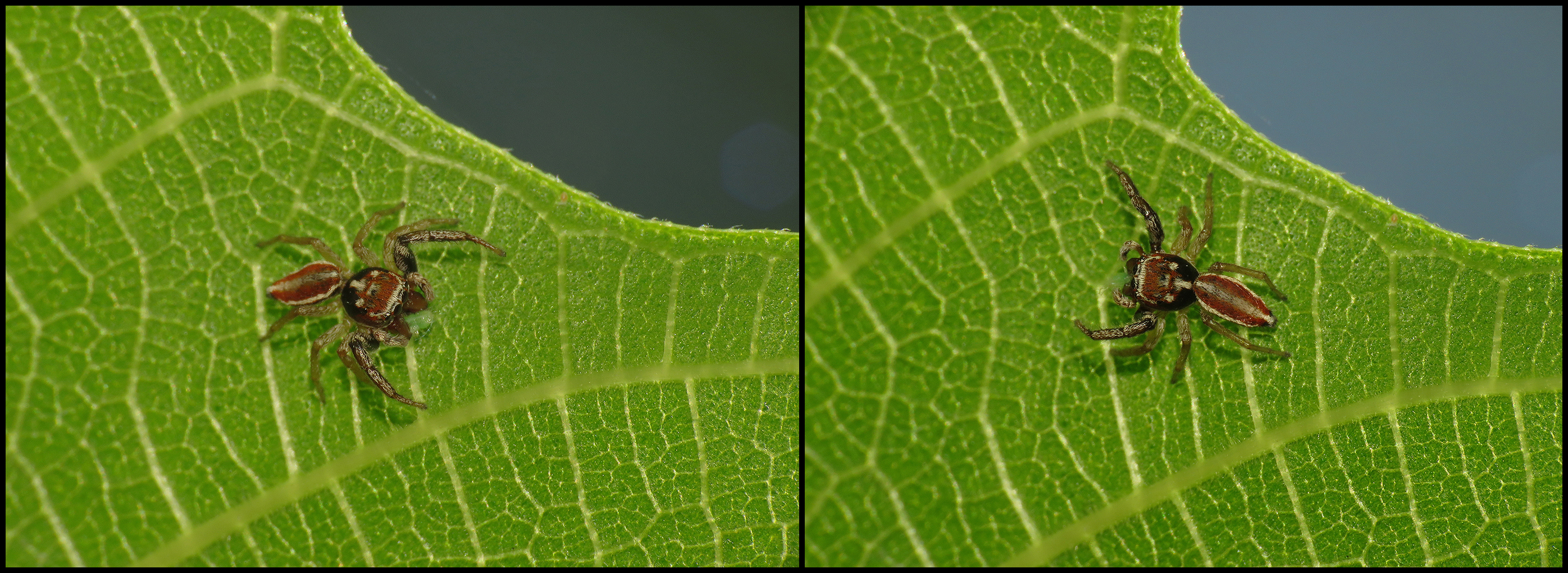
Icius hamatus is the name of this Salticidae species.

Like many other sap-sucking, small-sized Hemiptera, the Homotoma ficus larvae produce and expel the honeydew that attracts the ants. Here you can see the minuscule Crematogaster auberti ant.
The brown larva in this photograph, surrounded by the usual green ones ...
... is ready for the metamorphosis.
On another leaf of the same fig tree, I photographed this Lauritrioza alacris psyllid. This species feeds and reproduces on the Laurus nobilis trees in front of my house.
Bugs from the Anthocoridae family are commonly known as the Minute pirate bugs. Here you can see one of those small, predatory bugs that often feed on various pests. I can't tell you the exact species, but the family is definitively Anthocoridae.
With many preys around, the jumping spiders are also very active in my yard and garden. This Salticus mutabilis was photographed on the same fig tree.

Here you can take another look at the Homotoma ficus larvae. Because of the size of my models and the pretty extreme macro, I used the flash of my camera in all photographs in this post. I mean, all but one. This enlargeable shot was taken with a lot of patience using only the ambient light.
Near the tree, I stored some old, obsolete stuff in red nylon bags from the local supermarket.
On that vivid surface, I photographed another jumping spider. This one has caught another spider. I wasn't able to identify the species.
Not far from there, on the lawn under the tree, the Anthrenus verbasci carpet beetle was enjoying the abundance of nectar and pollen inside the daisy flower.
AND THAT'S IT. AS ALWAYS IN THESE POSTS ON HIVE, THE PHOTOGRAPHS ARE MY WORK - THE END.