
The first two weeks of October that year were nice and warm. Most of that month still felt like summer.

I took plenty of photographs in my yard and on the beach, and today I'm gonna show you a compilation of that old unpublished material from October 2015. Have a good viewing.
You can see a bug from the Coreidae family in this shot.
The name of the species is Centrocoris variegatus. The insect was found and photographed on the juicy leaf of the Beta vulgaris maritima.
On the 8th of October, I spent the whole afternoon picking those leaves.
Beta vulgaris maritima, commonly known as the sea beet, is a tasty edible wild plant closely related to the cultivated beet. Its leaves taste like chard or spinach but the aroma is more intense, and since it grows very close to the sea, the plant is also nicely salted. If you take the time to explore the chaotic and intricate details in this photograph, you may notice a white butterfly resting on the sea beet, near the center of the picture.
Here you can take a better, more up-close look at that butterfly. I cropped the previous image to make the insect more prominent in the shot. This is the Pieris brassicae, commonly known as the small cabbage white.
I found and photographed quite a few interesting creatures while picking the sea beet.
This is the Helophilus pendulus, a fly from the Syrphidae family.

The tiny red thing in the center of this shot is an arachnid. In the following photograph, you can take a better, more up-close look ...
... at the same red velvet mite from the Trombidiidae family. Can't tell you what species exactly this is because quite e few very similar ones can be seen crawling around.
This is the Cassida rufovirens, a beetle from the Chrysomelidae family. When it hides its legs, head, and antennae under the elytra and the upper plate of the thorax, the beetle looks like some kind of limpet.
Most of the leaves I collected that day belonged to the Beta vulgaris maritima plants that were growing under the tall reeds.

Here you can see a pretty big grasshopper that was resting near the top of one of those reeds. The name of the species is Anacridium aegyptium.
On the rocks, closer to the sea, I photographed this considerably smaller Aiolopus strepens grasshopper.
Some coastal rocks have interesting shapes. These holes for example ...
... are pretty interesting. In the following photograph ...

... a fly from the Syrphidae family entered the scene and was caught hovering above the rocks.
This small translucent snail was photographed on the sea beet leaf. Next to the leaf of that plant introduced earlier in the post, you can see the succulent leaves of the golden samphire (Limbarda crithmoides). In the following photograph ...

... Limbarda crithmoides plants are blurred in the background. A dragonfly is the protagonist of the shot. The Sympetrum striolatum dragonfly.
Here you can see another pretty big grasshopper. I caught and photographed this one in the juicy green grass a meter or two from the reeds.
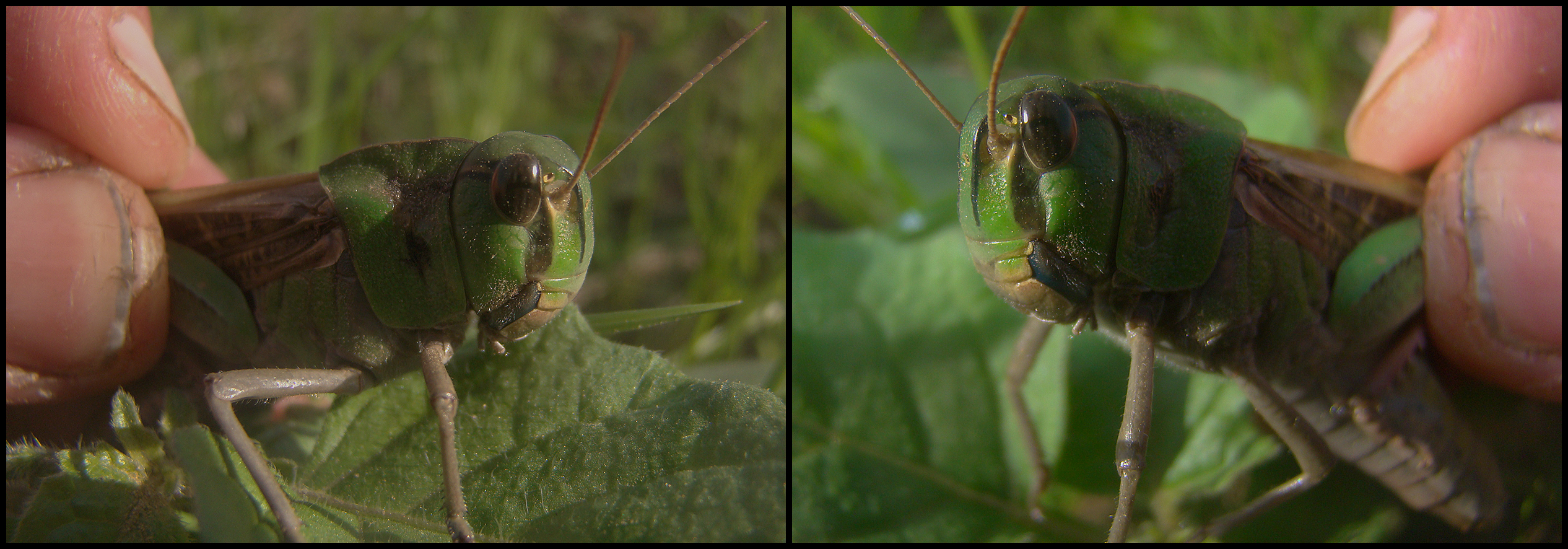
Locusta migratoria is the name of the species.
Sometimes, in shady places, the sea beet leaves are pale green, yellowish, or red. The leaves shown in this photograph were growing under some piece of plastic someone threw in the wrong place, very far from the nearest garbage can. I removed the piece of garbage and photographed the leaves in the light of the sunny, slightly hazy October day.
On the 2nd of October, I was busy with the last preparation for the opening of my art exhibition in Pula. The gallery was, and still is, situated in the former military barracks building from the Austro-Hungarian period of the city. It was built in 1899, and then in 1998, the military barracks started turning into a community building with a wide array of art & sport - related stuff.
Here you can take a look at the trunk of my car parked in front of the community center and see the packages with food I prepared for that occasion.
To cut expenses and surprise the visitors, I prepared the snacks at home, using the wild edibles picked in the meadows and along the shore.

The local cat was sleeping on the roof of my car.

Here you can see me with two of my creations displayed on the wall of the gallery. I didn't take this shot, the photographer that worked, and still works, for the local newspaper took it, but I took the picture today and played a bit with it in Photoshop.

Here you can see an artwork that wasn't part of that exhibition but was created in the same period as part of the same series in which I imagined various habitats on some alien world.
Later that night, on my way back home, I stopped in the historic center of the city to buy something in one of the fast food booths there, and I took this blurred photograph.

These two selfies were also taken at night. On the night of the 6th of October 2015. I was in my car, that's for sure, but can't tell you where the car was. Earlier that day ...
... I spent some time by the sea.
The young ant-queen that has recently lost its wings was digging a hole in the soil near the coastal rocks.
In the foreground of this shot, you can see a detail of one of the many vines in the nearby vineyard.

Here you can see the Crithmum maritimum plant near one of the small temporary puddles in the intertidal zone. In the following photograph ...
... you can take a look at the clusters of small fruits on the Atriplex prostrate plant.
I took this series of photographs in the coastal area called Palera, about four or five kilometers from the village of Liznjan. The following photograph ...
... was taken on the 9th of October.
I photographed plenty of details from the old garage near my house that day.
This is an old wheelbarrow wheel.
Here you can see a bunch of yellow things that resemble the ears of corn.

Here you can see the results I got when I put the photograph into the Google image search.
This looks like ... like ... I don't know ... a part of some machine? ... maybe ...
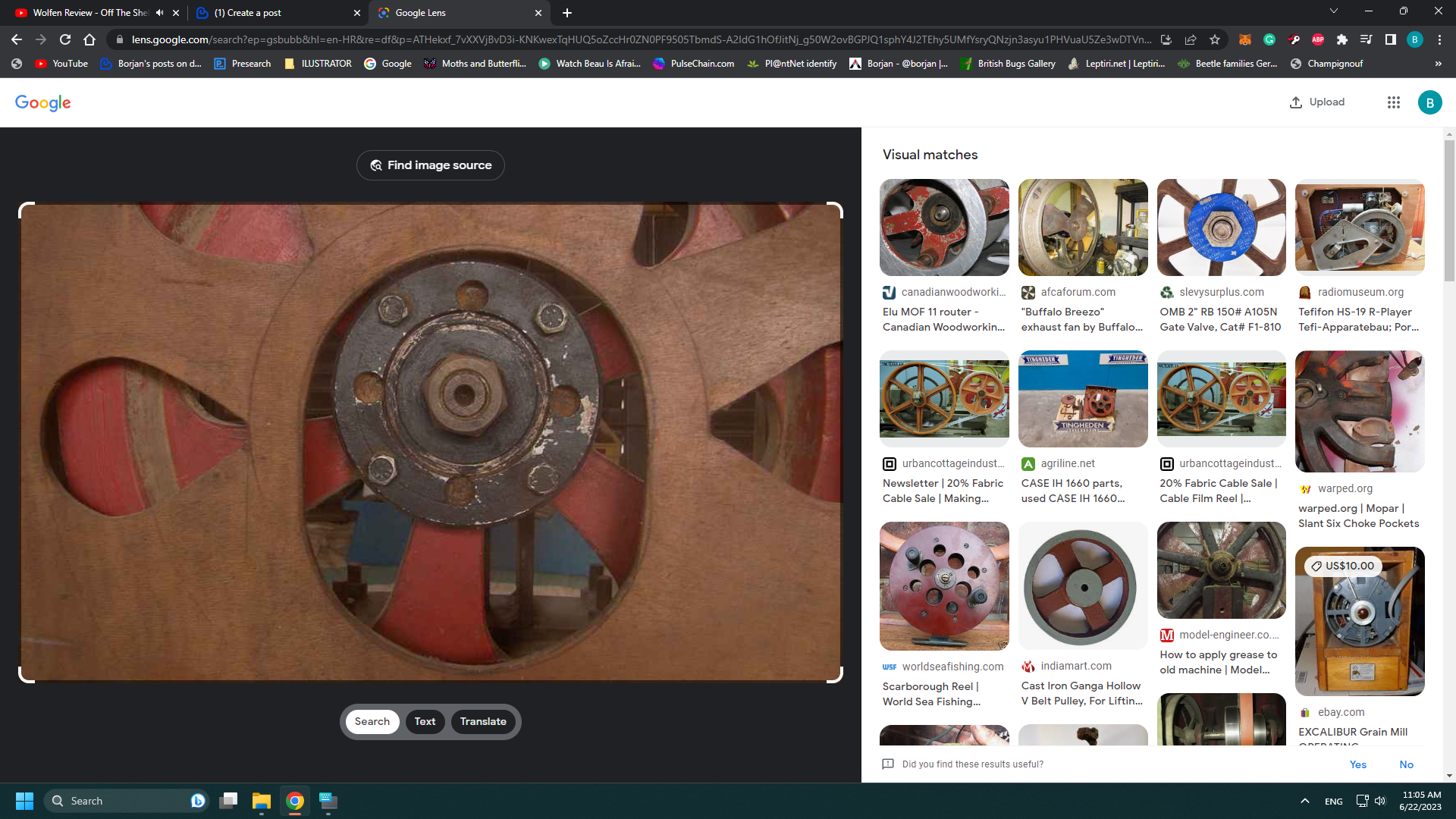
Here you can see the results Google image search gave me. In the following photograph ...
... you can take a look at the wide array of dusty old things accumulated through the years in that place.
Here you can see the large cobwebs in the corner of one of the rooms.
An old-fashioned computer monitor is dominating this scene.
This must have been a part of some old machine. Now is just a moderately photogenic piece of trash displayed on an old dusty shelf.
Here you can see some cool things that were hanging on the wall.
Later that day I created this little thing using one-half of the coconut, a bit of
plasticine, and some dry plant parts I collected on one of my many aimless ramblings through the woods and across the meadows.
On the 7th of October, early in the morning ...

... I encountered a hedgehog in my yard.

It was a fairly young, small hedgehog with a very cute, cartoonish face.
I followed him for a couple of minutes ...

... and then ...
... the hedgehog found a hideout in the narrow space under some planks.
On the 13th of October, while walking along the coast in the archeological park Vizula, near the harbor of Medulin, I came across a skeleton of some pretty big fish stranded on the shore.
On one of the pebbles in that area, I also photographed these spirals that look like tiny snails. These shells weren't made by snails. They are a product of sea worms and unlike the sea snail shells, they are firmly attached to the stone.