
The elegant little umbrella stuck in between the scales of a pine cone ...
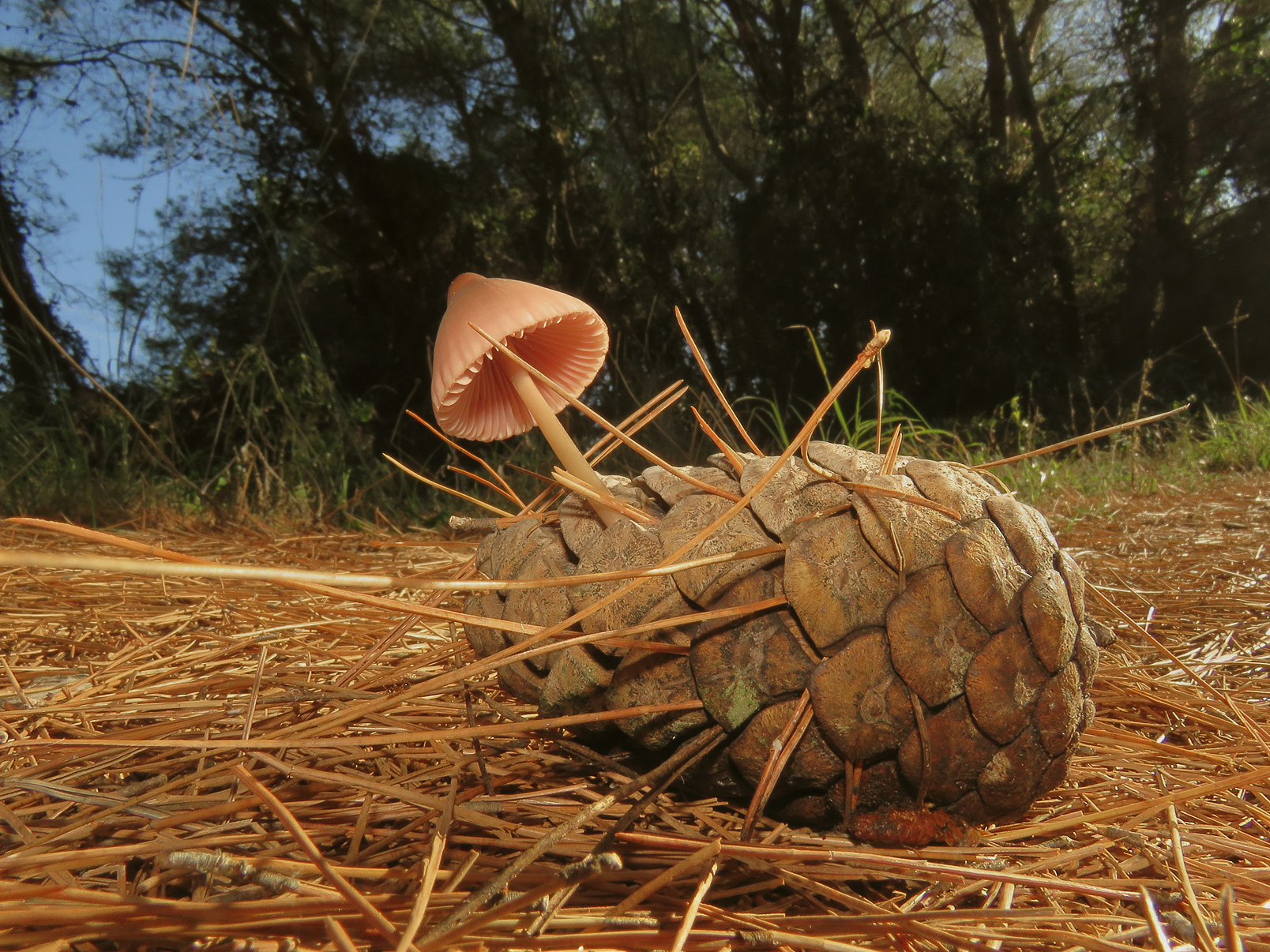
... on this opening shot ...
... is the fruiting body of the Mycena Seynesii, a fungus that grows mainly on decaying pine cones accelerating their decomposition, but sometimes can be found on the decaying branches or parts of the trunk as well.
Here you can see a bit older, completely developed mushroom of the same species, that has grown on some highly rotten pine wood material covered by a thick layer of needles.
The holes on its cap are maybe made by those fallen needles. Maybe, I'm not sure.
The holes looked cool in an up-close, minimalist composition.
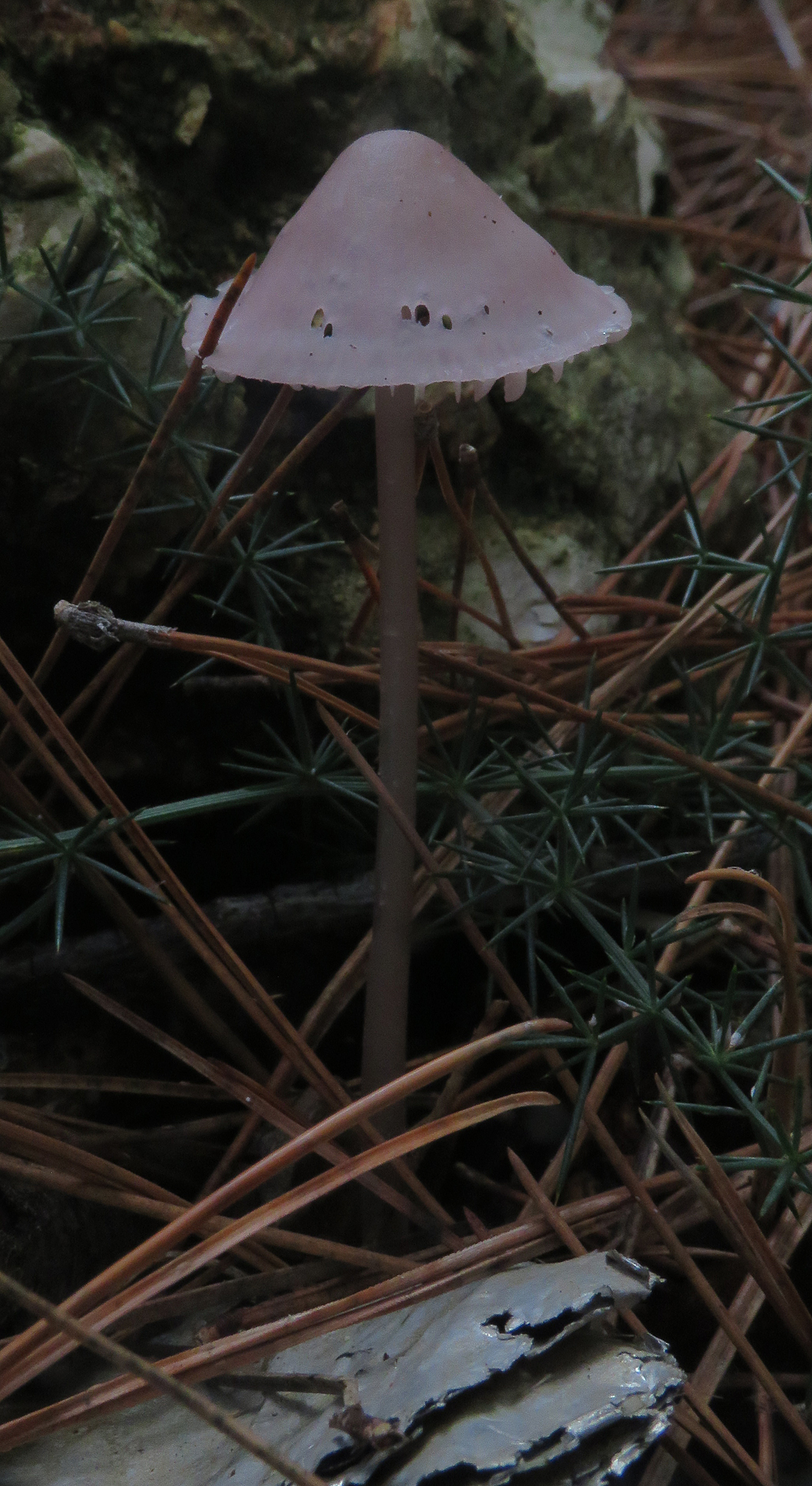
This mushroom grew in the shade under the tree, so it was much easier to get the photographs with the flash on, but the natural light was nicely subdued and quite beautiful, so I patiently took another photograph with longer exposure and ambient light only.
Here you can take a look at the setting. The place, the trees ...
... and the cool passage created by those pines, that looks a bit like a portal into some fantasy world. To me, at least.
This is the Gymnopus dryophilus ...
... a mushroom that grows equally well around deciduous trees and conifers.
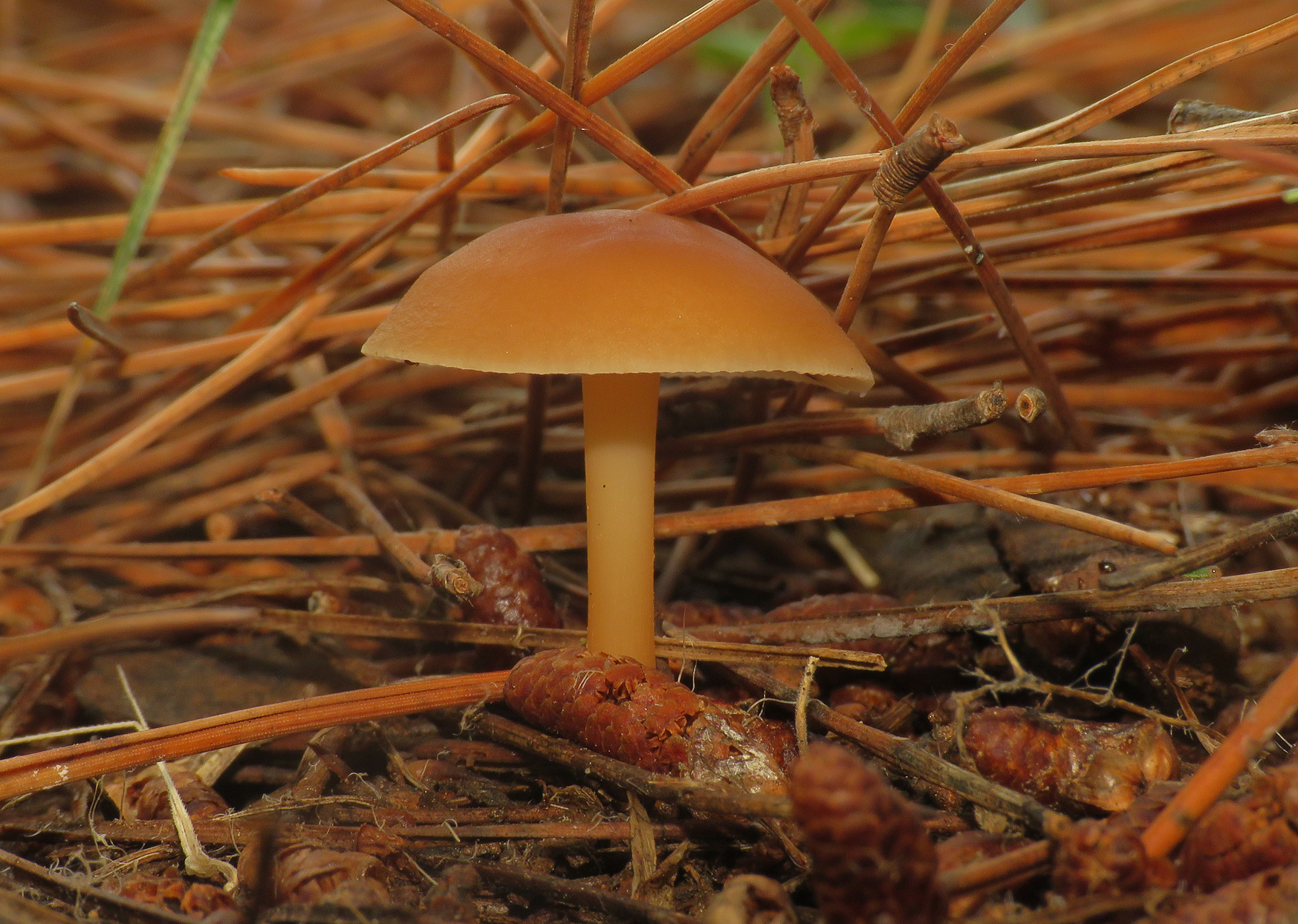
The fungus usually uses rotting wooden materials for its growth, but sometimes it does attack the tissues of a living tree.
I caught some nice minuscule details on one of these Gymnopus dryophilus umbrellas.
Here you can see some small rove beetle. I don't know the exact species, but I can tell you that I encounter these beetles quite often on various small mushrooms. They are hiding in between the gills.
Here you can see a really minuscule droplet. The darker thing on the left side of the picture is a springtail, hidden between the gills.
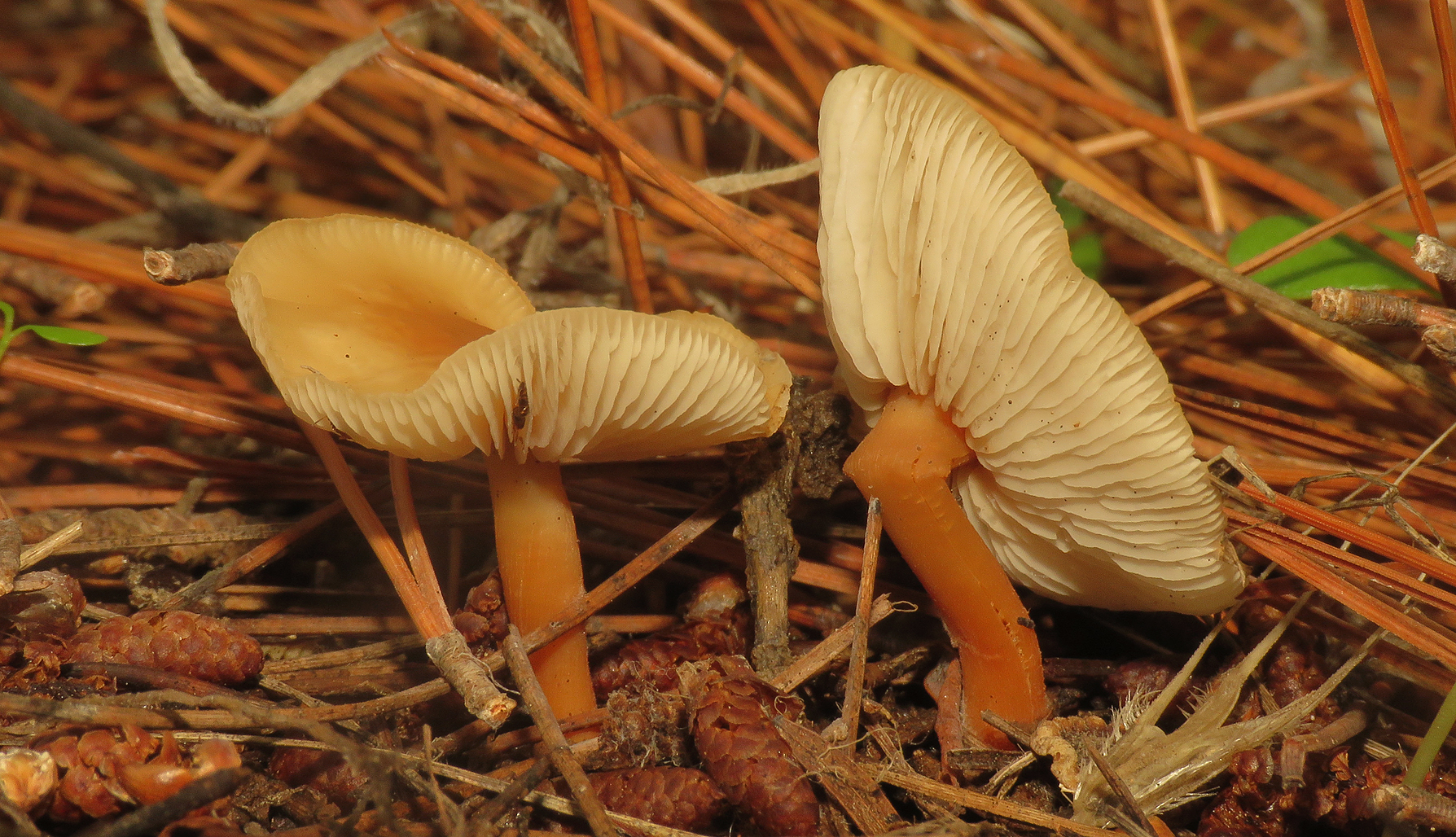
I spent almost half an hour around these pretty generic-looking little mushrooms.
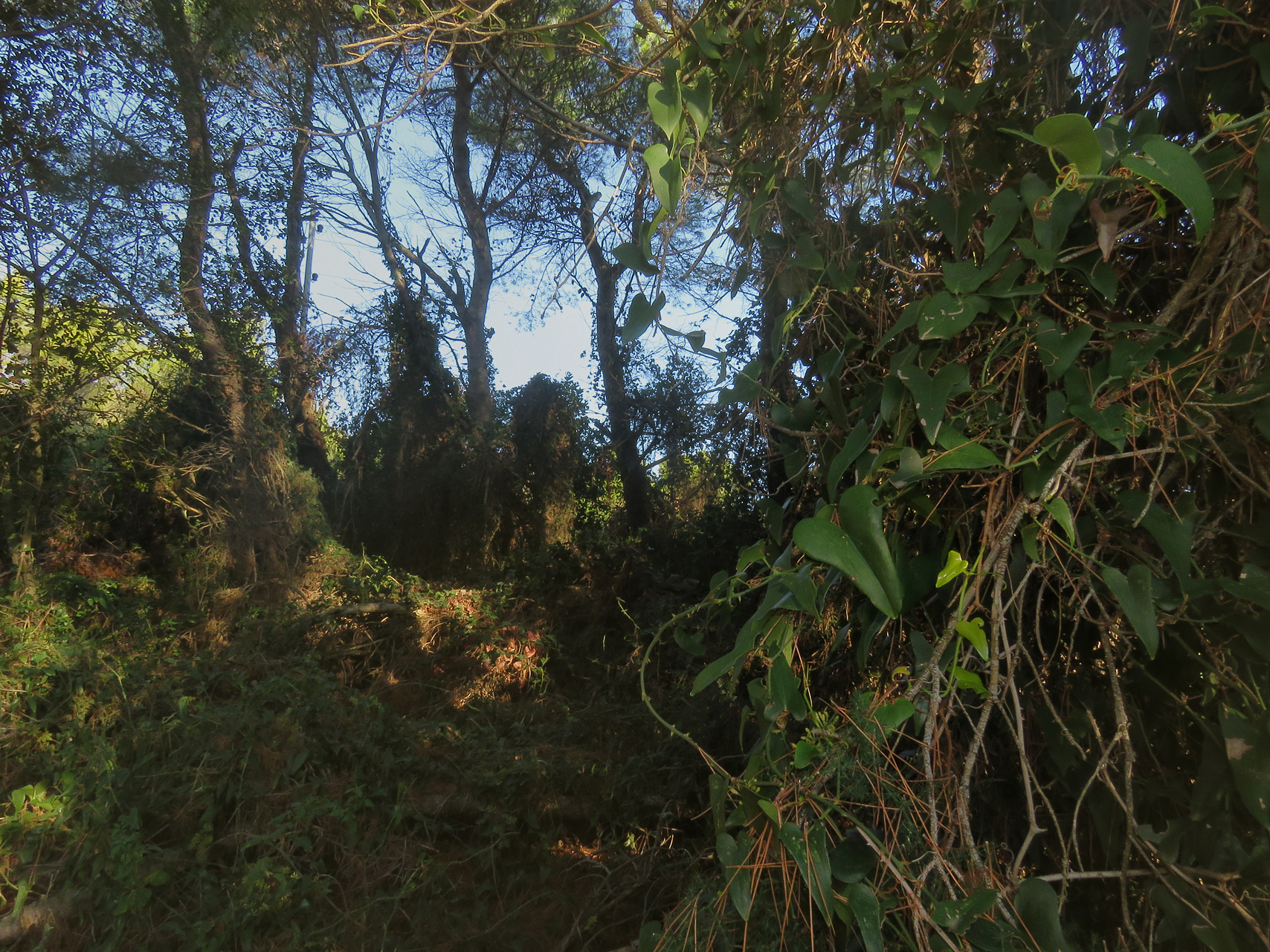
The thorny "tentacles" of the Smilax aspera plant were climbing along the trunks of some smaller pines in the area.
I found this cricket there, on the dried out leaf of the Smilax aspera.
This is a nymph of some bush - cricket (Tettigoniidae family). I can't tell you the exact species. It has an effective camouflage on brown leaves.
I found this minuscule mushroom in the dark, shady and humid area near the trunk of the biggest tree in that place. Marasmius calhouniae is the name of this species that I regularly encounter around pine trees.
Here you can see a small group of Marasmius calhouniae mushrooms.
These are the flowers of the Clinopodium nepeta, a plant that also likes humid, shady places under the trees.
This shiny leaf beetle ...
... the Chrysolina herbacea, was photographed on the Eryngium campestre plant that grew on a sunnier spot further from the tree. The shiny surfaces of this beetle look different from different angles and under different kinds of ambient light.
This one, photographed on some dry grass is, or it looks, completely green.
This is maybe, only maybe, the Panaeolus foenisecii.
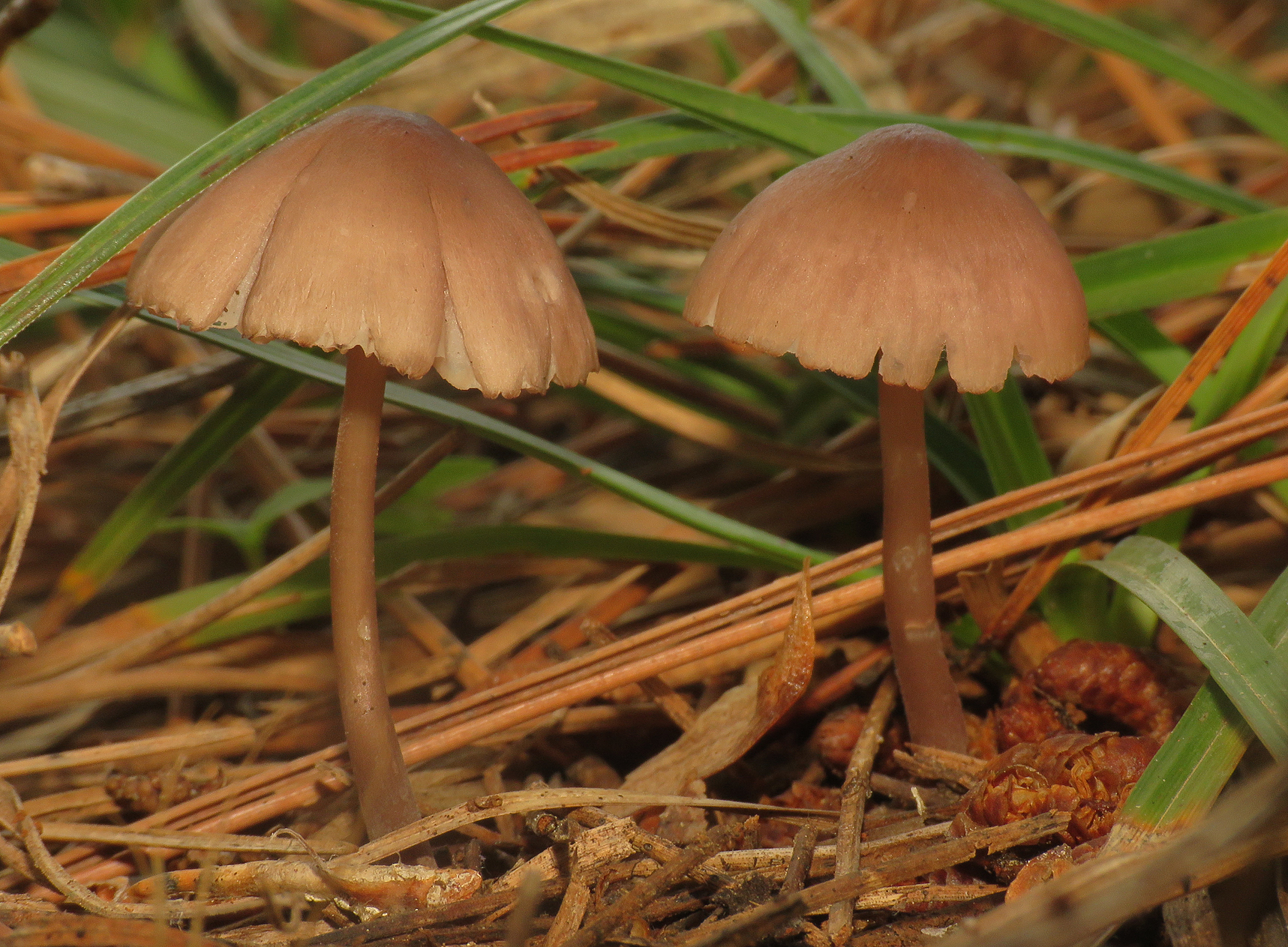
It's kinda hard to tell with many similar, small brown mushrooms around.
I photographed this Marasmius delectans ...
... on the needles - covered terrain among the fresh green grass at the age of the shade from the pine tree.
Here you can see how it looked in natural light only.
And that's it. As always in these posts on HIVE, the photographs are my work.