
Robinia pseudoacacia is a very common plant here where I live. The tree appeared in quite a few of my posts. Today I'll show you some insects I photographed on and around the Robinia pseudoacacia a long time ago.
The year was 2013. I don't remember all the details of that day but I do recall the area where I spent an hour or so exploring the branches, the leaves, and the herbaceous vegetation under the tree. I stopped by the side of the road a couple of kilometers from my hometown and another two or three kilometers from the neighboring village of Pomer.
I had only a small, partially broken compact camera back then - no real macro equipment, so today, small insects won't be shown in high-quality photographs. The wasp shown in the above photograph is partially hidden by the foliage in the following shot.
This was the first portrait I took on that occasion, I wasn't satisfied with the result, and I was pretty sure that I wouldn't be able to get closer and take a better one before the insect flew away.
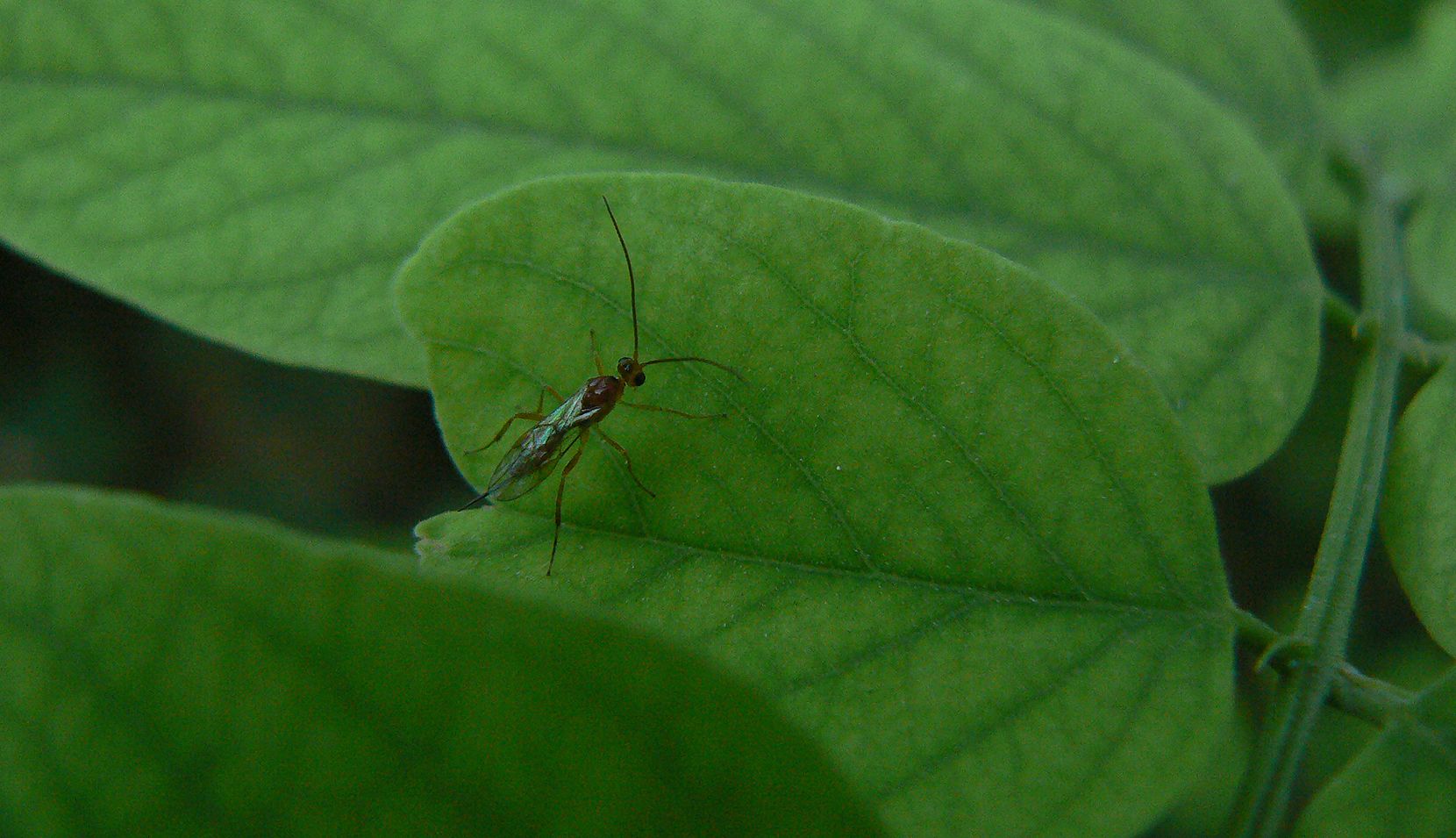
As you can see here, I was wrong. If you enlarge the picture by clicking on it, you'll be able to see all the little details. It's true that things are a bit too muddled and grainy for a really good photograph, but you can still see the small wasp clearly enough, and in general - the shot ended up looking much better than I expected of that camera.
When it comes to the name of the species, I can't tell you that but I know that it belongs to the Ichneumonidae family.
Here you can see the blue flowers of the Echium vulgare plant and a small black bee that just came out of one of these flowers. The bee belongs to the Megachilidae family. The name of the species is Chelostoma campanularum.

On the same plant that was growing under the tree, a meter or two from the trunk, I also found a very young wingless nymph of the Phaneroptera nana bushcricket.
A bit later, on one of the branches above my head ...
... I noticed two much bigger nymphs of the same species.
The one shown in this photograph is much bigger but its wings are still very small. The nymph shown in the the following shot ...
... has larger, better-developed wings which means that the insect is closer to its final, adult stage. The wings in adults are considerably longer than the rest of the body. I didn't encounter any adult on that occasion.
This fly was photographed on the vegetation that grows in the shade of the tree.
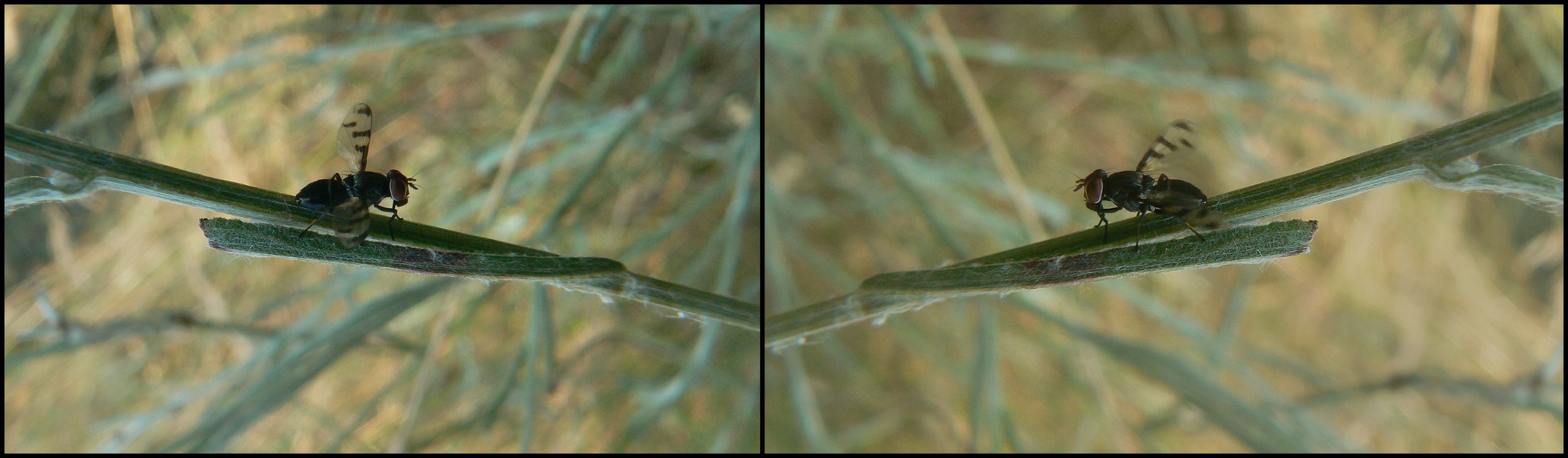
The name of the species is Herina lugubris. The fly was busy walking up & down the stem of the plant and signaling something with its interesting painted wings.
The tiny fly shown in the center of this shot was photographed on the lower branches of the Robinia pseudoacacia tree. The name of the species is Homoneura notata. It belongs to the Lauxaniidae family. Also there, on one of the lower branches ...
... I found an interesting shieldbug. I mean the bug shown in this and the following photograph isn't especially interesting to me, but I didn't know what else to say about this encounter. I mean this bug is interesting like all the other insects shown in this post are. Yeah, it's fairly interesting - that's it.
The name of the species is Piezodorus lituratus. The family is Pentatomidae, of course.
The planthopper shown in this tryptich is an insect native to North America.
Metcalfa pruinosa, a species from the Flatidae family was introduced to the southern parts of Europe during the late seventies.
On one of the leaves of the small, shrub-like oak that has grown in the shade of the Robinia pseudoacacia tree, I photographed a moth larva. Can't tell you the name or anything else about this species. The small caterpillar has built a silky tent above the upper surface of the leaf.
The leaves of the Robinia pseudoacacia look pretty good in black & white. That's why I decided to include this monochrome shot in today's post.
AND THAT'S IT. AS ALWAYS HERE ON HIVE, THE PHOTOGRAPHS ARE MY WORK
The following links will take you to the sites with more information about the protagonists of this post. I found some stuff about them there.
https://en.wikipedia.org/wiki/Robinia_pseudoacacia
https://en.wikipedia.org/wiki/Echium_vulgare
https://en.wikipedia.org/wiki/Chelostoma_campanularum
https://en.wikipedia.org/wiki/Phaneroptera_nana
https://en.wikipedia.org/wiki/Herina_lugubris
https://en.wikipedia.org/wiki/Homoneura
https://en.wikipedia.org/wiki/Piezodorus_lituratus
https://en.wikipedia.org/wiki/Metcalfa_pruinosa