
Kreuzdorn-Zipfelfalter ■ The blue spot hairstreak
Satyrium spini (Denis & Schiffermüller, 1775)
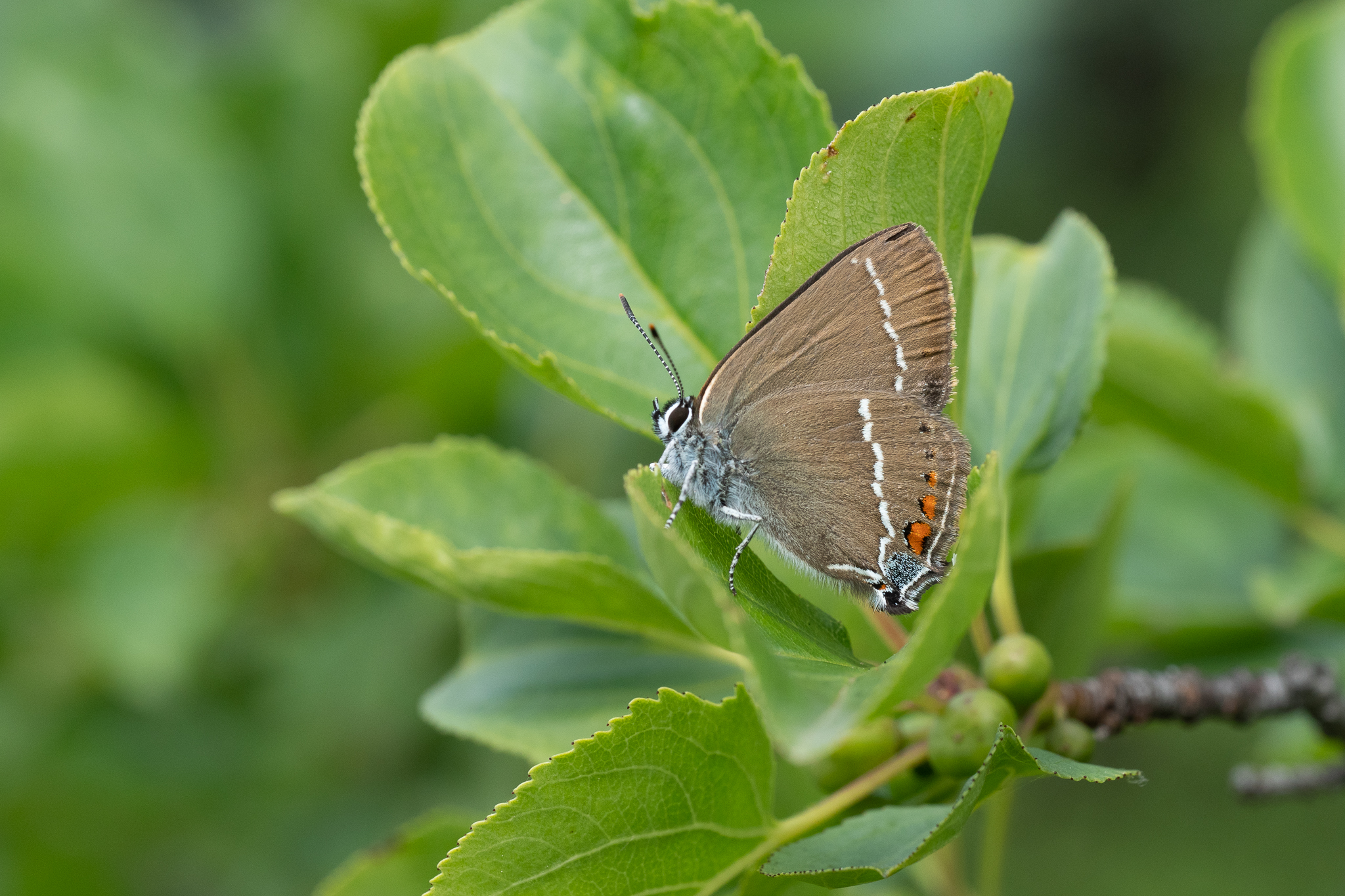
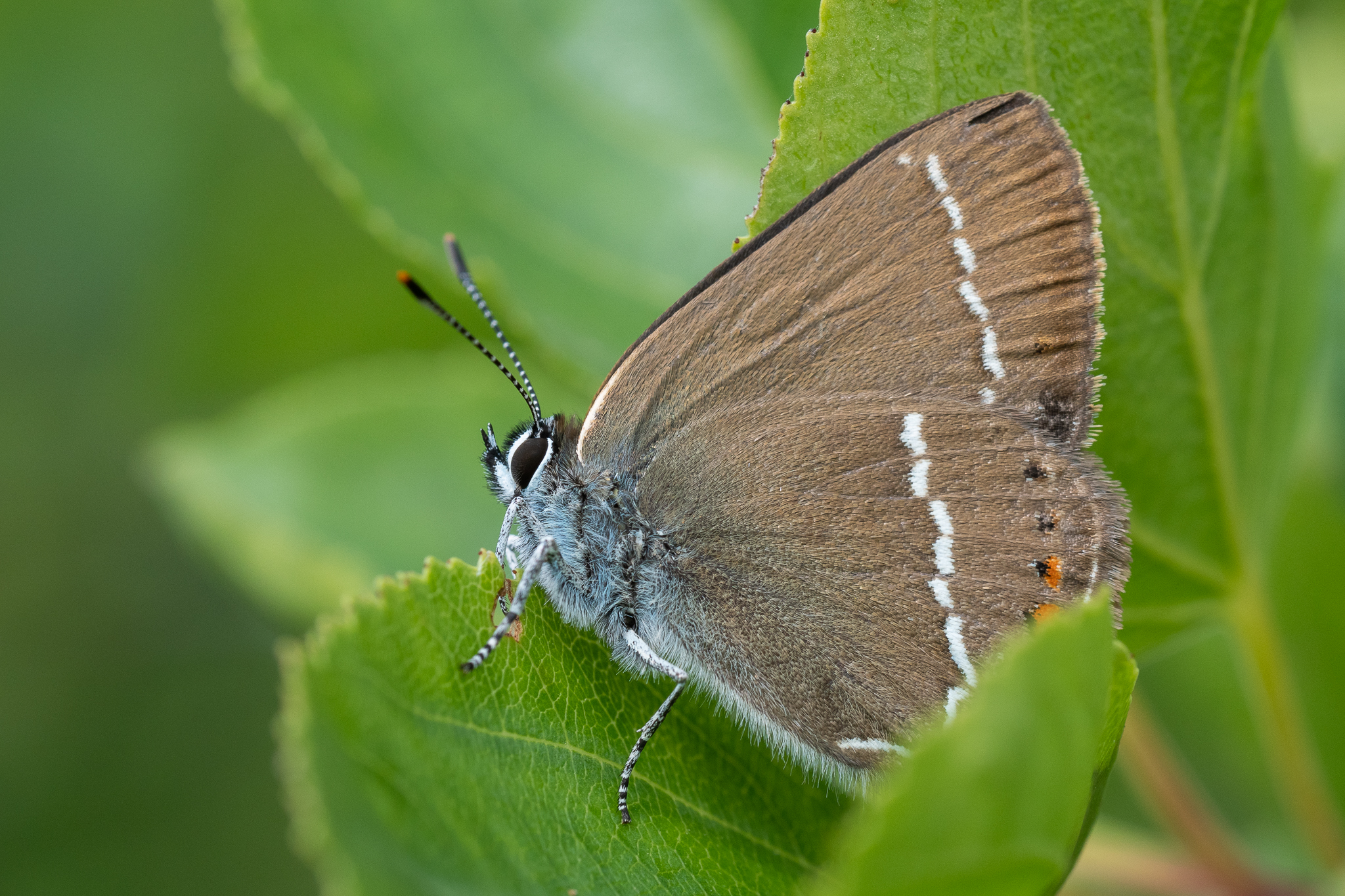
Der Kreuzdorn-Zipfelfalter ist ein Tagfalter aus der Familie der Bläulinge (Lycaenidae). Der große silberne Fleck ist sein markantes Erkennungsmerkmal, welches ihn deutlich von den anderen Zipfelfaltern unterscheidet. Der Falter bewohnt sehr trockene Standorte mit offenem Gelände. Die Futterpflanze der Raupen ist der Kreuzdorn (Rhamnus). Dort legt das Weibchen seine Eier in die Gabelung der Zweige. Das Ei überwintert und die Raupe schlüpft im Frühjahr. Die Verpuppung erfolgt an der Futterpflanze. Der Kreuzdorn-Zipfelfalter fliegt in einer Generation in den beiden Monaten Juni und Juli. Diese Art gilt als stark gefährdet.
The blue spot hairstreak is a butterfly from the family of Lycaenidae. The large silver spot is its distinctive feature, which clearly distinguishes it from other butterflies. The butterfly lives in very dry locations with open terrain. The caterpillars' food plant is the buckthorn (Rhamnus). There the female lays her eggs in the fork of the branches. The egg hibernates and the caterpillar hatches in spring. The pupation takes place at the food plant. The blue spot hairstreak flies in one generation in the months of June and July. This species is considered to be highly endangered.
▲ Click on the image for full resolution ▲
Gleich mehrere Exemplare konnte ich auf meiner Tour auf den Kallmuth nahe dem Ort Homburg beobachten. Dort oben flogen sie wild umher, um sich fast immer wieder an der gleichen windgeschützten Stelle auszuruhen.
On my tour to the Kallmuth near the village of Homburg I was able to observe several specimens. Up there they flew wildly around, almost always resting at the same sheltered spot.
▲ Click on the image for full resolution ▲
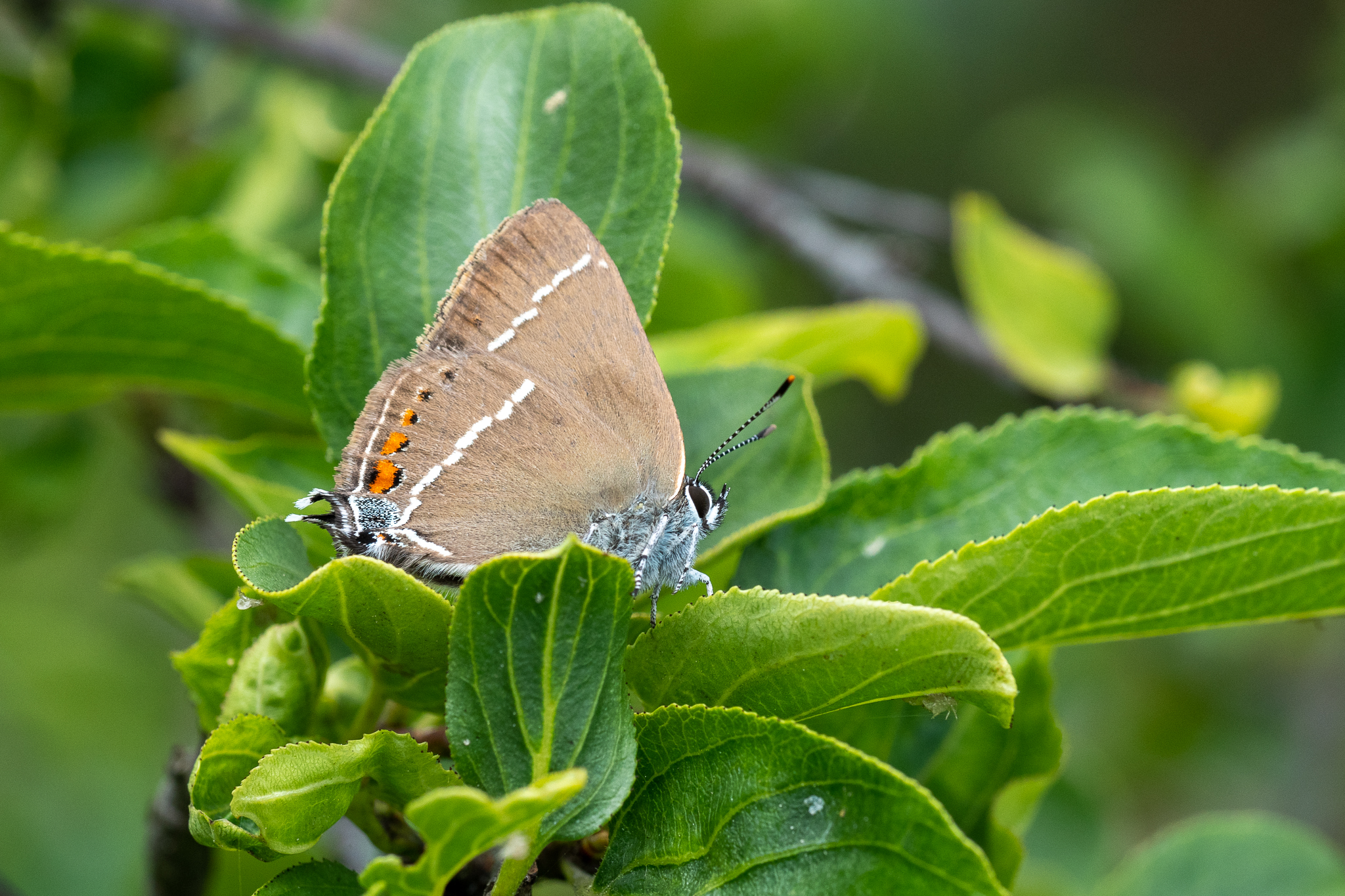
Etwas Geduld war auch bei diesen Aufnahmen notwendig. Aber die kleinen, quirligen Falter hatten sich schnell an mich gewöhnt und langsam kam ich immer näher an sie heran. An eine Arbeit mit meinem Stativ war nicht zu denken, denn die Falter saßen meistens 2-3 Meter hoch in den Sträuchern. Meine Kamera mit schwenkbarem Display war hier auf jeden Fall ein Vorteil.
Some patience was also necessary for these pictures. But the small lively butterflies had quickly got used to me and slowly I came closer and closer to them. It was impossible to think of working with my tripod, because they usually sat 2-3 meters high in the bushes. My camera with a swiveling display was a definite advantage here.
▲ Click on the image for full resolution ▲
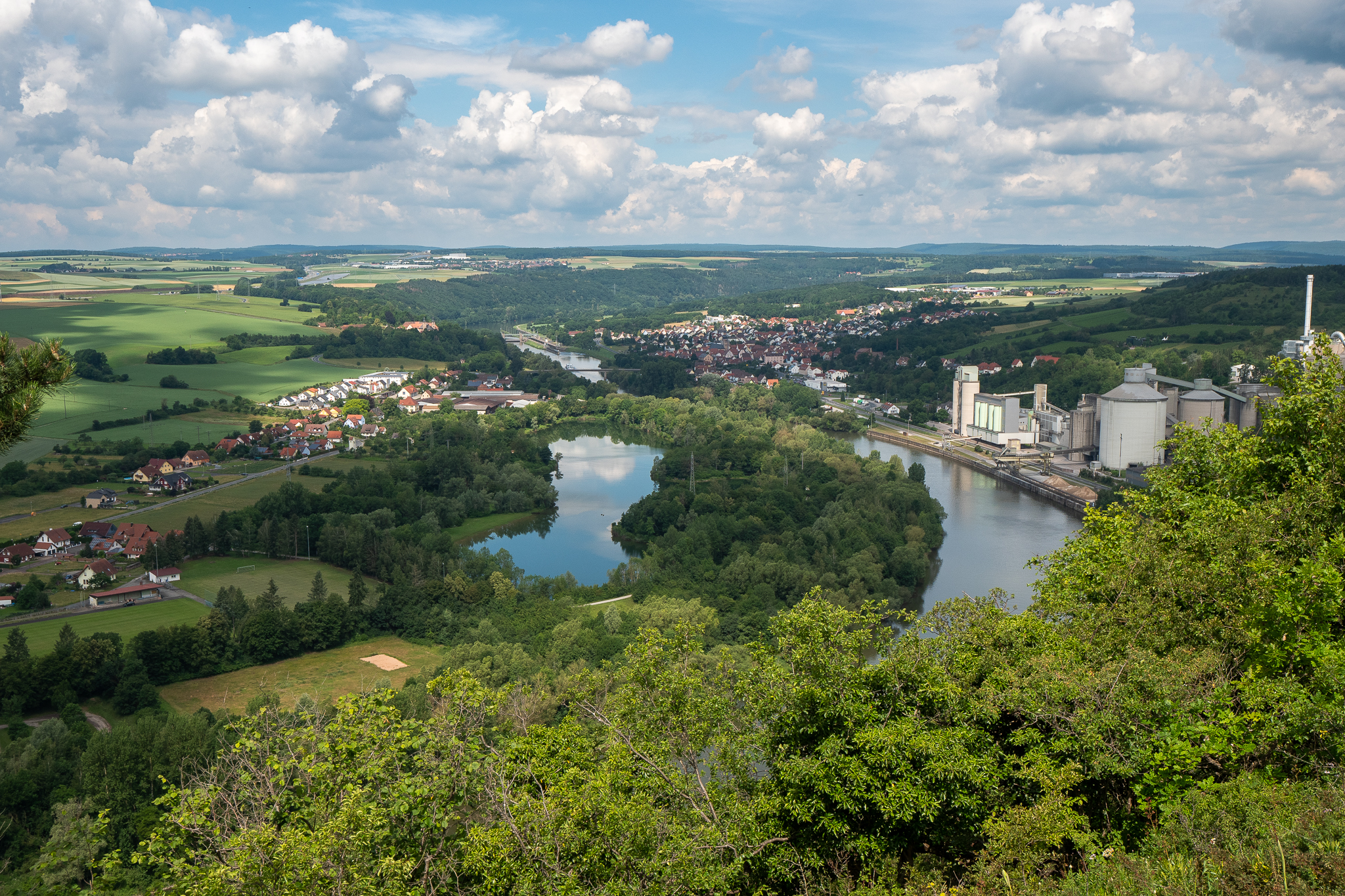
Vom Kallmuth aus, hat man einen herrlichen Blick ins Maintal. Ohne eine Landschaftsaufnahme komme ich von dort oben so gut wie nie zurück. Mehrere Sitzgelegenheiten laden zum Verweilen ein. Im Sommer ist der Kallmuth ein gut besuchtes Ausflugsziel für zahlreiche Wanderer und Naturliebhaber.
From Kallmuth, you have a magnificent view of the Main valley. Without a landscape shot I hardly ever come back from up there. Several seats invite to stay. In summer, the Kallmuth is a well visited destination for numerous hikers and nature lovers.
▲ Click on the image for full resolution ▲
Mein schönstes Bild, welches mir von diesem Schmetterling gelungen ist, findet ihr hier:
@faltermann/zauber-der-natur-the-magic-of-nature
My most beautiful picture, which I managed to get of this butterfly, you can find here:
@faltermann/zauber-der-natur-the-magic-of-nature
〰️
| Category: | Macro + Landscape |
| Camera: | Panasonic Lumix DC-G9 |
| Lens: | Olympus M.Zuiko Digital ED 60mm 1: 2.8 Macro + Panasonic Leica DG 8-18mm f2.8-4 Asph |
| Location: | Germany, Bavaria, Lower Franconia, Nature reserve Kallmuth |
〰️
Wenn dir mein Beitrag gefällt, freue ich mich über deine Nachricht.
Herzlichen Dank und viele Grüße vom 
If you like my contribution, I am looking forward to your message.
Many thanks and greetings from Germany 🦋
🔴 PeakD (Best user interface for the decentralized Hive Blockchain)🔴