
Totenkopfschwärmer ■ Deathhead Hawk-moth
Acherontia atropos (Linnaeus, 1758)
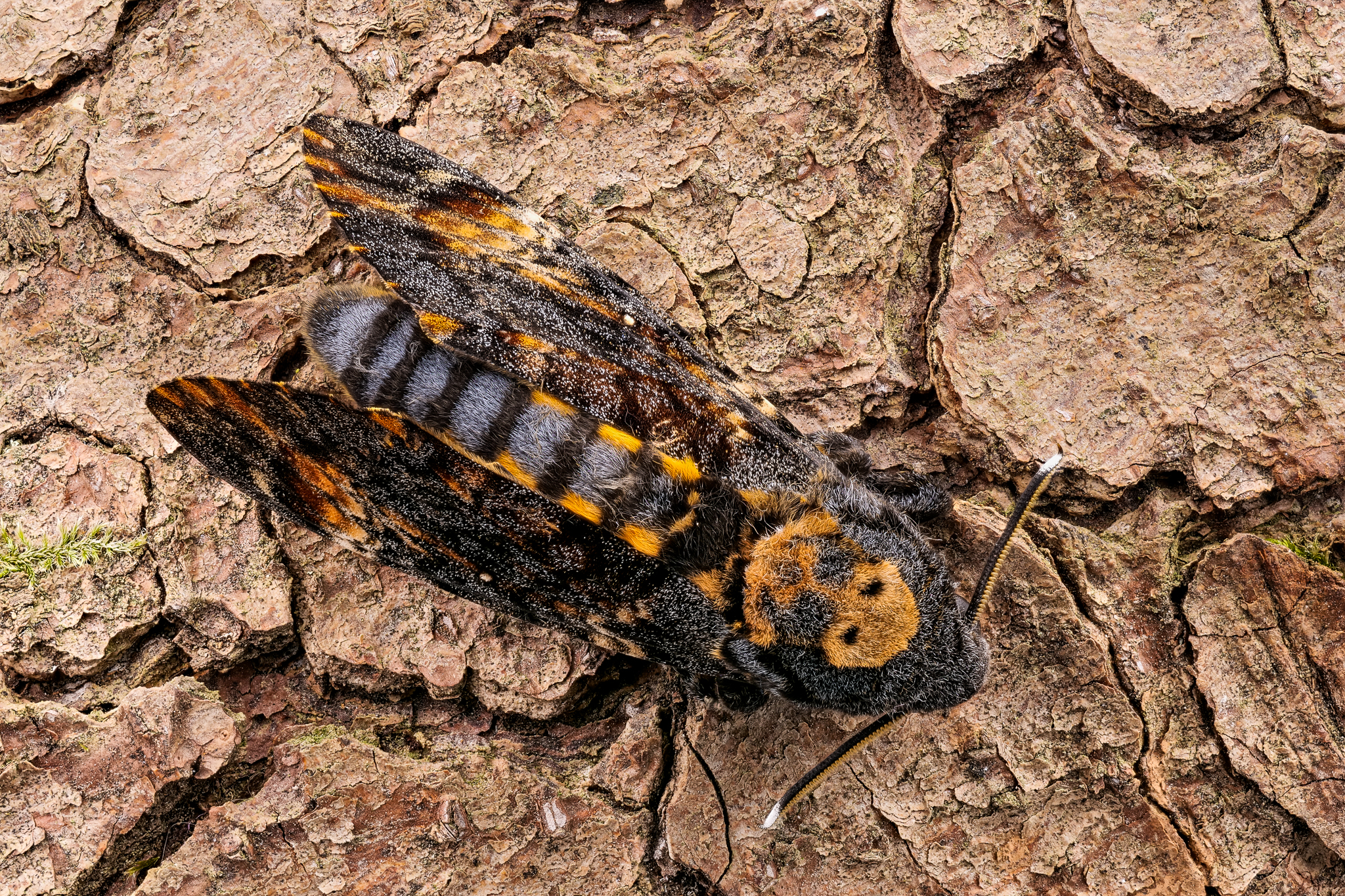
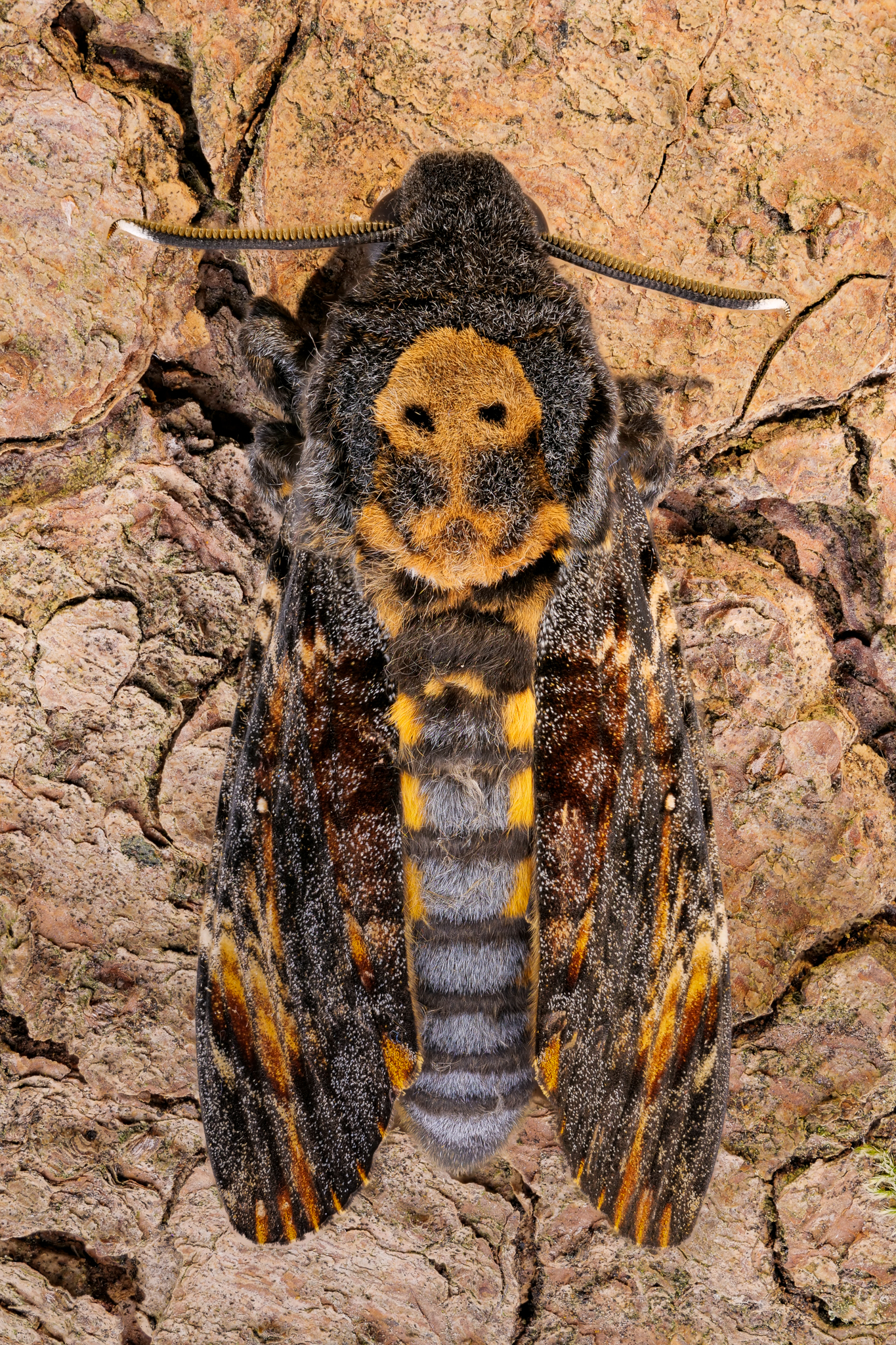
Der Totenkopfschwärmer ist ein Nachtfalter aus der Familie der Schwärmer (Sphingidae). Mit einer Flügelspannweite von bis zu 130 mm. gehört er zu den größten Nachtfaltern in Mitteleuropa. Als Wanderfalter fliegt er vom Süden Afrikas bis in den Norden von Europa. Der massive Körperbau und die auffällige Zeichnung machen den Falter unverwechselbar. Zahlreiche Mythen und Legenden werden mit diesem imposanten Falter in Verbindung gebracht. Sein wissenschaftlicher Name kommt aus der Unterwelt (Acherontia) so wie der Schicksalsgöttin (atropos). Der Totenkopfschwärmer galt als Unheilsbringer und die Schicksalsgöttin (atropos) durchtrennt den Faden des Lebens und entscheidet darüber, auf welche Weise ein Mensch stirbt. Einfach mystisch und faszinierend zugleich.
The moth is a moth from the Sphingidae family. With a wingspan of up to 130 mm. it is one of the largest moths in Central Europe. As a migrant moth it flies from the south of Africa to the north of Europe. The massive body structure and the striking pattern make this moth unmistakable. Numerous myths and legends are associated with this impressive moth. Its scientific name comes from the underworld (Acherontia) as well as the goddess of fate (atropos). The death's-head moth was considered to be a bringer of disaster and the goddess of fate (atropos) cuts the thread of life and decides how a person dies. Simply mystical and fascinating at the same time.
♂
▲ Click on the image for full resolution ▲
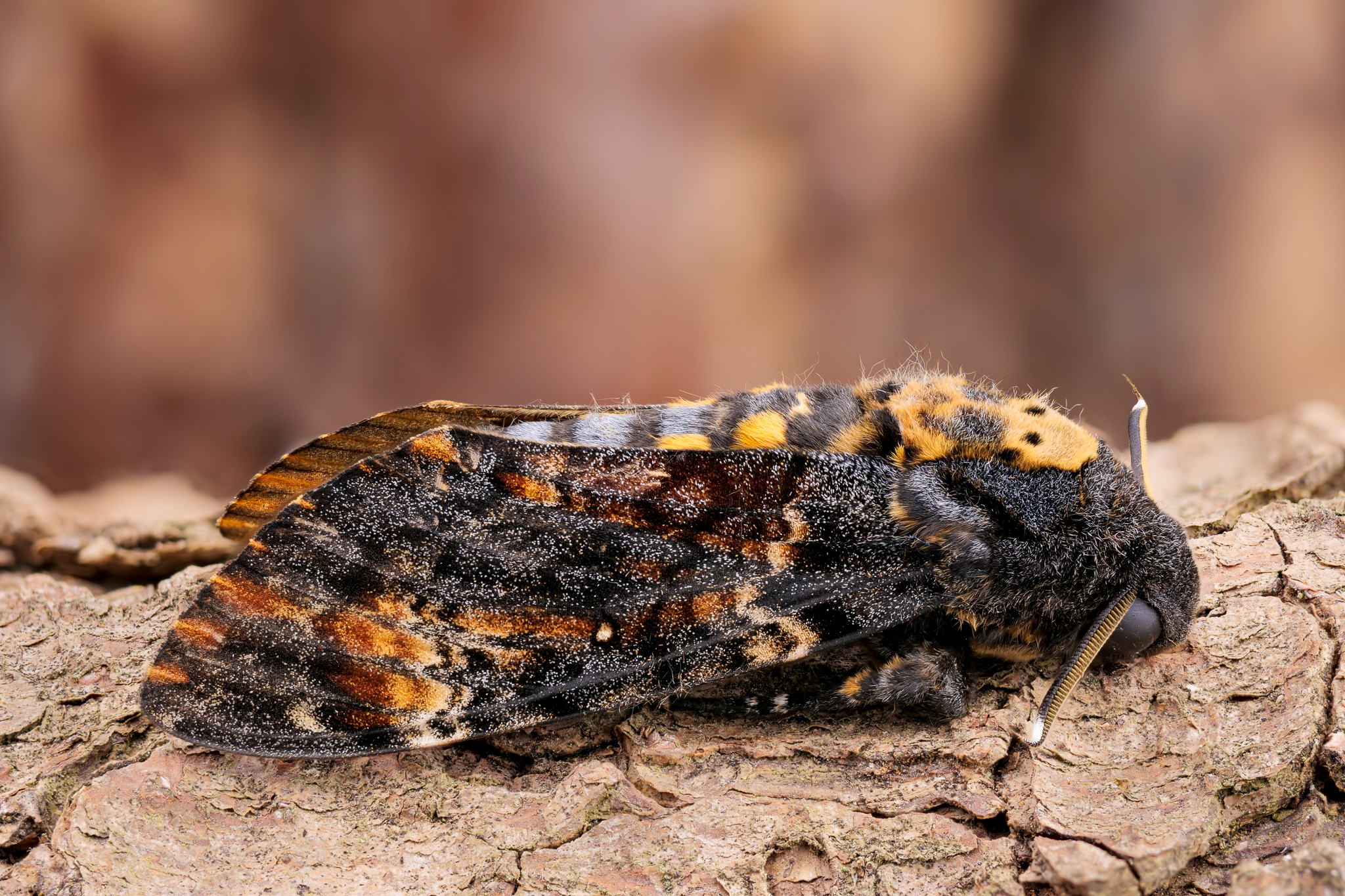
Leider war dieses Exemplar schon tot. Ein Bekannter hatte den Falter auf seinem Balkon entdeckt und mir überlassen. Ein so frisches Exemplar in makellosem Zustand gibt einige Rätzel auf. Aus meiner Sicht muss der Falter frisch geschlüpft sein. Wahrscheinlich wurde er beim Besuch im Bienenstock von Bienen gestochen und hat diese Attacke nicht überstanden. Mit letzter Kraft hat er es aus dem Bienenstock geschafft, konnte aber aufgrund der zahlreichen Stiche nicht mehr fliegen und ist letztendlich gestorben.
Unfortunately this specimen was already dead. An acquaintance had discovered the moth on his balcony and left it to me. Such a fresh specimen in perfect condition gives up some riddles. From my point of view the moth must have hatched fresh. Probably it was stung by bees during its visit in the hive and did not survive this attack. With his last strength he made it out of the hive, but due to the numerous stings he could not fly anymore and finally died.
▲ Click on the image for full resolution ▲
Totenkopfschwärmer ernähren sich von Bienenhonig. Sie dringen dabei in einen Bienenstock ein, um dort an den Vorräten von Honigbienen zu saugen. Beim Eindringen in den Bienenstock geben sie ein Sekret ab, welches dem Duft der Honigbienen gleicht. So werden Sie von den Bienen meistens akzeptiert. Manchmal gelingt diese Tarnung nicht und der Falter wird von Bienen attackiert. So verwundert es nicht, dass Imker in ihrem Bienenstock manchmal verstorbene Totenkopfschwärmer finden, die das Gift der Bienen nicht überlebt haben.
The Deathhead Hawk-moth feed on bee honey. They penetrate into a beehive to suck on the honeybees' honey reserves. As they enter the hive, they release a secretion that resembles the scent of honey bees. In this way they are usually accepted by the bees. Sometimes this camouflage is not successful and the moth is attacked by bees. So it is not surprising that beekeepers sometimes find deceased Deathhead Hawk-moth in their hive that have not survived the bees' venom.
▲ Click on the image for full resolution ▲
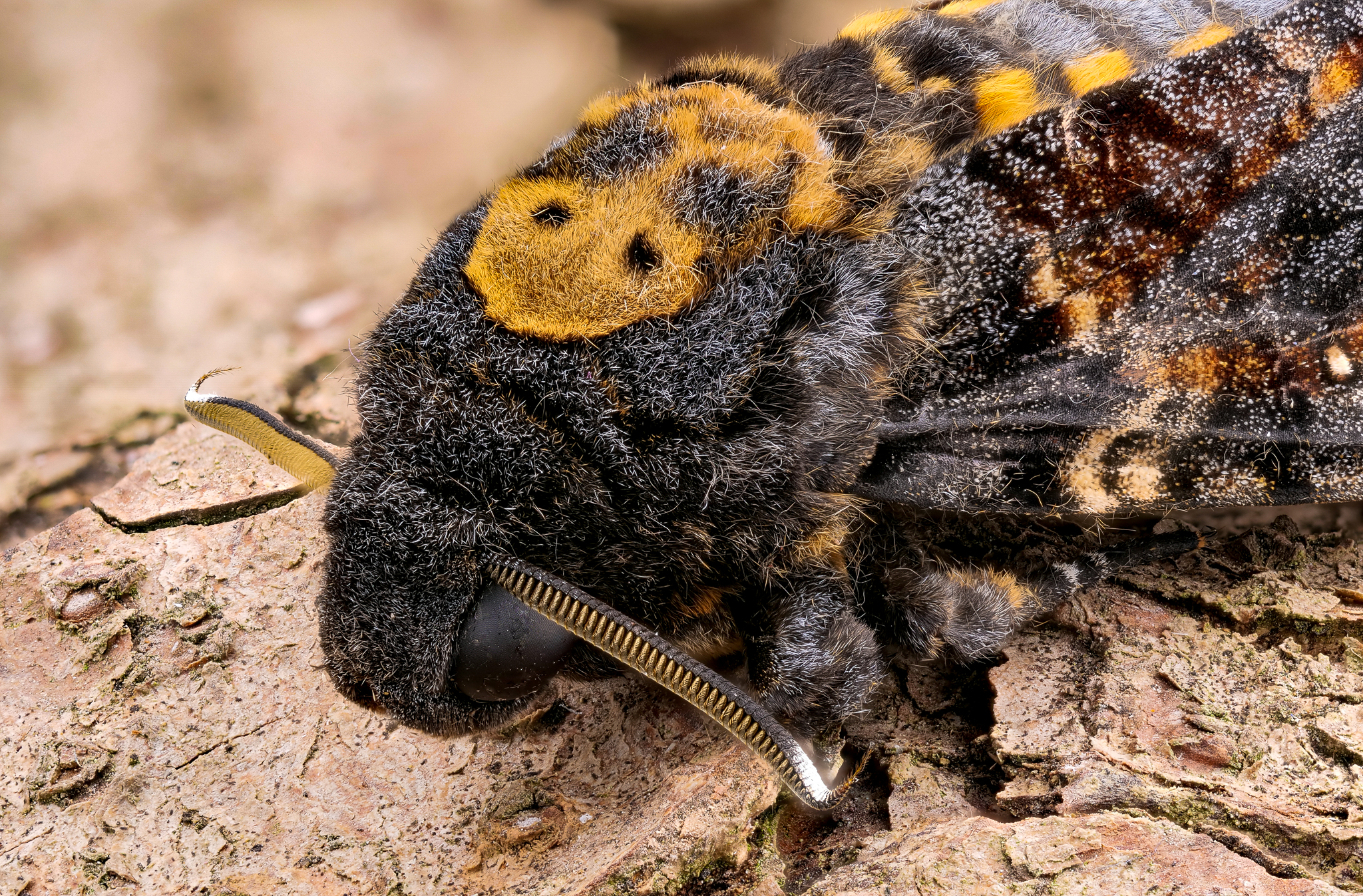
Der von mir gezeigte Falter wurde mit hoher Wahrscheinlichkeit von Bienen gestochen. Er hat es noch aus dem Bienenstock geschafft, konnte wahrscheinlich nicht mehr weit fliegen. Gelandet ist er auf dem Balkon meines Bekannten. Er hatte mir den Falter mitgebracht. Meine Freude war groß, auch wenn mir ein lebender Falter lieber gewesen wäre. Normal fotografiere ich keine toten Tiere. In diesem Fall will ich allerdings eine Ausnahme machen.
The butterfly I show was most probably stung by bees. He still made it out of the beehive, probably couldn't fly far. It landed on the balcony of my colleague. He had brought me the moth. My joy was great, even if I would have preferred a living moth. Normally I do not photograph dead animals. But in this case I want to make an exception.
▲ Click on the image for full resolution ▲
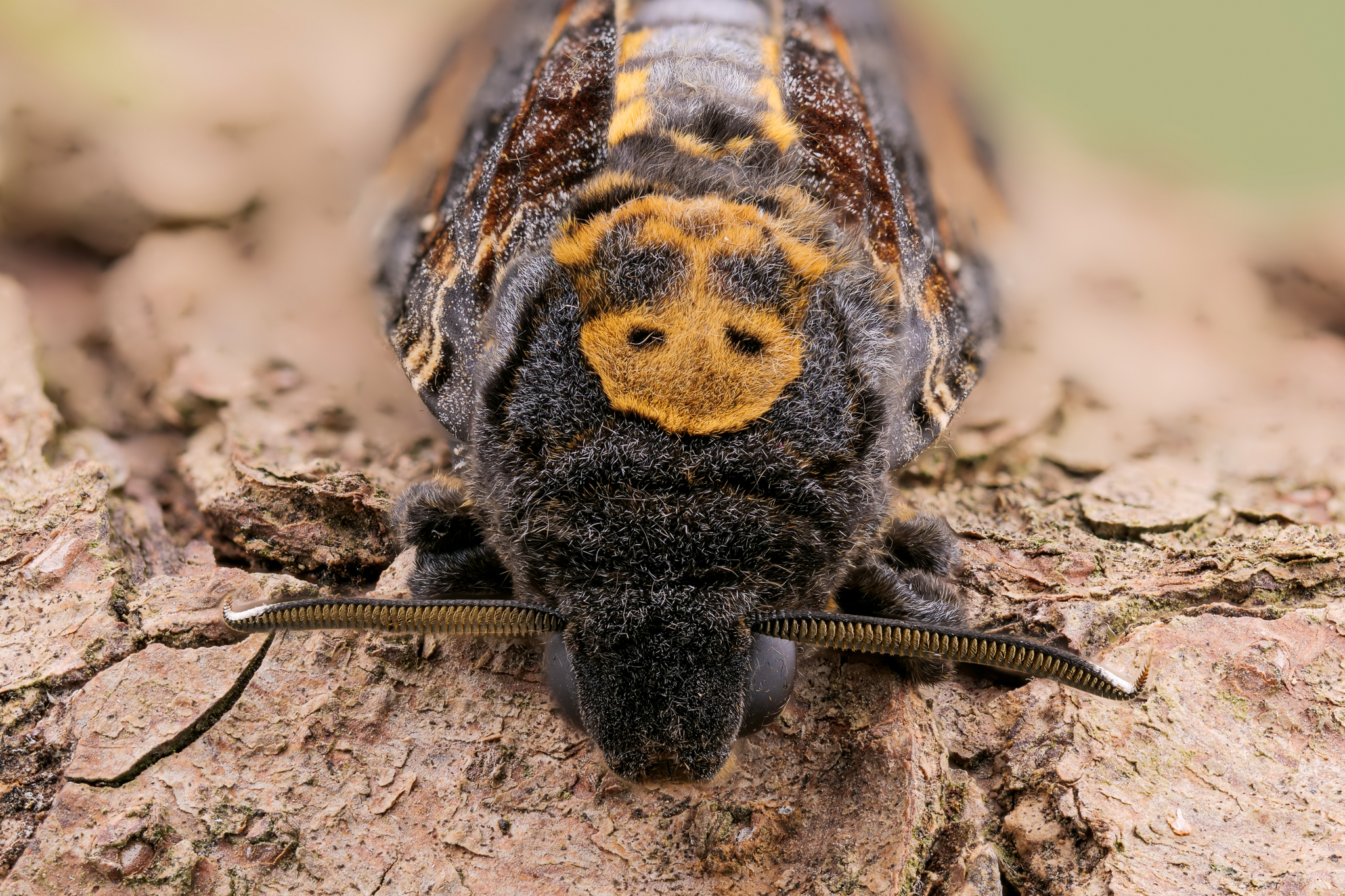
Ein Wanderfalter mit Totenkopf auf dem Rücken, der sich in Bienenkästen von Honig ernährt. Damit noch nicht genug. Der Totenkopfschwärmer kann auch noch pfeifende Laute von sich geben und Duftstoffe abgeben. Er pflanzt sich fort, in dem das Weibchen seine Eier an Kartoffelpflanzen ablegt. Die Raupe ernährt sich von den Blättern und verpuppt sich im Erdreich. Die bis zu 65 mm lange Puppe verträgt jedoch keinen Frost. So kann sich der Falter in Mitteleuropa und im Norden nicht fortpflanzen. Als erstklassiger Langstreckenflieger bleibt im nur der Flug nach Afrika. Die Hoffnung bleibt, dass ich irgendwann einen lebenden Totenkopfschwärmer finden kann.
A migratory moth with a skull on its back, which feeds on honey in bee hives. But that is not all. The skull moth can also make whistling sounds and emit scents. It reproduces by the female laying its eggs on potato plants. The caterpillar feeds on the leaves and pupates in the soil. However, the pupa, which can be up to 65 mm long, cannot tolerate frost. As a result, the moth cannot reproduce in Central Europe and in the north. As a first-class long-distance flyer, the only thing that remains is the flight to Africa. The hope remains that one day I can find a living moth.
▲ Click on the image for full resolution ▲
〰️
| Category: | Macro |
| Camera: | Panasonic Lumix DC-G9 |
| Lens: | Olympus M.Zuiko Digital ED 60mm 1: 2.8 Macro |
| Location: | Germany, Bavaria, Lower Franconia, Esselbach |
Wenn dir mein Beitrag gefällt, freue ich mich über deine Nachricht.
Herzlichen Dank und viele Grüße vom 
If you like my contribution, I am looking forward to your message.
Many thanks and greetings from Germany 🦋
🔴 PeakD (Best user interface for the decentralized Hive Blockchain)🔴