
I encountered plenty of insects and collected quite a few memories while walking across the stony area around an abandoned stone quarry about five-six kilometers from my hometown.
In this opening photograph, you can see the Marbled white butterfly (Melanargia galathea) resting on the Dipsacus fullonum plant.
In this wide shot, you can take a look at the quarry in the late afternoon.
These bees ...

... were photographed half an hour earlier, on the sunny terrain just outside the quarry.
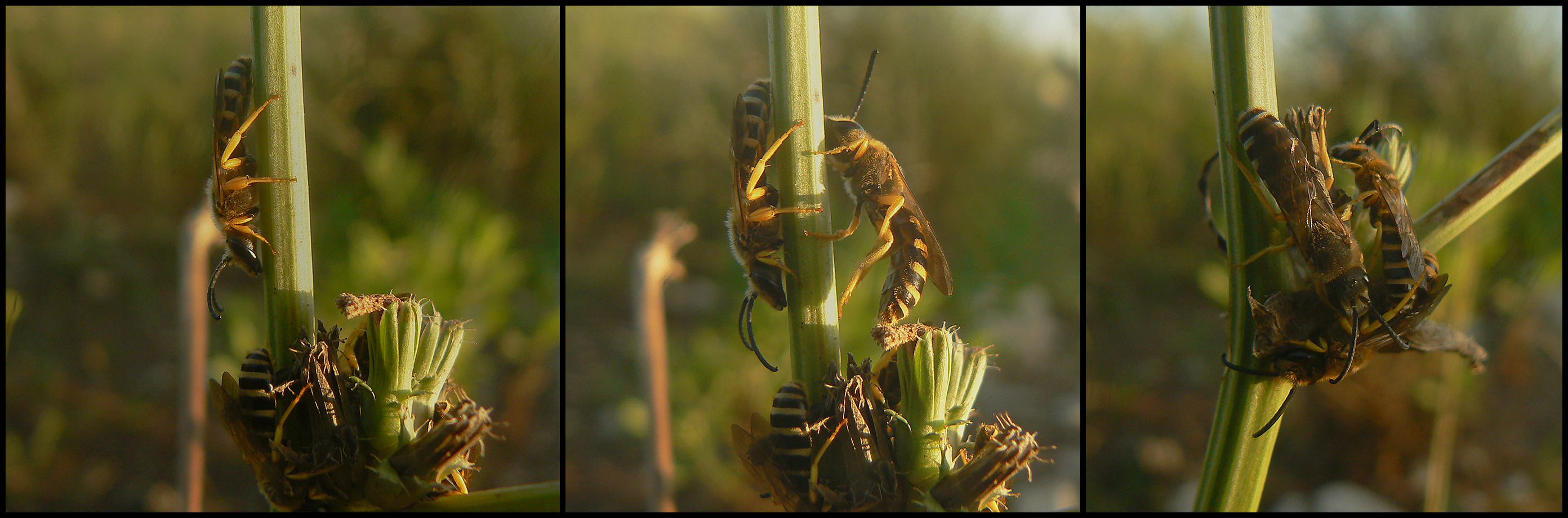
Males of this species, the Halictus scabiosae, often form small groups in the evening.

In these photographs, you can see them preparing for the night.
As the sun is going down, ready to disappear behind the horizon ...
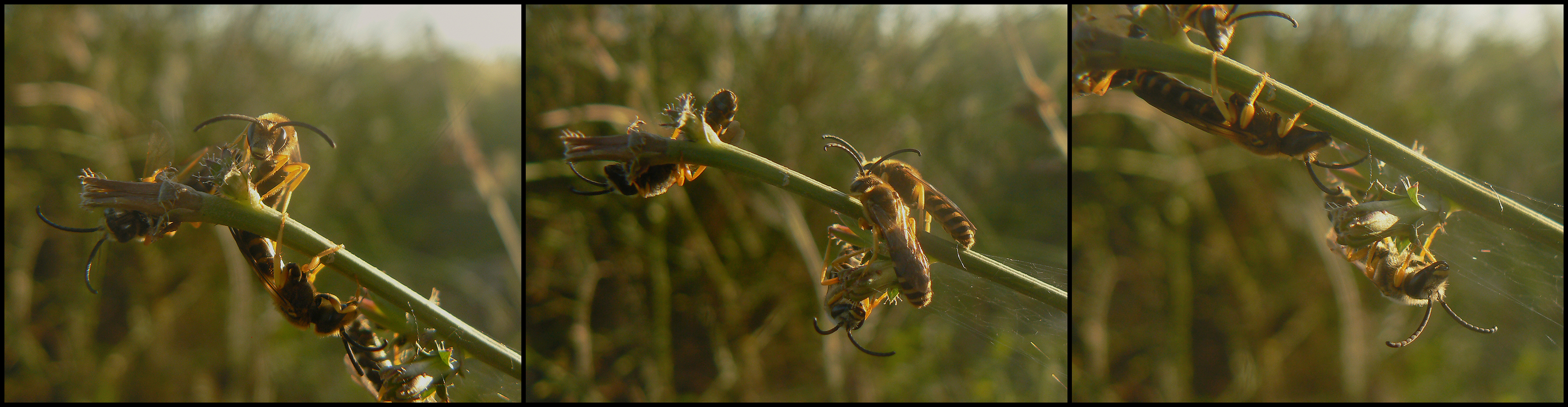
... the bees are congregating on the Cichorium intybus plant.
These umbels of wild carrot flowers (Daucus carota) ...
... were photographed on the same occasion, a couple of meters further.
This Melitaea phoebe butterfly was flying around and sucking the nectar of those flowers.
The Pyrgus alveus butterfly was resting on some dried-out plant not far from there.

In this series of eight shots, you can see a small Phaneroptera nana nymph eating the pollen inside the trumpet-like Convolvulus silvaticus flower. Phaneroptera nana is a bushcricket from the Tettigoniidae family.

When the nymphs grow a bit, they feed on leaves and petals. These could be the signs of their voracious presence. But I'm not sure. These flowers could have been partially eaten by some other creatures. Caterpillars, ad example.

If you enlarge this photograph, you may notice a wasp in the lower-left corner of the picture. I noticed it only today while preparing the post. Back then, in 2019, I had no idea that the flying insect is there.
Here you can see the young shoot of the Artemisia absinthium plant that grew on the soil inside one of the small holes in the boulder by the unpaved road that leads to the stone quarry.

These plants, which I wasn't able to identify, were photographed in the meadows about hundred meters from the quarry.
Down on the ground, on the dusty road, I noticed a black beetle that was running in circles.
A bit further, in the shade of the vegetation, the ants were transporting the seeds of various grasses that grow there.
When it comes to the running beetle, I can't tell you the exact species. But this is definitively a ground beetle. Carabidae family.
Not far from there, on the blackberry shrubs that grow by the road ...
... I photographed the Anacridium aegyptium grasshopper.
Meanwhile, the beetle was still running around. After some more searching through the Internet, I think that this is probably a ground beetle from the genus Pterostichus of the Carabidae family. I still can't tell you the exact species, because that genus is present with quite a few similar ones in this area, but I kinda came closer to the truth with this second search.
A couple of meters further, the Locusta migratoria grasshoppers were mating.

Here you can see a minuscule wasp with strange, thick hind legs that I encountered for the first time on that occasion.
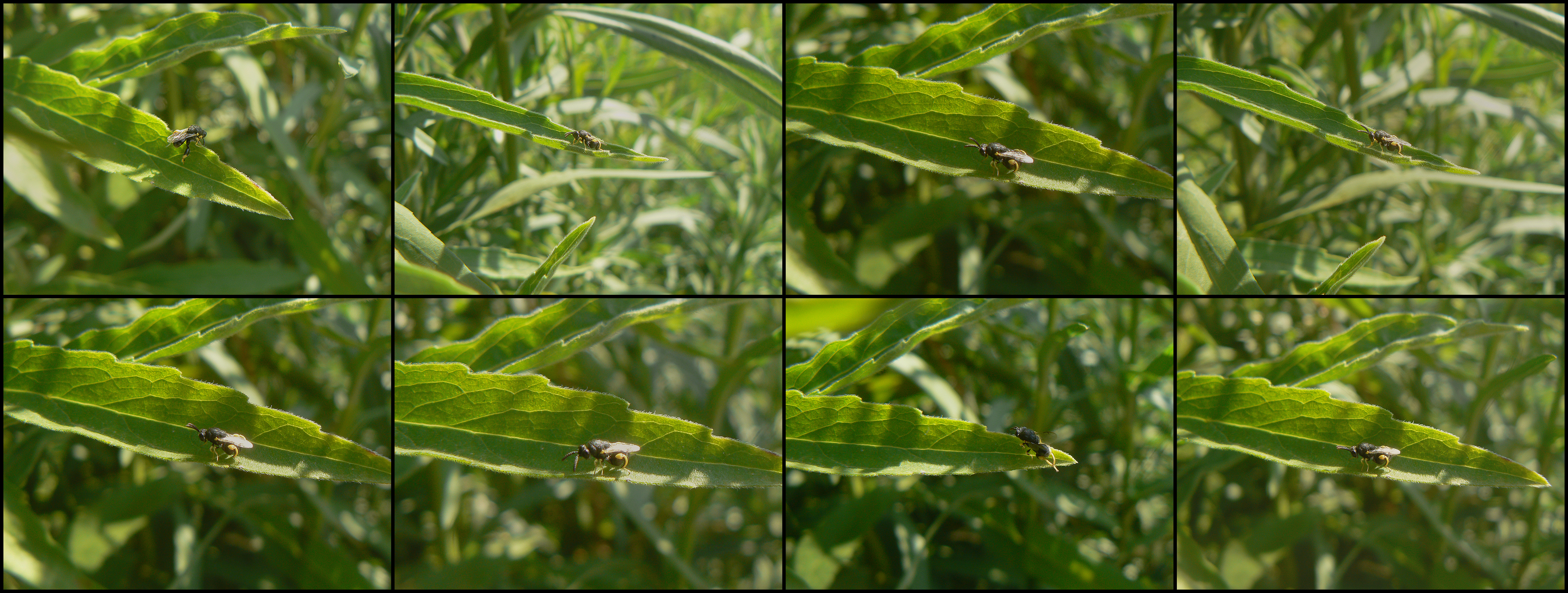
Brachymeria femorata is the name of the species. The family is Chalcididae.

When it comes to their reproduction, these wasps parasitize on pupae of moths and butterflies.
Not far from there, the juvenile Neoscona adianta spider was feeding on a fly that ended up caught in the web.
After leaving the meadows behind ...
... I reached the place covered with fern.
Here you see the wingless nymph of the Agalmatium bilobum planthopper, and in the following triptych ...
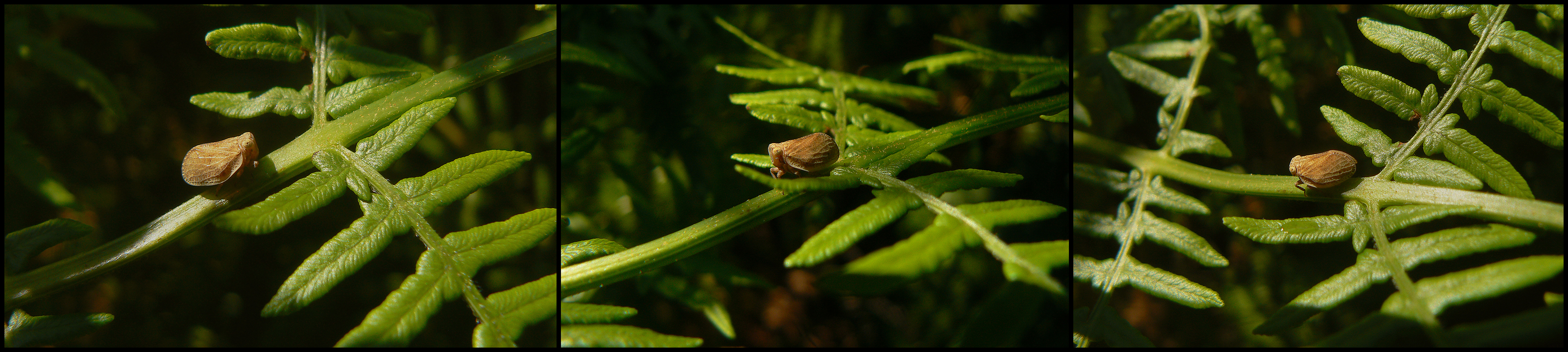
... you can take a look at the adult insect of that species.

This is a young, wingless nymph of a grasshopper ...

... the Common Straw Grasshopper (Euchorthippus declivus).
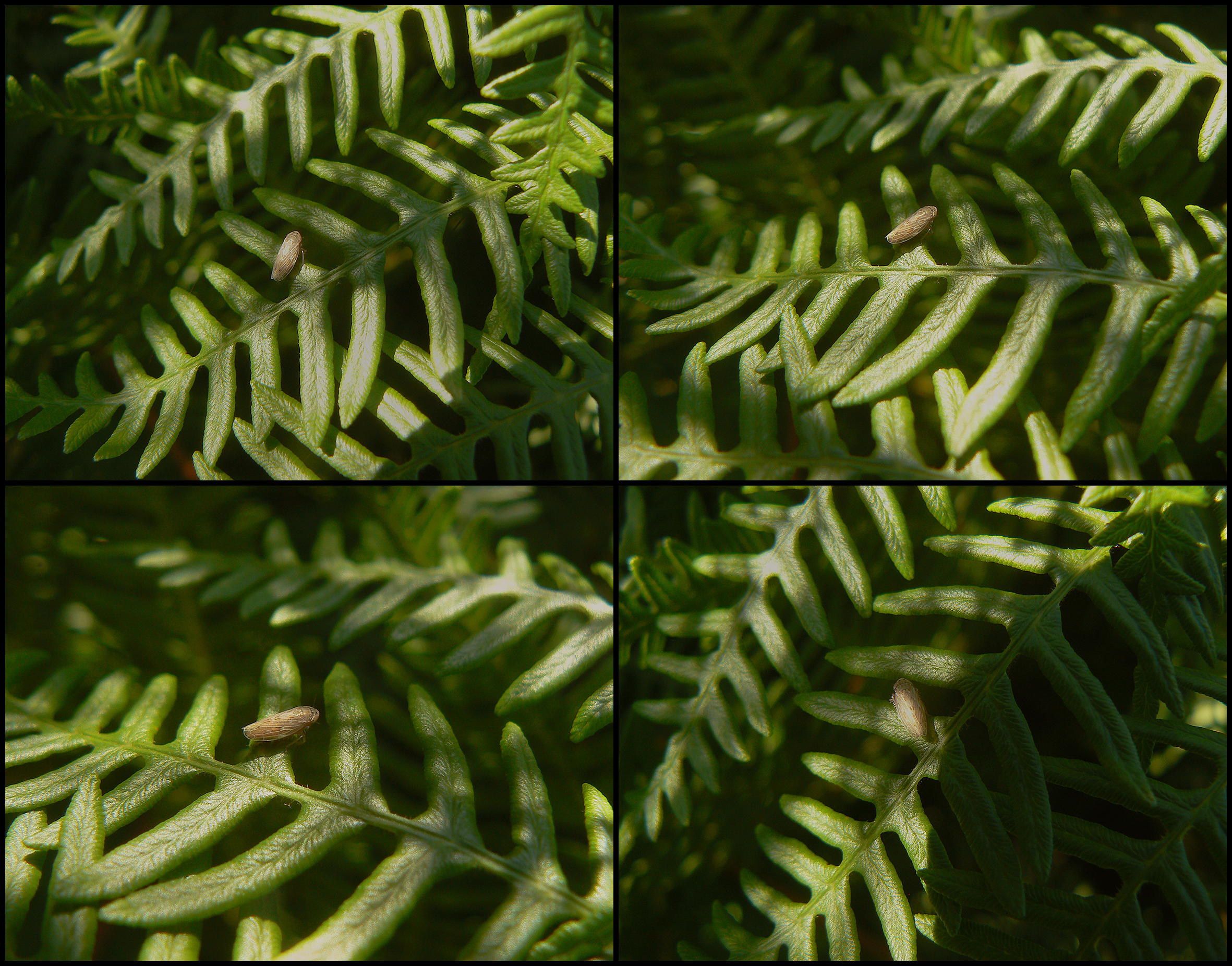
Here you can see the Paramesus obtusifrons leafhopper on the fern.
A bit further in the dense vegetation, I noticed a robber fly. Asilidae family.
This predatory fly has just caught another, much smaller fly. Don't know the name of the species.
On some shrubs not far from there, I photographed the Coreus marginatus bug.

In these four shots, you can see the developing acorns of the small Quercus robur oak.
This is the Cirsium vulgare thistle.
Here you can see the seeds of that plant.
Right now, the end of this post is near. With each consecutive photograph, the night will be closer.
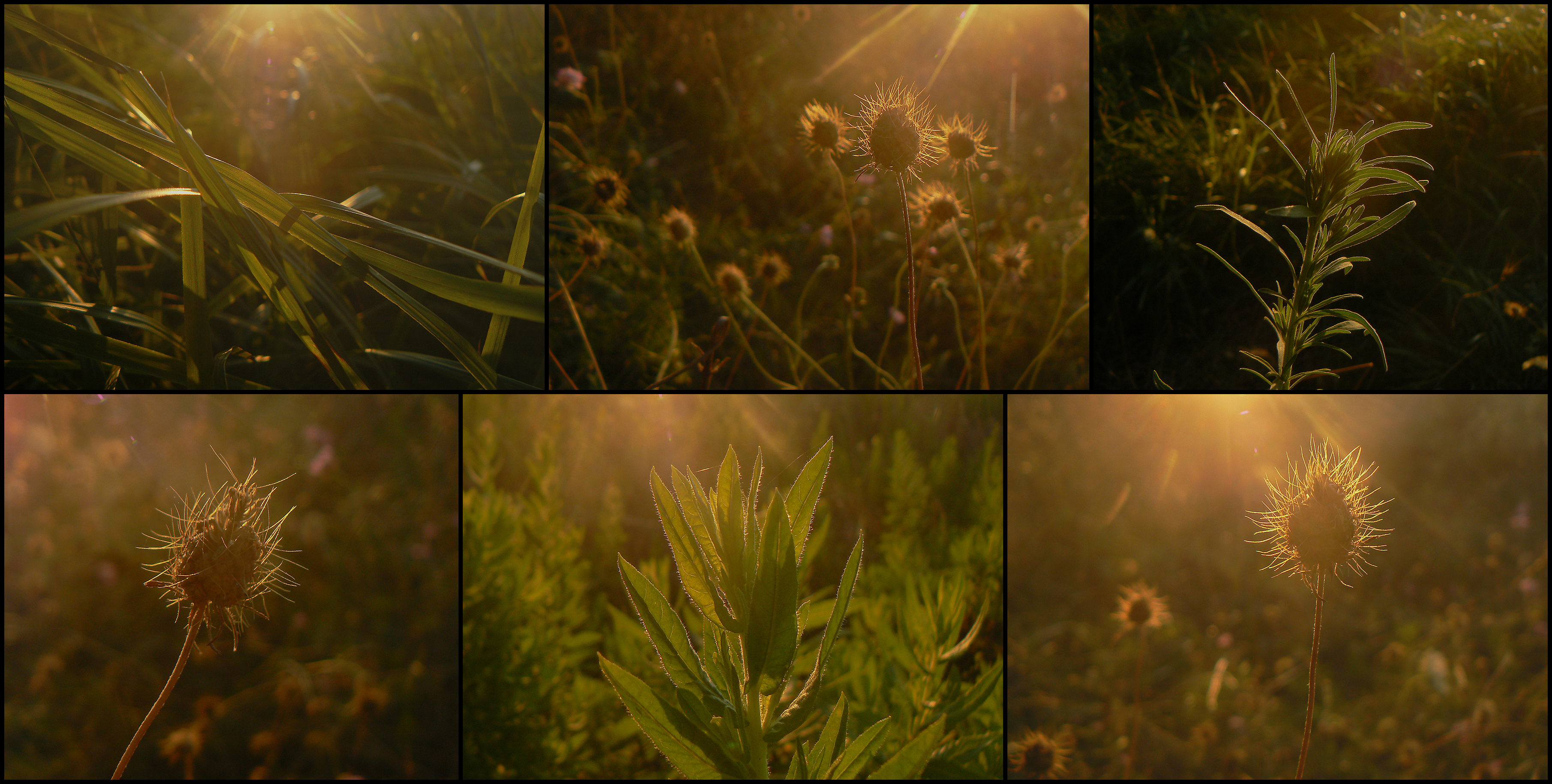
Here you can see various plants in the evening light.
Here you can take a look at one of the many cobwebs stretched between the plants in the meadow.
In this animated GIF, you can see the Eupholidoptera schmidti bushcricket feeding on some seeds. When the photographs from which the GIF was made were taken, the sun was somewhere behind the horizon and the light was very low.
AND THAT'S IT. AS ALWAYS IN THESE POSTS ON HIVE, THE PHOTOGRAPHS ARE MY WORK - THE END.