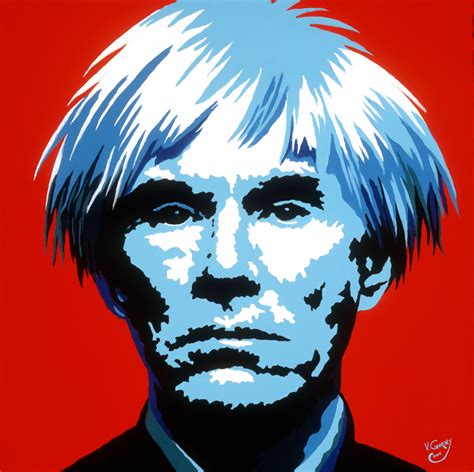
ART IS WHAT YOU CAN GET AWAY WITH

sift666(65)
Published in
#art
Words
1811
Reading
9 min
Listen
Play
6y

Was Andy Warhol just a fucking asshole and part of the illuminati game?

My friend @in2itiveart thinks he is, but I suspect that he's one of my artistic inspirations, so I'm not entirely in agreement.
She is no holds bared scathing about him:

"He was such a super asshole. It’s all about attitude - I guess if you just look at the art and don't know anything about him then the art, in and of itself, could be considered beautiful - but then you find out about him, and it's hard to still like his art - because then I can see the taunting fuck you message he is sending off - if he had had an attitude of care about the images instead of being a total vampire - he basically sucked the life out of things and then spat them back out as a poloroid.

He funded a lot of very sick people getting hooked on dope for 15 min of fame in the factory - he fed on weak people’s weaknesses - he did not uplift them - but instead he added more sickness to sickness - and surely he didn't know any better - but Andy Warhol is like the iconic human version of what Facebook is now - YUCK. He had no aspirations to uplift or grow or be better, instead he reveled in sickness and made more of it...

Yes, the art has a certain beauty but the multiple nature of it is what makes me cringe... I was taught in art school to see beauty in everything including common artifacts of society- like a toaster or a watering can or a fork knife spoon - even a Campbells soup can - but he took it that one step further and debaced the image- and the did the same with humans-

What did he contribute to society? It’s like Madonna-who took the last vestiges of goodness and sexed it up- laying the groundwork for all that we have now... they both took the dregs and made them into fake diamonds...I just detest Andy Warhol so much that it’s impossible for me to really enjoy his work..."

I disagree and agree at the same time which is optimal

Basically I think most popular culture is manipulated to some extent by the Tavistock institute or programs like MK Ultra.

But having said that, most of my favourite music, movies, and art, are part of that social programming. So I can't dismiss it all even if the intentions behind it may have been bad, because it's my inspiration. I think the internet was set up by the CIA for evil intent but I still use it every day..

Andy Warhol seems to me to have been a very original thinker with some fairly severe personality disorders.

I think he was an "Asset" (a creator manipulated and used by agencies) rather than another talentless puppet put in place by the agencies and lifted to popularity (like all modern pop stars) or a shill (like Alex Jones)

So I see his art as being original and it resonates with me - sometimes I do a picture and only afterwards realise his influence - like this one:

image.png


"ART IS WHAT YOU CAN GET AWAY WITH"


Andy Warhol (Aug 6, 1928 – Feb 22, 1987)


Campbell’s Soup Cans (32 Canvases)
Andy Warhol / 1962 / Synthetic polymer paint on canvas/
/ 20″ x 16″
Museum of Modern Art

“Why do people think artists are special? It’s just another job.”
Philosophy of Andy Warhol, Andy Warhol, Harcourt Brace Jovanovich, New York, 1975

“Sometimes people let the same problem make them miserable for years when they could just say, So what. That’s one of my favorite things to say. So what.”

Image result for andy warhol images


“If you want to know about Andy Warhol, just look at the surface of my paintings and films and me, and there I am. There’s nothing behind it.”
–Andy Warhol

Andy, My true Story 3, Gretchen Berg, Los Angeles Free Press (17 March 1967)

Andy, John & Yoko <3:

Yoko, Andy, and John

“They always say time changes things, but you actually have to change them yourself.”
Image

“An artist is somebody who produces things that people don’t need to have.”

“Don’t think about making art, just get it done. Let everyone else decide if it’s good or bad, whether they love it or hate it. While they are deciding, make even more art.”


Nico and Andy Warhol as Batman and Robin for Esquire, 1967

“Sometimes the little times you don’t think are anything while they’re happening turn out to be what marks a whole period of your life.”


Warhol & Brillo Boxes At Stable Gallery

“I’ve never met a person I couldn’t call a beauty.”

Andy Warhol:

“I have Social Disease. I have to go out every night. If I stay home one night I start spreading rumours to my dogs.”

“I’m confused about who the news belongs to. I always have it in my head that if your name’s in the news, then the news should be paying you. Because it’s your news and they’re taking it and selling it as their product. But then they always say that they’re helping you, and that’s true too, but still, if people didn’t give the news their news, and if everybody kept their news to themselves, the news wouldn’t have any news. So I guess you should pay each other. But I haven’t figured it out fully yet.”
Quote from The Philosophy of Andy Warhol: (From A to B and Back Again), 1975

“I thought that young people had more problems than old people, and I hoped I could last until I was older so I wouldn’t have all those problems. Then I looked around and saw that everybody who looked young had young problems and that everybody who looked old had old problems. The “old” problems to me looked easier to take than the “young” problems. So I decided to go gray so nobody would know now old I was and I would look younger to them than how old they thought I was. I would gain a lot by going gray: (1) I would have old problems, which were easier to take than young problems, (2) everyone would be impressed by how young I looked, and (3) I would be relieved of the responsibility of acting young—I could occasionally lapse into eccentricity or senility and no one would think anything of it because of my gray hair. When you’ve got gray hair, every move you make seems “young” and “spry,” instead of just being normally active. It’s like you’re getting a new talent. So I dyed my hair gray when I was about twenty-three or twenty-four.”
Quote from The Philosophy of Andy Warhol: (From A to B and Back Again), 1975

“It does not matter how slowly you go so long as you do not stop.”

“I believe in low lights and trick mirrors.”

“You need to let the little things that would ordinarily bore you suddenly thrill you.”

“I’m not afraid to die; I just don’t want to be there when it happens.”

Related image

Andy Warhol and the Velvet Underground with Nico

Andy Warhol fotografa Muhammad Ali e sua figlia, 1977:

Andy Warhol photographing Muhammed Ali

Related image

Warhol and Basquiat


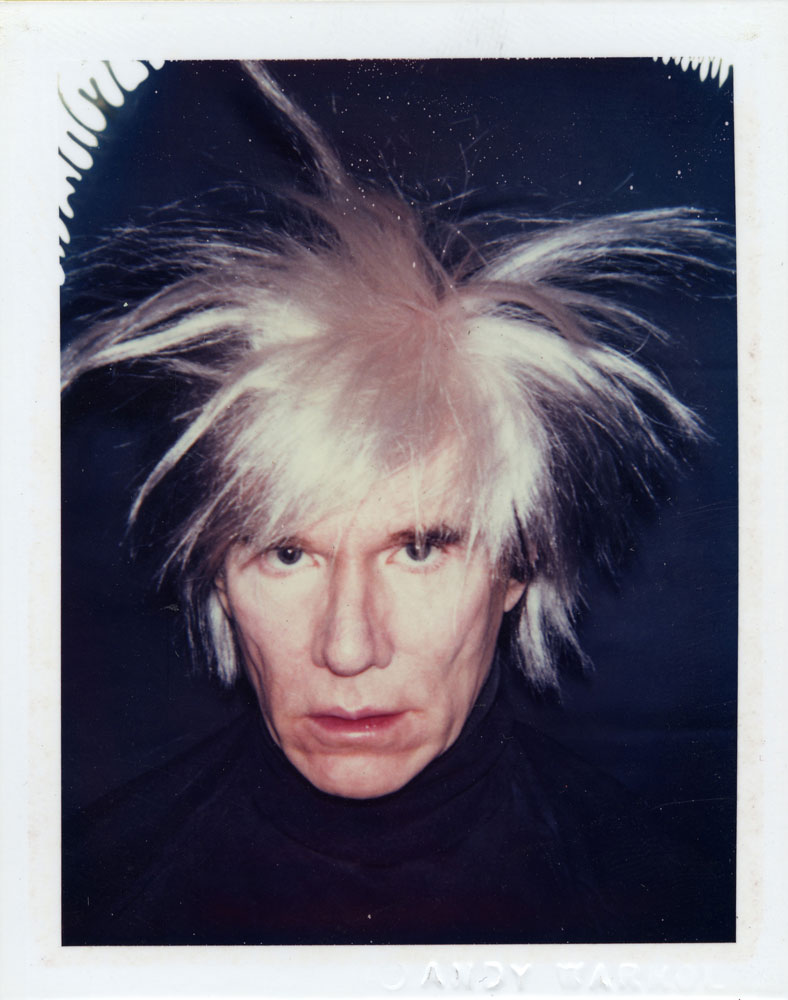
Hair or Art? How Andy Warhol used Wigs to Craft his Enigmatic Image


Mention the name Andy Warhol and most people would instantly think of his painting of a Campbell’s Tomato Soup can, his portrait of Marilyn Monroe, or his prediction that everyone would enjoy 15 minutes of fame.

Some might mention his unruly hair—without realizing it was a wig. And yet, the website hairisforpulling.blogspot.com suggests that the silver-grey wig made the renowned pop artist what he was. In effect, it gave him his brand.

Pop artist Andy Warhol eating cereal and looking at his mother Julia, prob. at her home. (Photo by Ken Heyman/Woodfin Camp/Woodfin Camp/The LIFE Images Collection/Getty Images)

Pop artist Andy Warhol eating cereal and looking at his mother Julia, prob. at her home. (Photo by Ken Heyman/Woodfin Camp/Woodfin Camp/The LIFE Images Collection/Getty Images)

The wig (or, more accurately wigs—it seems he built up quite a collection of them) was not so much about style as image. Warhol believed that the wig gave him a personality of “otherness.”

Warhol (1929-87) began wearing wigs in the 1950s when he started going bald. According to hairisforpulling.blogspot.com, he started with a mouse-brown creation, moved through several shades of blond, and eventually settled on silver grey. His theory was simple: if you looked old all the time, no one would know how old you were.

Portrait of the American artist Andy Warhol at his exhibition dedicated to Black transvestites in the US. Ferrara, November 1975

Portrait of the American artist Andy Warhol at his exhibition dedicated to Black transvestites in the US. Ferrara, November 1975

The wigs may have been about more than vanity. It has been proposed that there was more to Warhol’s wig-wearing than hiding a bald patch or defining an image.

The site suggests Warhol had deep insecurities arising from his religious upbringing and his homosexuality. He also wanted to find a balance between appearing less gay to achieve commercial success, while at the same time appearing attractive to other men.

Andy Warhol

Andy Warhol

There is a suggestion that the artist was anxious to hide other issues as well. Visitors to his apartment said that he often greeted them wearing masks to hide skin problems. So it does appear there was more to wearing the wig than met the eye.

Despite all this, Warhol didn’t wear the wigs with any great care. They were generally placed randomly and with his remaining dark hair sticking out underneath.

(Photo by Francois LOCHON/Gamma-Rapho via Getty Images)

(Photo by Francois LOCHON/Gamma-Rapho via Getty Images)

Most of the wigs seem to have been made in New York, and had the label “HAIRPIECE, Original by Paul.” It appears they were made with hair imported from Italy.
Although he wore wigs for many years, it was only in 1985 that Warhol’s worst nightmare came true when his wig was snatched clean off his head. UPI.com recounts that a woman made her bid for 15 minutes of fame by grabbing the hairpiece at a New York book-signing.

The Andy Warhol Museum

The Andy Warhol Museum

In his own words, quoted on Warholstars.org : “I don’t know what held me back from pushing her over the balcony. She was so pretty and well-dressed.

I guess I called her a bitch or something and asked how she could do it. But it’s okay, I don’t care—if a picture gets published, it does. There were so many people with cameras.

Warhol (left) and Tennessee Williams (right) talking on the SS France, 1967.

Warhol (left) and Tennessee Williams (right) talking on the SS France, 1967.

Maybe it’ll be on the cover of Details, I don’t know… It was so shocking. It hurt. Physically… And I had just gotten another magic crystal which is supposed to protect me and keep things like this from happening…”

Despite that, Warhol was apparently relatively unfazed by the incident and continued signing copies of his book America! after pulling up his parka hood. There is no report of the culprit being apprehended, so it appears she made good her escape.

https://www.thevintagenews.com/2019/01/04/warhols-wigs/

image.png

ART IS WHAT YOU CAN GET AWAY WITH | Ecency