
Here are two more clickable photos from Sunday's photography fun. I posted a video of the making of these photos HERE, but I wanted to use these photos to talk a bit more about capturing "sunbursts" (also called sun flares or starbursts). Sunbursts are when you capture the sun in your photos, along with the pointy "rays" coming off of the sun.
One of the key settings for capturing good sunbursts is having a small aperture, as close to f22 as you can get. Both photos below were shot at f22. The smaller the aperture, the better the burst you can get. You can still get sunbursts at wider apertures, they just tend to be smaller rays coming off of the sun.
Another thing that helps get better sunbursts is having the sun partially behind or partially covered by an object. In the first photo below, the sun is partially behind the mountain which helped create a pretty nice sunburst. In the second photo, the sun is still higher in the sky and although it still created a sunburst, it is not quite as nice as the first shot. Clouds in front of the sun can also decrease the effect of sunbursts, as it did in the second shot.
So, what's with that crazy orange color to the sun and reflection of the sunlight on Lake Tahoe? Smoke... There was smoke in the air from a wildfire and that can make sunsets and sunrises incredibly intense with oranges and yellows that seem unreal. Mix that orange with the crazy blues, aquas, and greens of Lake Tahoe, and you can end up with a pretty cool looking photo.
click images to view large
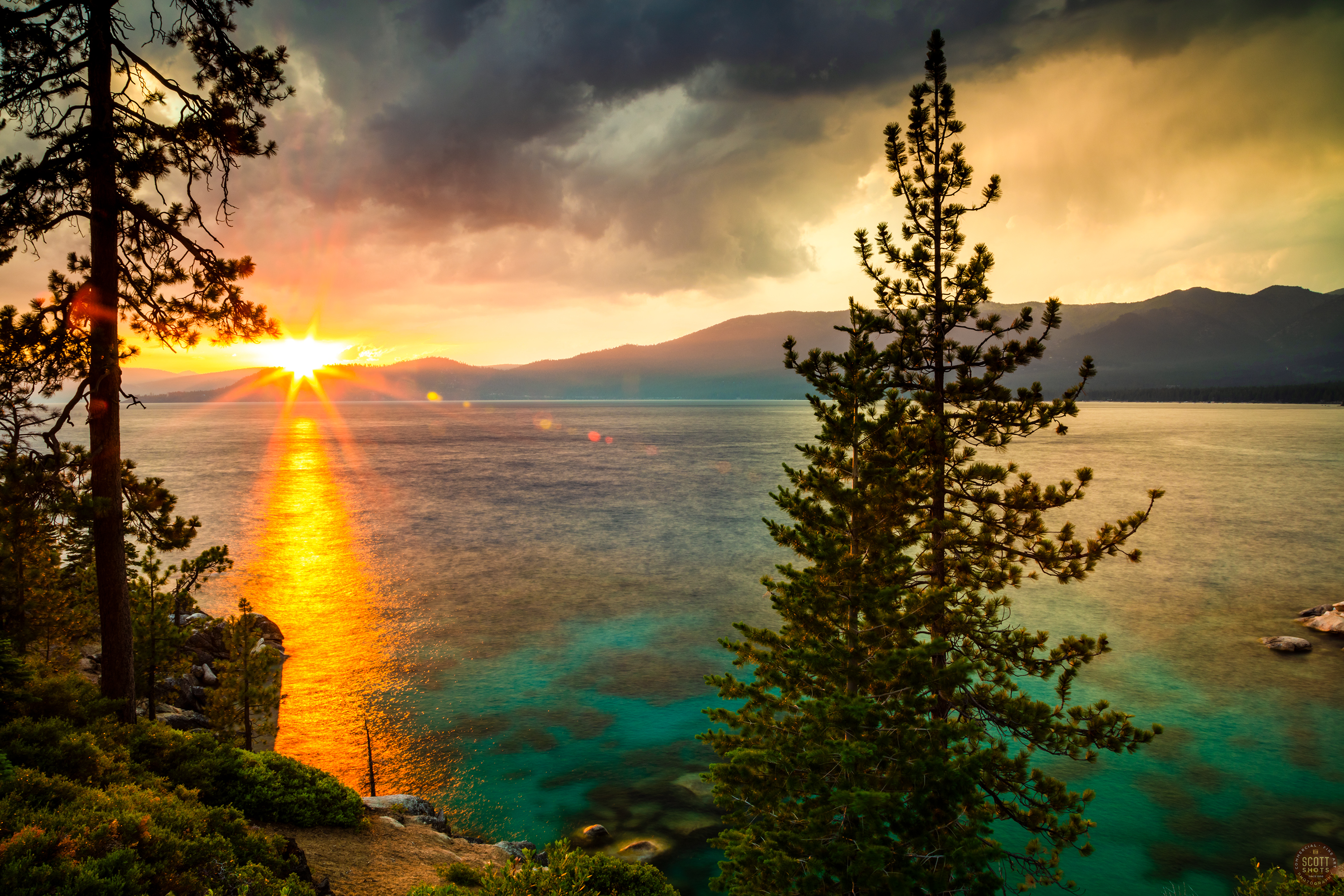
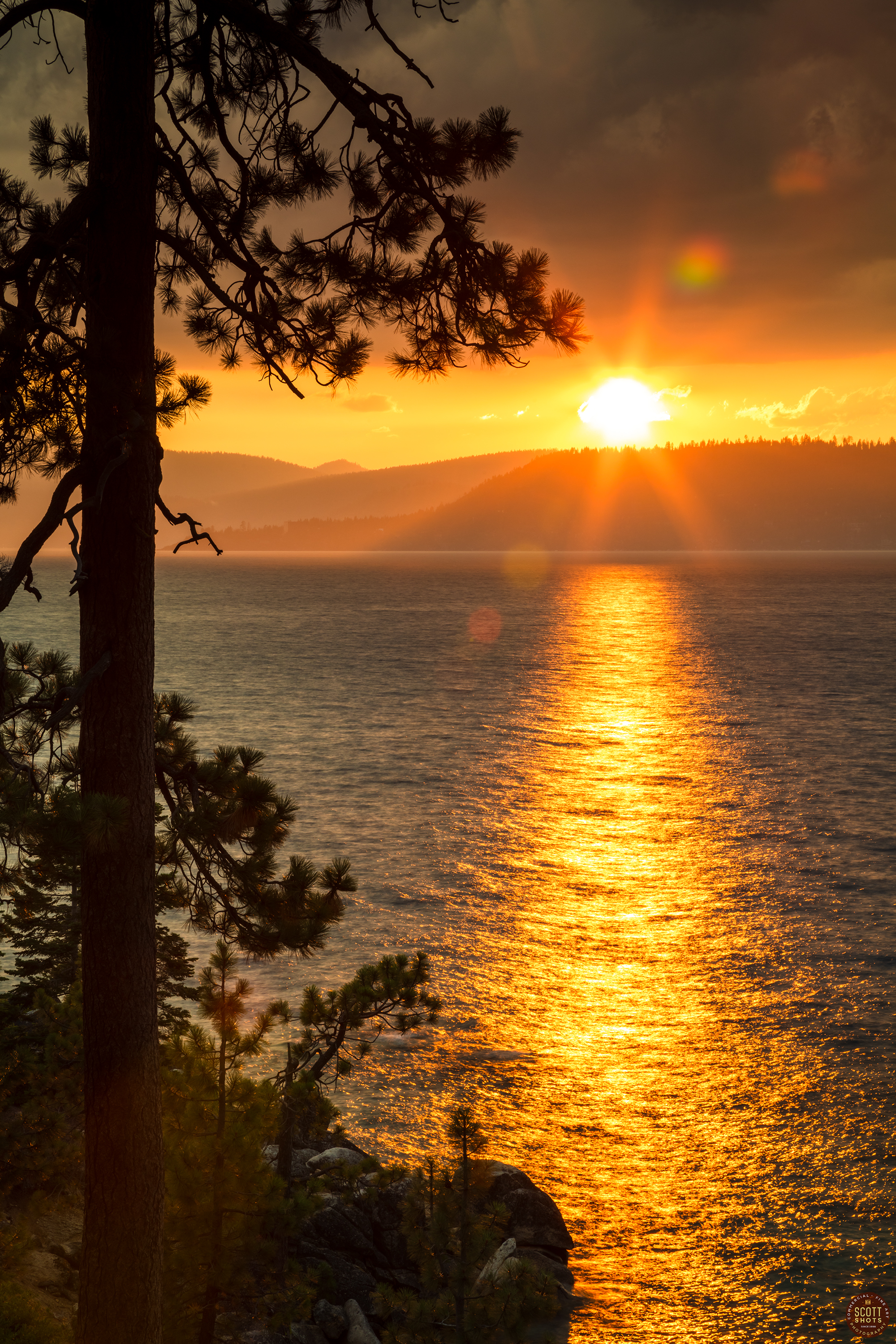
Both of these photos were shot on a Canon 5DS R with a 24-105mm lens. The first one had a focal length of 24mm, the second one was 40mm. They both had an aperture of f22, in order to get that sunburst. The ISO was 50 for both. The shutter speed was 6 seconds for the first one, 2 seconds for the second. Both were shot with a polarizing filter and two graduated neutral density filters. The polarizer helped cut through the glare on the surface of Lake Tahoe, in order to bring out more green and aqua colors from the lake. The polarizer probably wasn't necessary for the seconds shot. The graduated neutral density filters helped darken the sky and balance out the exposure with the foreground.
Question - Which of these two shots is your favorite?
Thank you for looking and reading!
Scott Thompson
Scott Shots Photography
Click to view my Dynamic Steemians Discord channel. Feel free to ask me photo related questions there:
More posts from this photoshoot:
- Video - Last Night's Lake Tahoe Photography Fun! (and a bit of "how-to")
- Amazing Lake Tahoe Sunset, Shot This Sunday (and a bit of "how-to")
As always, large limited edition prints, printed by me personally, are available for purchase with USD or STEEM.