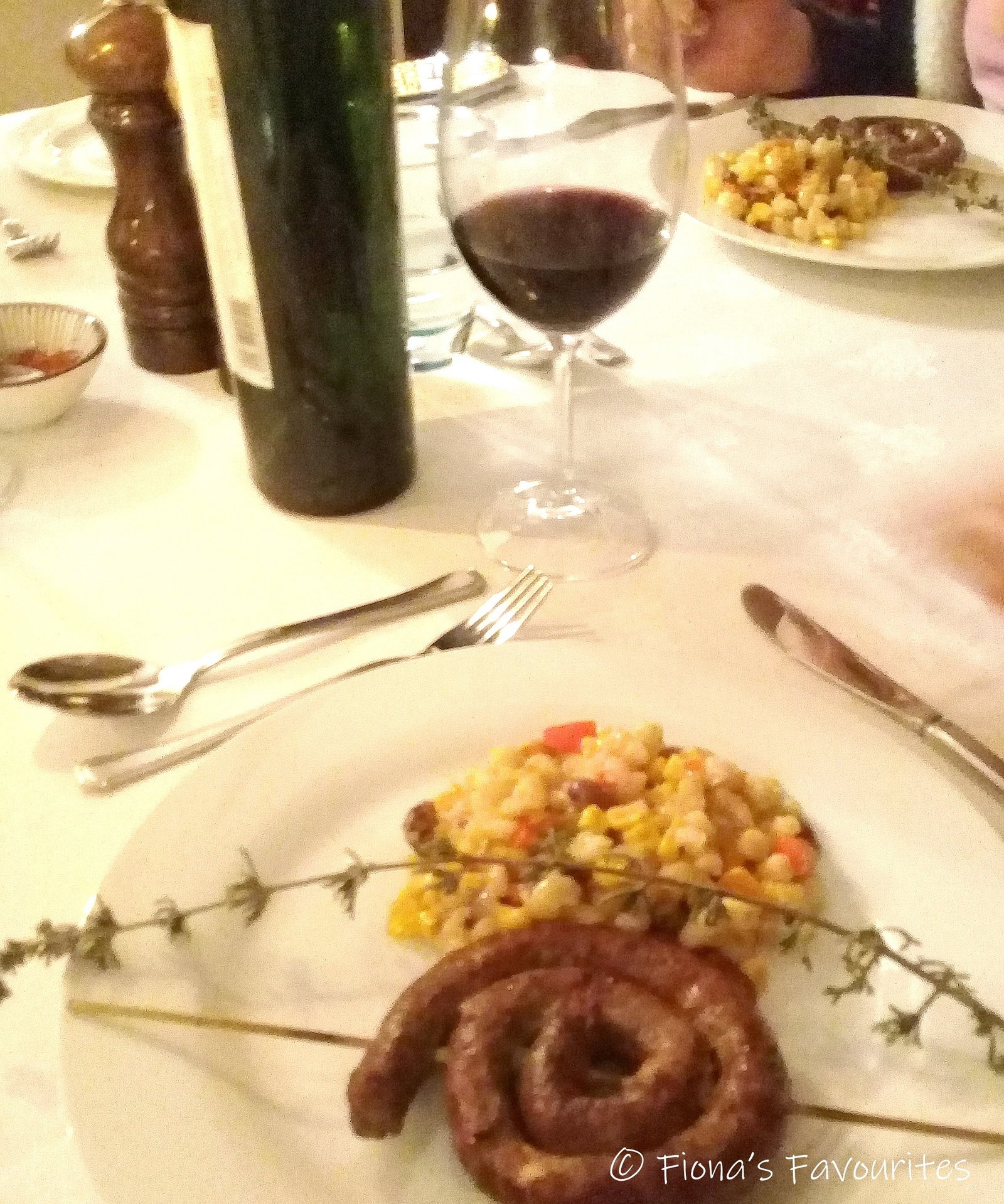
I can cook with wine. Again. My smokin' friends, however, still cannot light up and have a puff.
Alcohol will be on sale on specified days, in specified hours. I'll come back to this.
In Cape Town alone, just a two and a half hour drive from where I live, there are nearly 1,000 cases in hospital and more than 194 people in ICU (Source).
That metropolitan area, along with another rural municipality in the province, are the identified "hotspots". In our municipality, the number of cases has gone from 4 to 35 of which 27 are active (i.e. 8 recoveries, source). To date, there is still no case in the village. We know, though, it will come. It's inevitable.
It was initially predicted that South Africa's Coved-19 outbreak would reach its peak around September. Cape Town, however, is now expected to reach its peak at the and of this month or the beginning of July. The concern about sufficient number of beds remains.
In case you're wondering why I've not included the number of tests conducted world wide: there are conflicting figures and a well-documented shortage of test kits. In South Africa there's a ten-day backlog and they're using a triage system to identify who should be tested. So, what's the point?
In a country that has a "command council" coordinating efforts to curtail the pandemic, and where abuse of power is all too common: under level 1 lockdown and which I mentioned in a previous post, and continuing under level 2 and when a a parent stepped on to the beach to fetch a child..
I alluded to some of the questions about personal data in this post, and when I linked to this inteview with Edward Snowden. If you didn't follow the link then, do it this time, and listen to the interview. It's even more relevant, two to three months later, than it was then.
With the same provisos: social distancing and fewer than 50 patrons? South Africa may have a religious people, but we are a secular state.
What about personal care businesses and tattoo parlours?
All these establishments have, in terms of their training, good business and good sense, to apply good hygiene and sanitary practices. Ergo less risk of spread.
Oh, and on the issue of collecting names and addresses of "attendees", names and addresses are not collected when one visits the supermarket, hardware store or the bank. Not that I'm suggesting they should be.
One can exercise at any time of the day. Non-contact sport is playable. But the golf and tennis clubs cannot be open. Inter provincial movement is prohibited, but you can go and visit a game park - as long as you drive yourself. It's still not clear whether one may visit family or have a few friends (who are family) over for lunch. One minister says "Aye" another says "Nay".
Then, restaurants, previously only allowed to sell alcohol when it was consumed on the premises, may now sell sealed bottles of their patrons' favourite tipple to take home. During the same days and times that any other off-consumption outlet may sell alcohol, viz., Monday to Thursday between 09h00 and 17h00.
Really?
It precipitated an outburst from me on my personal Facebook page:
Restaurants & pubs selling alcohol for home consumption - these things spring to mind:They have to charge restuarant prices to make it worth their while. What patron will pay those prices when it's possible pay much less from bottle stores and from grocery shops?
As they also have to sell alcohol, for delivery and collection, during the specified times, so other than lunch orders, no wine pairings...
And little [village] pubs: do they have the buying power to buy alcohol at discounted rates? More to the point, do they still have the reserves to buy in stock? I am sure there are other things I can't think of right now...
I have long thought that those in government have less than no idea how business really works, especially small businesses and where people are self-employed and/or freelance.
People who get monthly salaries from our taxes have no clue what it takes to actually make money, i.e. generate a product or service that customers buy and which pays not just the business's bills, but people's wages and salaries. Money doesn't appear in our bank accounts by magic each month.
Emphasis added
I ran a corporate finance boutique in the late 90s and early 2000s. I learnt then that the guys in government have no clue what cash flow for a business means. This is (sic) becomes quite acute when you have a contract with them. Scope variations, late payments, and other horrors were the order of the day.Every month-end, however, the same government officials were happy to receive their salaries with compliments from the tax payer.
The guys making decisions over the citizenry have no clue as to how reality is on the ground.
Forty odd years ago, when I started taking Geography seriously, I learned that primary industries, and specifically, mining and agriculture were the greatest contributors to the country's economy. Now, those two, are second only to services which contribute just on 24% of the country's GDP (Source). The lockdown has seen the mines closed and now slowly reopening with all the challenges of this rampant disease. Other than "essential" retail, the only services that continued were financial banking services.
Effectively, the economy was shut down for two months.
What constituted essential retail was the source of endless discussion: under level 1, we could only buy food. It was a fight to "release" sanitary items other than toilet paper on to the shelves. Only after significant pressure was one able to buy baby clothing and infant supplies. Then only for newborns and to a particular age. It seems that the powers that be understand that babies' arrival won't wait for lockdown to be lifted, but that children will just stop growing and start again when the lockdown is lifted. Under level 2, only certain specified (I kid you not) items of clothing could be bought.
The government has similarly made relief packages available for small businesses with turnover below ZAR 300 million. Ahem... However, of those that qualify, and which have applied, nearly 70% have been unsuccessful. Entities that do not qualify are sole proprietorships. Given high barriers to entry, and the cost of maintaining a business entity, the sole proprietorship is the simplist and cheapest entity to establish. Within my own circle, I know of individuals and entities, alike, that have simply not tried to seek relief: we know from past experience, the bureaucracy and hoops through which they must jump just to apply. Here's a specific example: a friend established a pre-school nine years ago. She has put her heart and soul into it, and until Covid-19, it was very successful. She was planning a celebration of ten years early in 2021. Because of the lockdown, she's considering closing it. Then, last week, there was a glimmer of hope for some compensation for work done - in line with the requirements of the relevant government department.
Back to my Facebook rant and the subsequent comment which corroborated what I was trying to say: that, by and large, politicians and government have no real concept of the mechanics of running a business. Did they really think through the implications of permitting restaurants and takeaways selling booze for home consumption? Do they really think that this will rescue micro businesses that have not had any turnover (let alone income or, heaven above, made a profit), for two months?
Until next time, be well
Fiona
The Sandbag House
McGregor, South Africa