
There is a forest just outside the city of Pula. It starts with the pine trees behind the last suburban homes, and then the vegetation gets more varied after a hundred meters or so. The core of that forested area it's a nice mix of evergreen and deciduous trees.

I visit that place only when I have to do something in the city or buy some stuff in the supermarkets and shopping malls not far from there. Since that happens relatively often, I have plenty of photographs that show the suburban woods.
Photographs in this post were taken on a couple of occasions during the July of 2021.
Here you can see the introductory pines ...
... and the path that leads deeper into the forest.
These markings on some of the trees signal the perimeter of the forest park.
I was a bit dipper in the woods, in the area with denser vegetation, when this photograph was taken.
I was far enough from the suburban traffic at this point, but the forest was far from being quiet. The cicadas were singing loudly high in the canopies.
They are usually too high on trees to be visible, but this time ...
... a mating pair somehow ended up on the ground ...
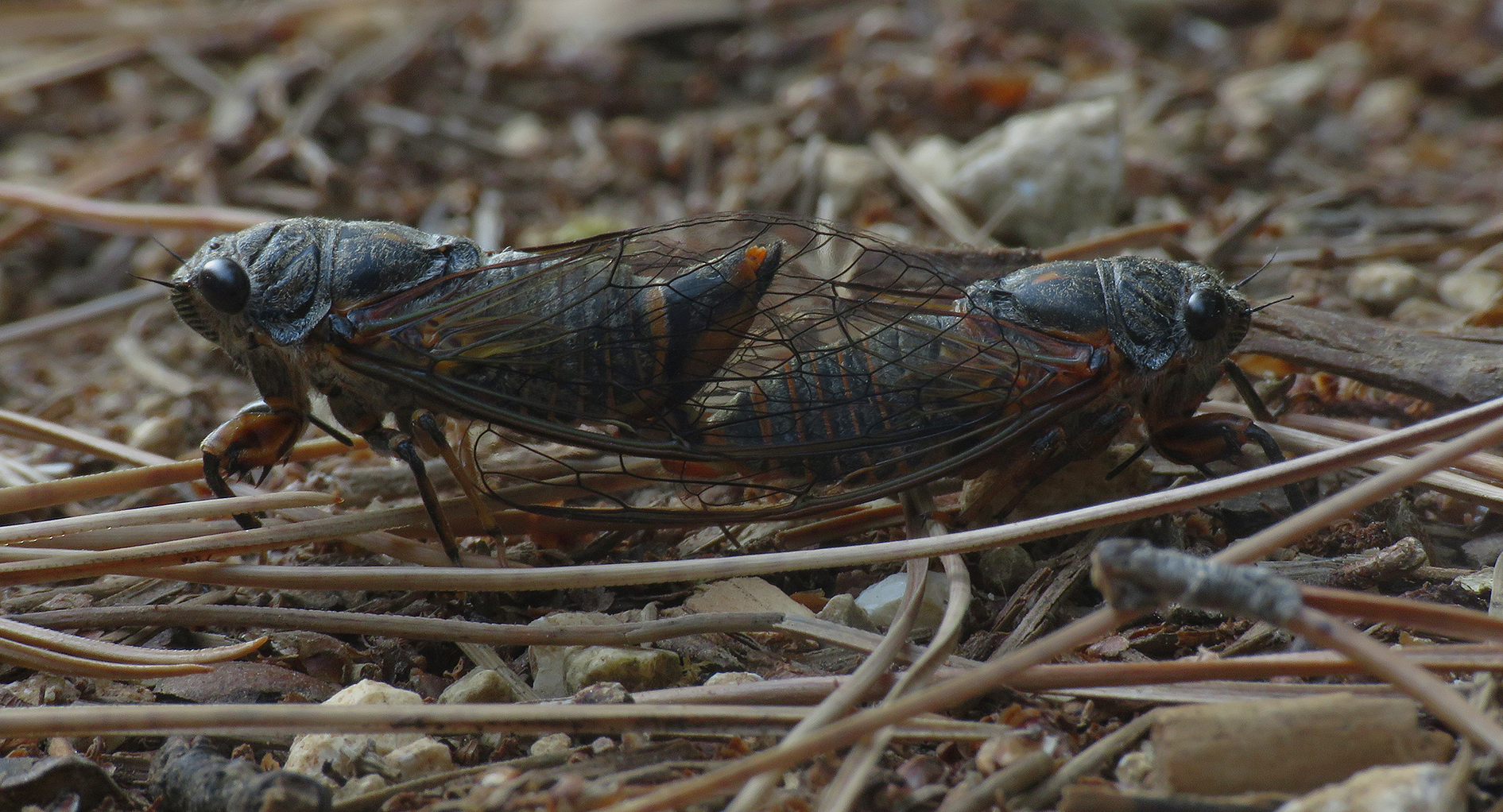
... so I was able to take a couple of shots. Tibicina haematodes is the name of this species.
With this photograph, the post is folding backward, following the same path that brought me to the cicadas, and in the following shot ...
... you can see the place where I usually leave the car.
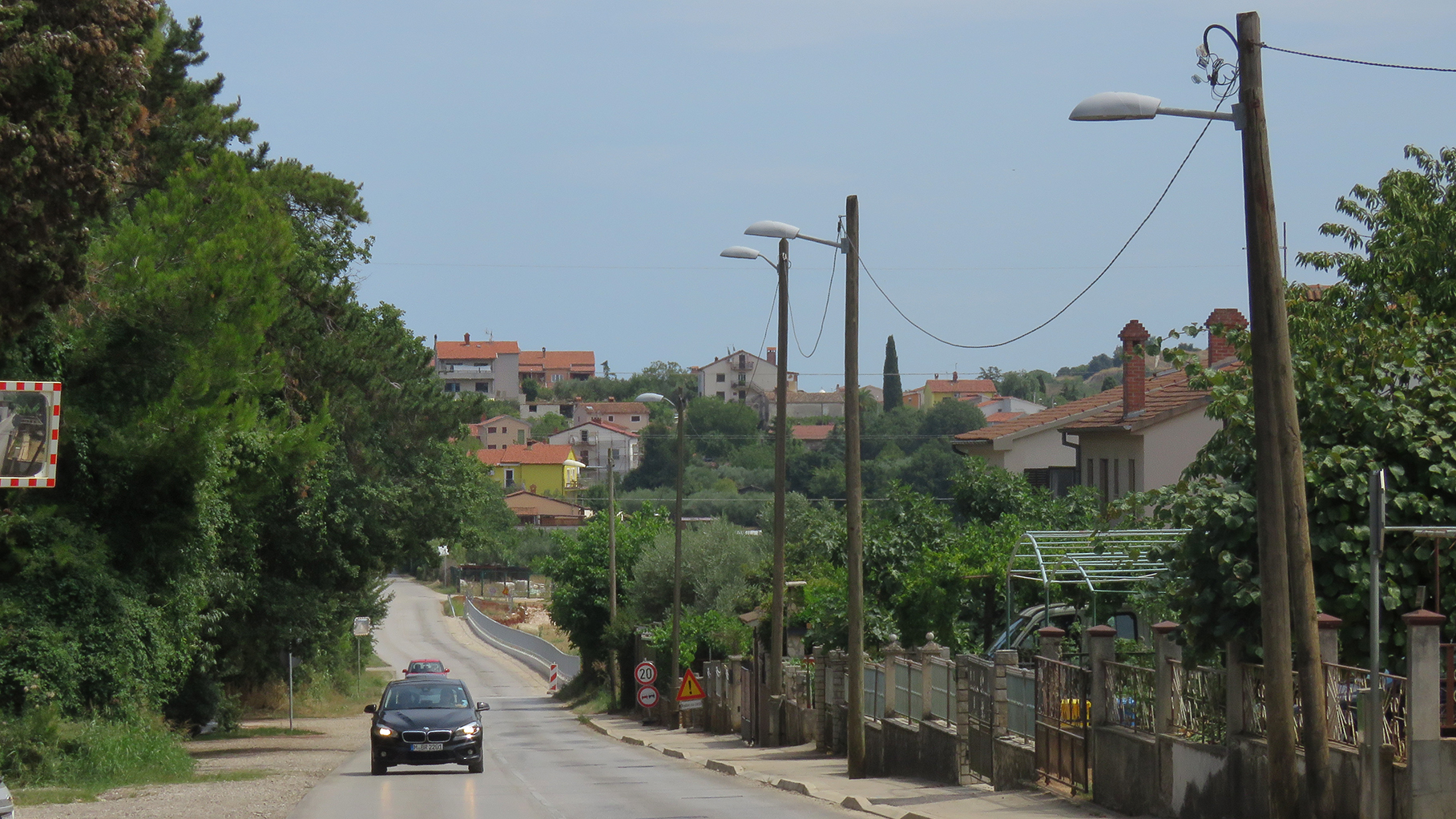
Here you can take a look at the road that passes through some small villages and leads back to my hometown.
In this photograph, a fragment of suburbia is trapped inside the traffic mirror.
Here you can see an old box mounted on the old utility pole.
This photograph was taken on another summer day, back then in July of 2021.
It's the same place, but the sky above it looks different.
With this photograph ...
... the post is suddenly teleported deeper into the forest ...
... where I came across this dead, dry branch of a pine tree ...
... that looked very interesting in the lush, green environment.
A bit later ...
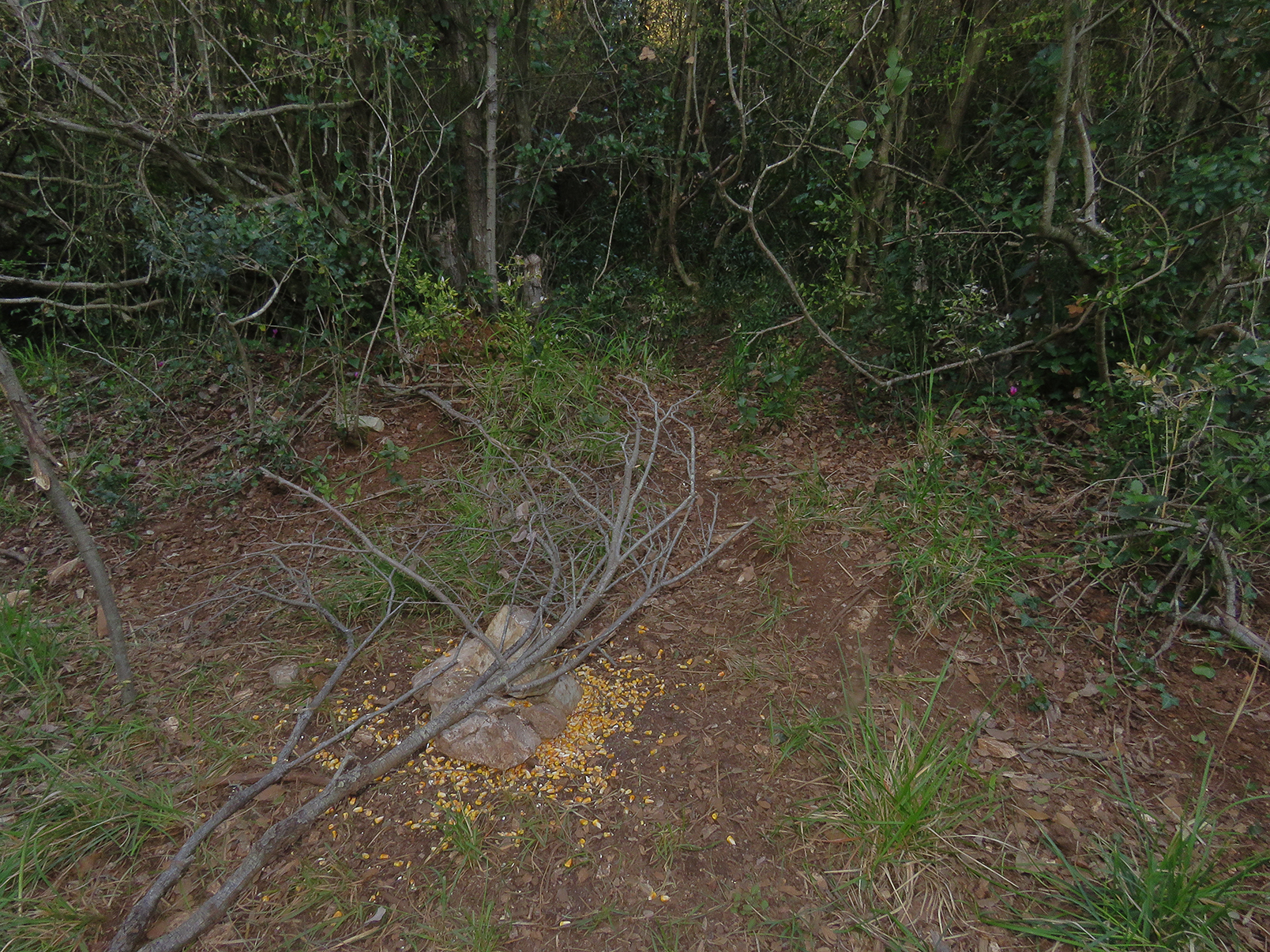
... I was on the narrow path surrounded by small trees and various thorny shrubs, and there ...
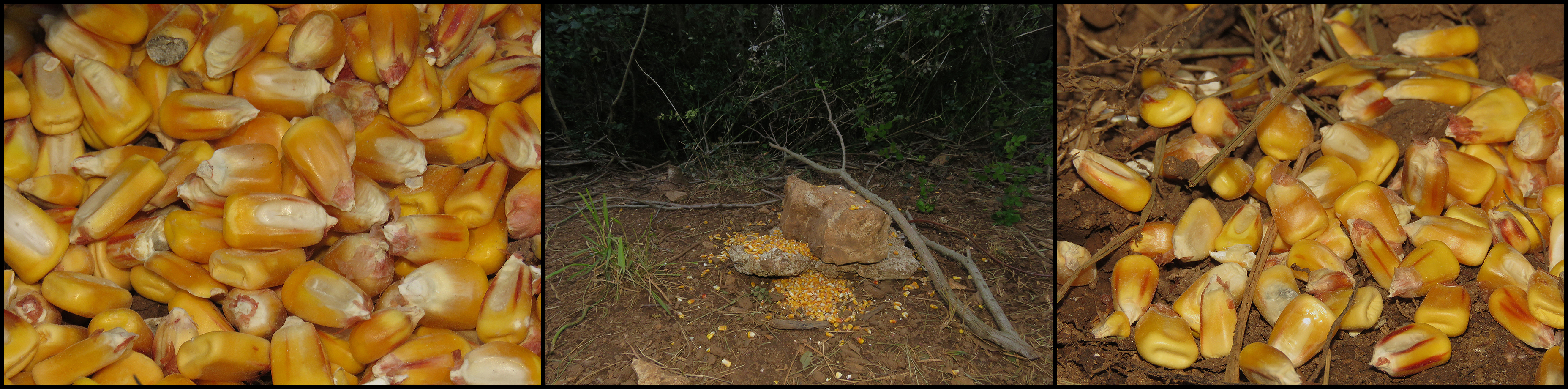
... I found this feeding point for whoever likes a bit of corn for breakfast or dinner.
There was a camera attached to the small tree. This is part of a program that monitors the population of wild pigs that live at the edge of the city and sometimes visit the suburbia, mostly at night or early in the morning.
On the blackberry shrub not far from there, I photographed a pair of beetles.
These are Coraebus rubi, beetles from the Buprestidae family.
Sometimes, while rambling through the woods ...
... I reach various stretches of the road that leads towards my hometown, usually two to three kilometers from where I parked my car.
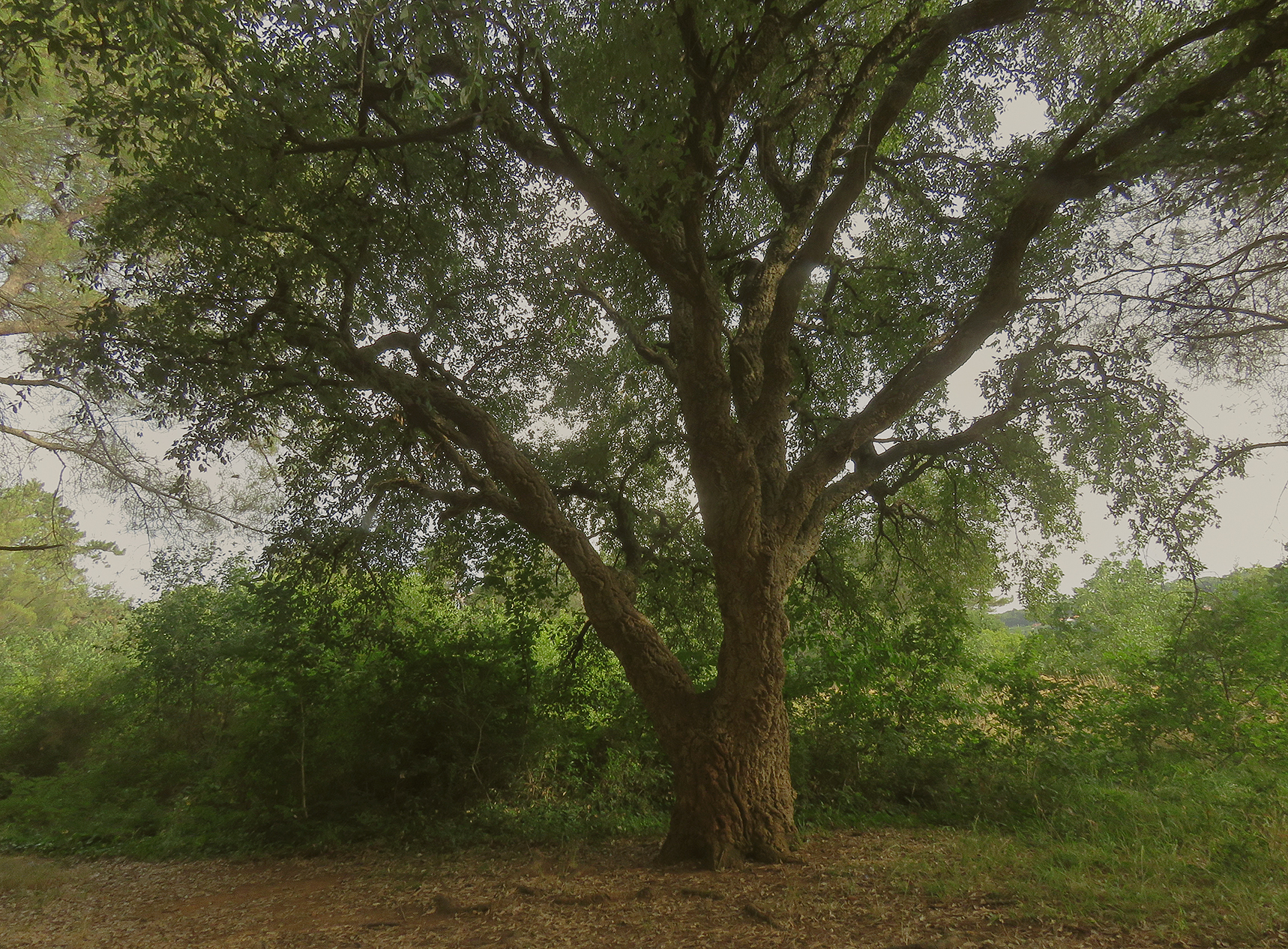
Here you can see the beautiful cork oak tree (Quercus suber). This isn't a common species in this area. It can be found only around the city, in the forest parks planted about 200 years ago during the Austro-Hungarian administration. Not far from that tree ...
... I found an interesting insect.
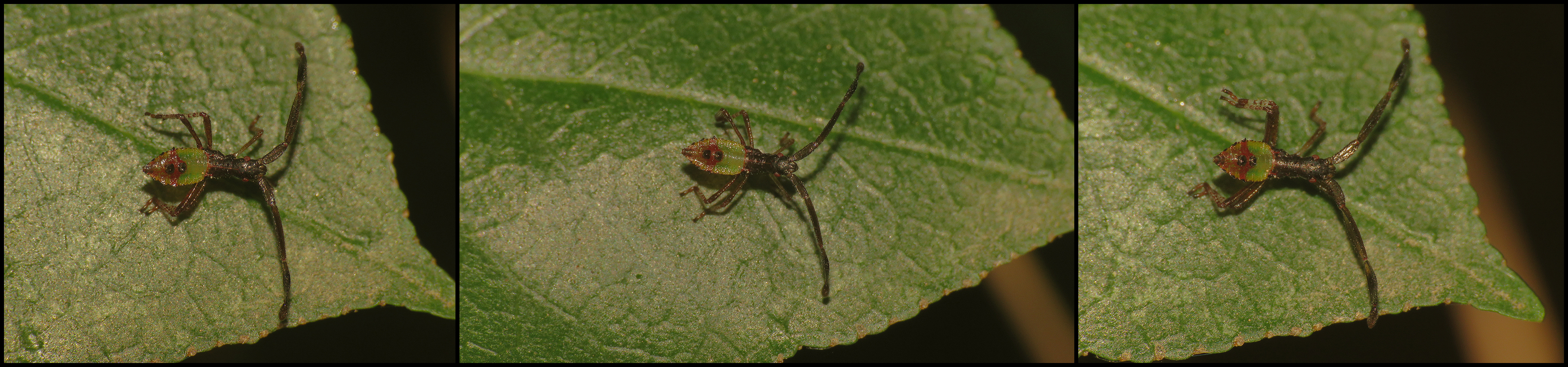
This is a nymph, a young, wingless version ...
of the Gonocerus acuteangulatus, bug from the Coreidae family. I didn't find any adults around, so I can't show you how this species looks in its adult stage. But I can tell you that they are brown, and look more "normal" than these strange babies.
Here you can see some interesting shapes that I found ...
... while following one of the main paths that lead through the forest park.
They looked like parasitic plants or fungal growths.
Some leaves were completely covered with these things.
The protuberances in these photographs are produced by the tree ...
... but are triggered by arachnid activity.
Minuscule mites caused the formation of these galls.
Infected by the salivary secretions of a mite, the plant tissue forms a protuberance inside which the small arachnid can feed safely.
Some aphids also use this feeding technique, but the galls are larger and look different.
With this photograph, the post has reached the edge of the forest ...
... the area near the cultivated fields and open meadows.
I took only a couple of shots here.
Photographed the Crepis vesicaria plant ...
... and this lovely little cockroach.
Ectobius vittiventris is the name of this elegant, amber species. It lives in forests. Eats only decomposing foliage, and cannot survive in urban environments where the usual city cockroaches thrive.
And now, with this photograph taken while driving back home, is time to end this walk through the city forest park in summer. As always in these posts on HIVE, the photographs are my work - THE END.