
The 27th of November 2023 was a relatively warm, humid day. Life was good for snails & slugs, and the weather was ideal for fungi ready to reproduce.
I remember finding the humidity slightly annoying but the presence of mushrooms lifted my mood high enough for an overall enjoyable experience.

You can see the Suillus bovinus bolete in this opening photograph of a post made to be a contribution to the #FungiFriday by 

Here you can see two more mushrooms of the same kind photographed from an angle that shows the tops of their caps.
In this shot taken through the macro lens, you can take a look at one probably insignificant but fairly photogenic detail I noticed on the top of one of the caps presented in the previous photograph.
The same lens also helped me get closer to the pores under the cap.
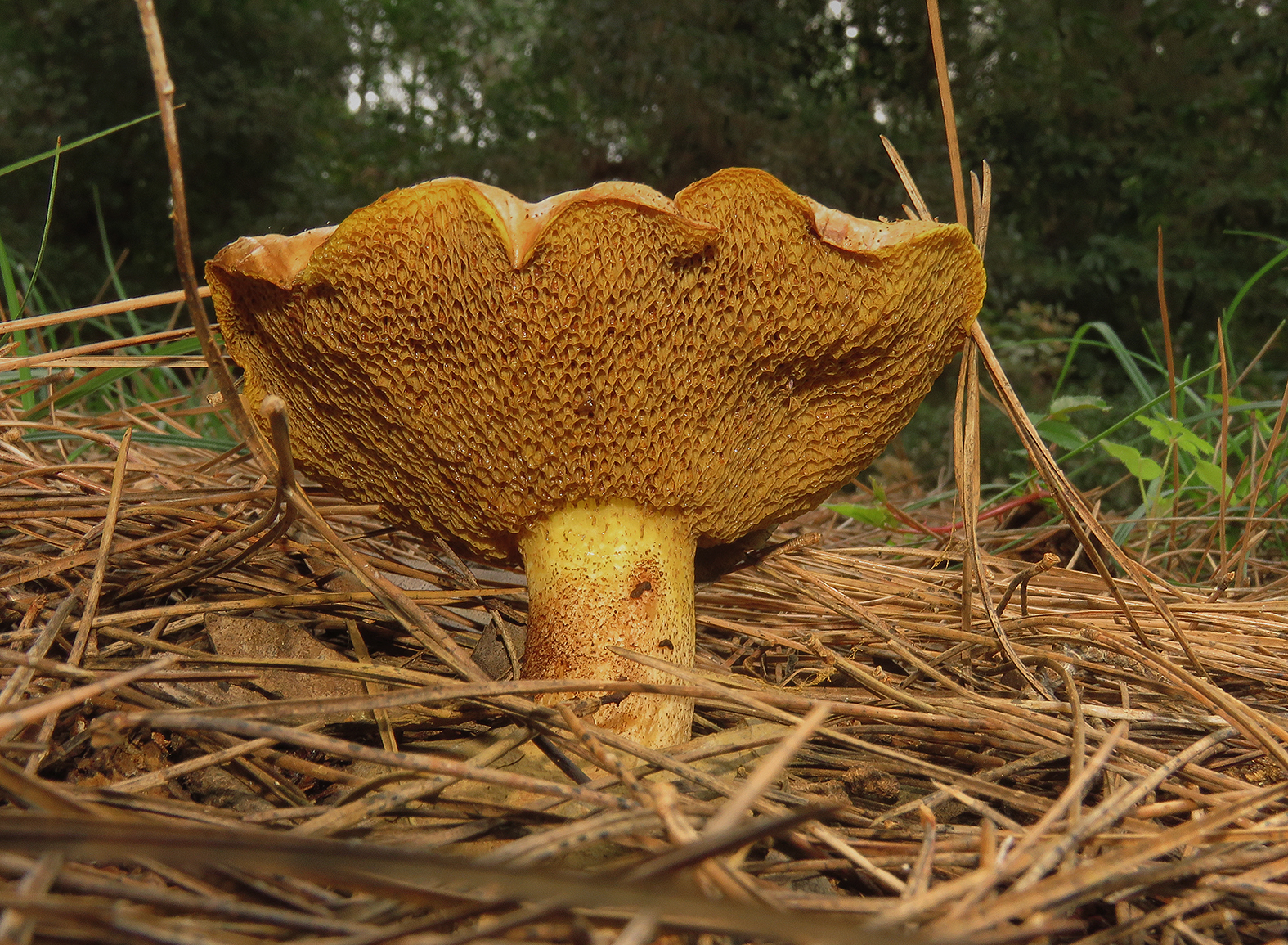
The pores on the fully developed Suillus bovinus fruiting body ready to release the spores are relatively large compared to other boletes I encounter here in my area ...
... and they look great in macro view. The structure resembles a miniature version of honeycombs.
The pores are the ends of the tubes. The spores are produced on the opposite end of each tube attached to the cap and dispersed when they reach maturity.

Here you can see a Suillus bovinus bolete partially hidden by fresh grass and dead needles fallen from the tall pines that dominate the forest park.
The photograph shows a bit of the scenery as well.
Suillus bovinus is a juicy edible mushroom so I took a few of these fruiting bodies with me to prepare them for dinner.

A bit further, near the big rotting branch of a pine that somehow ended up on the humid ground, I came across another edible mushroom. This is a Hohenbuehelia petaloides fruiting body.
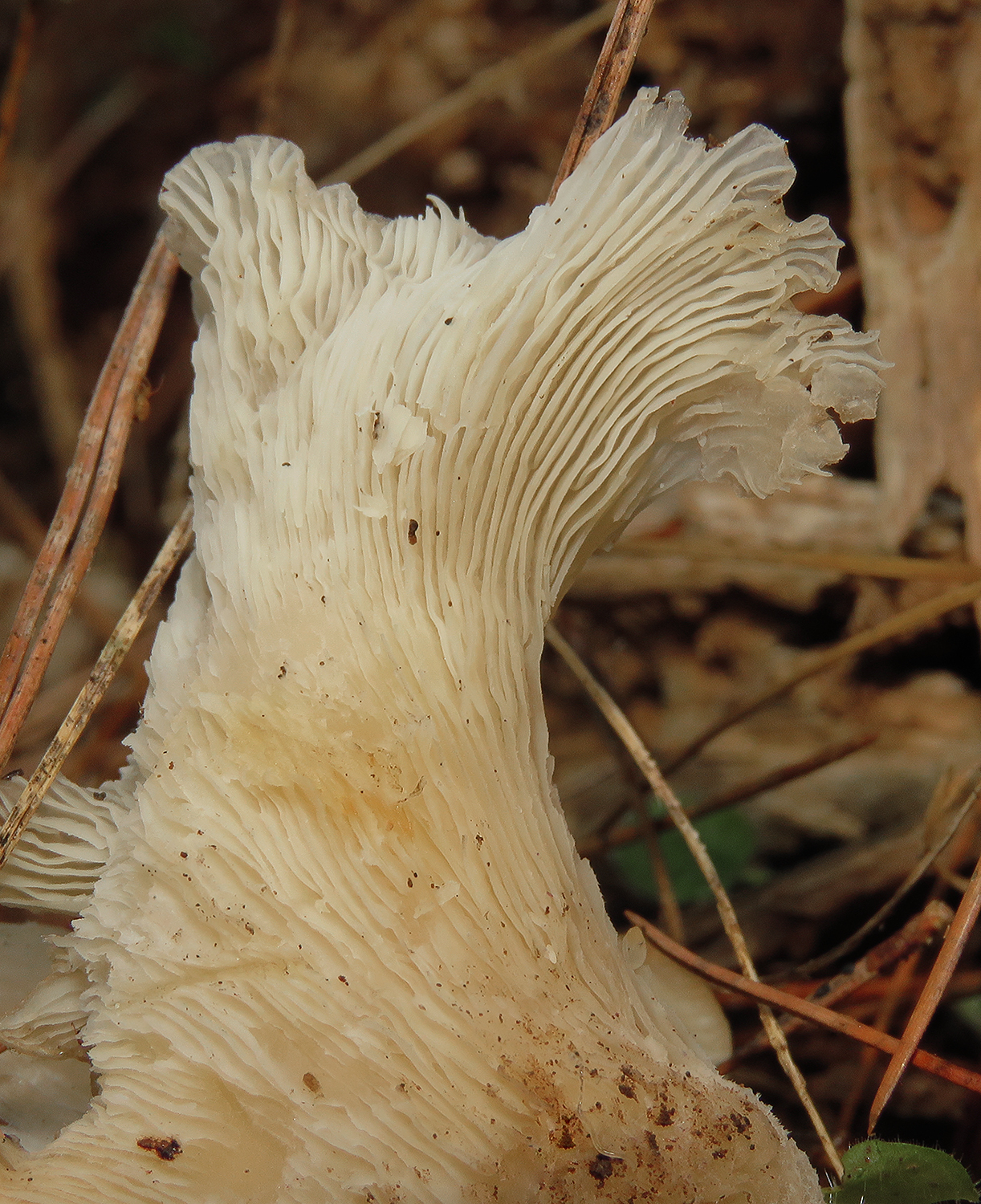
The shape of the mushroom was a bit disheveled but the gills were pretty elegant.
Especially when seen through the macro lens.
This fungus feeds on decaying wood, and I, sometimes, feed on this fungus.

Here you can see a flower, for a change. The following photograph ...

... shows the entire plant. I mean, almost entire. The roots are hidden.
The scientific name of the species is Silene latifolia.

Here you can see another gilled mushroom.

This photograph shows the top of its cap.

I can't tell you the name of the species this time but I can fairly confidently say that this fungus belongs to the genus Cortinarius of the Cortinariaceae family. A couple of meters from the mushroom shown in this and the previous two photographs ...

... I found something that looked like tiny fungi growing among the moss near the gravel road that leads right through the middle of the forest park. I can't tell you what exactly this is. The photograph was taken through the macro lens, of course.
A bit later I found an Inocybe rimosa mushroom by the side of the road.
I came closer to its gills in this photograph. This is a poisonous mushroom.

Here you can see another Cortinarius. A few very similar species from this genus are very poisonous so I never tried to eat this type of mushroom.
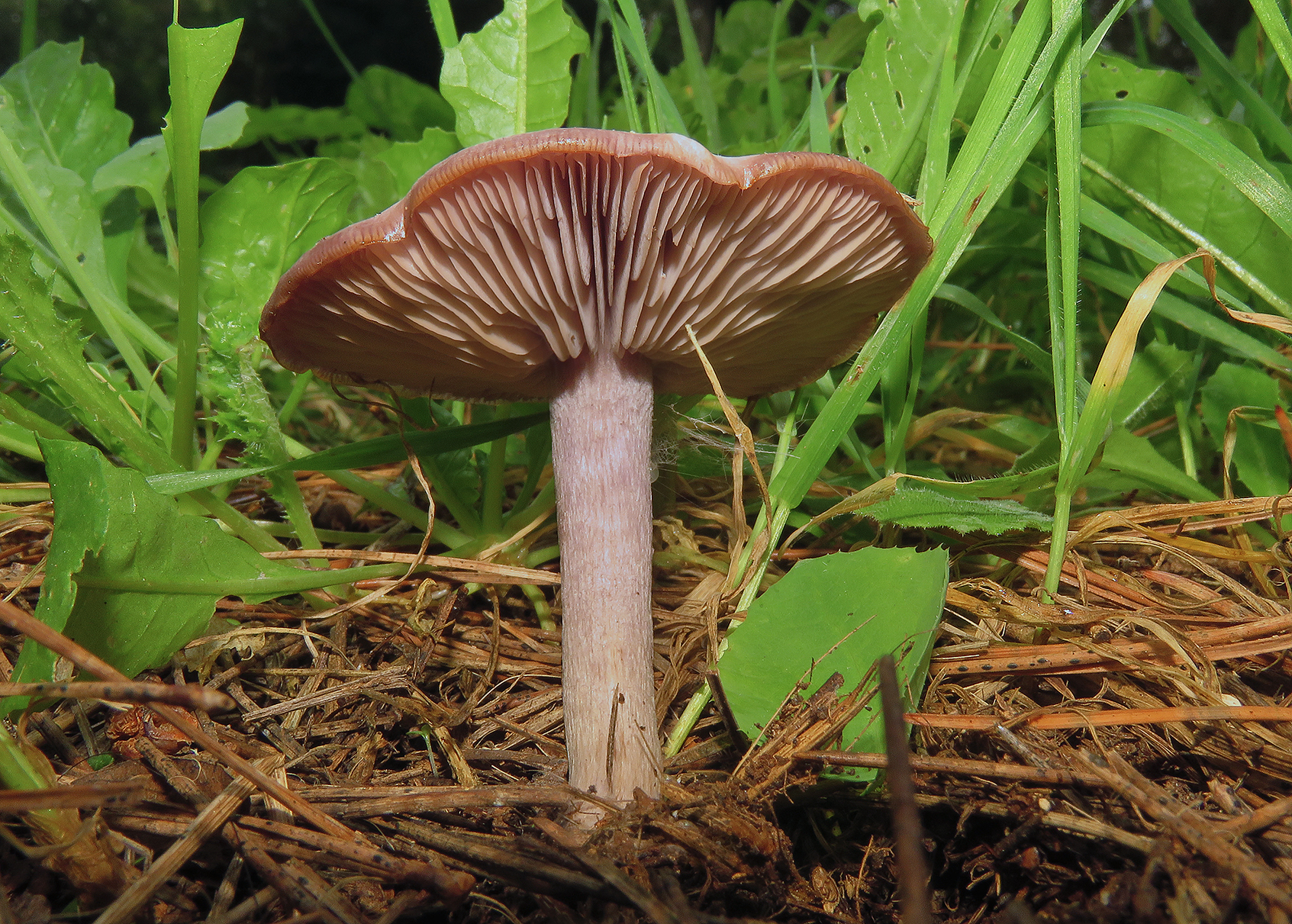
This is the edible Lepista sordida mushroom.
Here you can take a look at the top of its cap.

And that's it. I don't have any more fungi to show today.
All the mushrooms and stuff presented in this post were photographed in a place called Busoler, a forest park on the suburban edge of the city of Pula.
AS ALWAYS HERE ON HIVE, THE PHOTOGRAPHS ARE MY WORK.
The following links will take you to the sites with more information about some of the protagonists of today's post. I found some stuff about them there.
https://en.wikipedia.org/wiki/Suillus_bovinus
https://en.wikipedia.org/wiki/Hohenbuehelia
https://en.wikipedia.org/wiki/Silene_latifolia
https://en.wikipedia.org/wiki/Cortinarius
https://en.wikipedia.org/wiki/Inocybe_rimosa
https://en.wikipedia.org/wiki/Lepista_sordida