
Crypto Derivative Platform Counterparty Is Coming to the Bitcoin Cash Network
This week a new forked counterparty protocol has been announced that will be solely dedicated to the Bitcoin Cash (BCH) network. The team plans to launch its native currency XCPC on March 1 while also detailing there will be a ‘burning’ as well.
Also read: Japan’s DMM Bitcoin Exchange Opens for Business With 7 Cryptocurrencies
An Independent Counterparty Protocol Dedicated to Bitcoin Cash
Bitcoin cash supporters were greeted this week by a new development — A counterparty protocol for the BCH network. The original counterparty network is a peer-to-peer platform launched in 2014 that allows the creation of financial assets derived from the BTC chain. In order to bootstrap the protocol’s native currency, developers performed what’s called Proof-of-Burn. This method requires the initiation of sending a cryptocurrency to an address that is unspendable. During the creation period of XCP in January of 2014, 2125.63 BTC were ‘burned’ by being sent to an unspendable address. Essentially the counterparty protocol can create other types of assets like bond notes, collectible cards, and loyalty rewards that are backed by the security of the BTC blockchain.
“Now a new forked version of the counterparty protocol is being created for the bitcoin cash blockchain — The counterparty protocol for BCH will have its own native currency called XCPC, and will be used to pay for the registration of asset names,” explains the XCPC team.
More generally, XCPC represents stake in the counterparty.cash platform on the Bitcoin (Cash) blockchain and it is the voting currency for changes to be decided on by the user community.
Counterparty.cash Nodes Will Communicate With the Bitcoin Cash Network
At the moment the team is having a “community consultation” to discuss the best ways to get counterparty for bitcoin cash operating smoothly. Interested volunteers and those who want to pitch ideas to the XCPC team can join the conversation to discuss the project’s goals. On February 1 the team will outline the platform’s logistics and the official launch will be on March 1, 2018. According to the XCPC developers, the forked counterparty protocol will allow full communication with the BCH network.
“The technology will allow counterparty.cash nodes to communicate with each other via the Bitcoin (Cash) blockchain,” the XCPC team emphasizes.
Bitcoin cash supporters have been talking about a counterparty implementation for quite some time and people have discussed creating implementations for the client. There was even a counterparty pull request submitted to the Bitcoin Unlimited codebase back in March. BCH proponents seem excited about a counterparty platform for bitcoin cash as it could lead to asset creation alongside possibilities like a Turing complete system.
What do you think about a counterparty concept applied to the BCH network? Let us know in the comments below.
Disclaimer: Bitcoin.com does not support this product/service. Readers should do their own due diligence before taking any actions related to the mentioned protocol or any of its affiliates or services. Bitcoin.com is not responsible, directly or indirectly, for any damage or loss caused or alleged to be caused by or in connection with the use of or reliance on any content, goods or services mentioned in this article.
Images via Shutterstock, and XCPC
Have you seen our new widget service? It allows anyone to embed informative Bitcoin.com widgets on their website.
The post Crypto Derivative Platform Counterparty Is Coming to the Bitcoin Cash Network appeared first on Bitcoin News.
Ditch University and High Transaction Fees – Praxis Accepts Bitcoin Cash
Praxis is an intern, apprentice-like placement company, acting as a practical, resumé building experience for those who believe university is a waste of intellect and time and treasure. Recently, they’ve announced tuition can be paid in bitcoin cash, which offers near instant transaction times and low fees.
Also read: India’s Bitcoin Exchange Banking Problems
Praxis Accepts Tuition in Bitcoin Cash
“We want to provide the best payment options available to our customers,” Derek Magill of Praxis responded when asked by News.Bitcoin.com why the education company decided to accept bitcoin cash in payment toward tuition. “We started accepting bitcoin (core) in 2014 after some customers requested it. It was great,” he continued, “but by the end of 2015 nobody was using it. We’ve recently gotten a ton of interest in accepting it again, though, in the form of bitcoin cash because it is usable like core once was.”
Praxis started in 2013 as a response to what some graduates find, especially in the US, once leaving university: they’re saddled with debt, have acquired no real new skills to speak of, and they’ve been out of the job market for half a decade, leaving resumes flat. It’s a combination for frustrating entrance into working life. Praxis eschews the university experience, preferring to match student interest with real-world business, small and start-up. Participants have landed experiences with companies the likes of Bitpay to Seasteading to Major League Baseball. And while working, they’re given courses on how to improve personally and professionally.
“Incidentally, we’ve seen dozens of our customers, ages 16-26, sign up for Yours.org accounts and start making their first transactions in bitcoin cash,” Mr. Magill detailed. “These are people who were previously totally uninterested in cryptocurrency who are now using it daily. That’s telling.”
Bitcoin cash (BCH) is the younger twin brother of bitcoin core (BTC), created through what’s known as a hard fork in the Bitcoin network. Enthusiasts worried BTC was becoming too cumbersome. Transaction times lagged and fees were excessive, souring user experience and, they believed, accessibility and adoption.
Core supporters suddenly repeated the mantra BTC was a store of value, like gold, better used for settlement between large institutions, and so its medium of exchange properties were moot. They also argued a hard fork would confuse people and potentially expose the network to security risks. BCH advocates wanted both a store of value and a medium of exchange, a currency capable of holding its value and more…with the ability to buy a cup of coffee.
Passion
The two positions became irreconcilable, and BCH was born August of last year. In under six months, bitcoin cash has developed a relatively stable price, hovering around the 2,500 USD point, and its fees and confirmation times are reminiscent of BTC’s early days.
“What it will do for our business remains to be seen,” Mr. Magill admits. “Short term, it might just be a couple customers here and there who use it and we’re excited enough by that, but long term the ability to process payments at much lower fees will do wonders for us financially. And keep in mind too that we’re in the education business,” he urged. “I’d love to see more and more of our customers be inspired to learn about bitcoin cash and use it because we offer it as an option. I think it will be great for them personally and financially.”
Bitcoin cash has been on an adoption tear, with exchanges like Coinbase and, if rumors are to be believed, Cboe, accepting the currency, along with plans from a prominent debit card provider to include it for loads. Sites are popping up all the time as more merchants onboard.
Mr. Magill practices what he preaches. Not only did he drop from a top ranked university to start his own business, he’s also a passionate advocate for bitcoin cash. An event he hosted shortly before leaving college included crypto evangelist Jeffrey Tucker. That was it. Mr. Magill became intrigued and then, ultimately, disillusioned with bitcoin core’s user experience. A Steve Patterson podcast interview on bitcoin cash years later re-lit Mr. Magill’s fire, and “that excited me about bitcoin in a way I hadn’t felt for years. I’d stay up all night reading reddit forums, listening to Youtube videos and debates, and pretty soon I was sold,” he explained. “I want decentralized digital cash that I can send anywhere in the world for next to no cost and that is also a store of value. Now I have it.”
He’s lectured all over the world, traveling and teaching about the value of self-initiative and breaking away from legacy institutions of learning. “My obsession with Praxis and what we’re doing is similar to my obsession with bitcoin cash,” he emphasized.
“I want to be able to live as freely and as wealthy as possible and I want others to be able to do the same.”
Do you think more merchants will adopt bitcoin cash? Let us know in the comments section below.
Images courtesy of Pixabay, Praxis.
Not up to date on the news? Listen to This Week in Bitcoin, a podcast updated each Friday.
The post Ditch University and High Transaction Fees – Praxis Accepts Bitcoin Cash appeared first on Bitcoin News.
A Visual Comparison Between Bitcoin and Other Markets
The market cap of cryptocurrencies, the world’s fastest growing asset class, has surpassed $677 billion. And bitcoin itself has surged past the payment processing company Paypal and the fast food company McDonald’s. Still, it looks tiny compared to other global markets.
Also Read: Chinese Bitcoin Mining Giant Bitmain Establishes Branch in Zug, Switzerland
The site The Money Project has put together a series of interesting pictures describing the market cap of the world’s money and markets. Each block square is worth $100 billion.
Apple, a world leading tech giant, has a market cap of over $800 billion. But Bitcoin prognosticator Ronnie Moas, founder and director of Standpoint Research, predicted that “Bitcoin needs to be taken seriously as within five years it could reach $800 billion.”
The world top 50 richest people are worth a whopping $1.9 trillion. Bitcoin’s pseudonymous creator Satoshi Nakamoto with his coins unmoved from day one is also in the billionaire league. And in recent weeks, ripple’s record highs have propelled its co-founder creator Chris Larsen to one of the world’s richest people. He owns 5.19 billion of its XRP cryptocurrency, which gives his holdings a rough value of $12.82 billion, according to Forbes.
The total value of the world’s coins and banknotes is roughly $7.6 trillion.
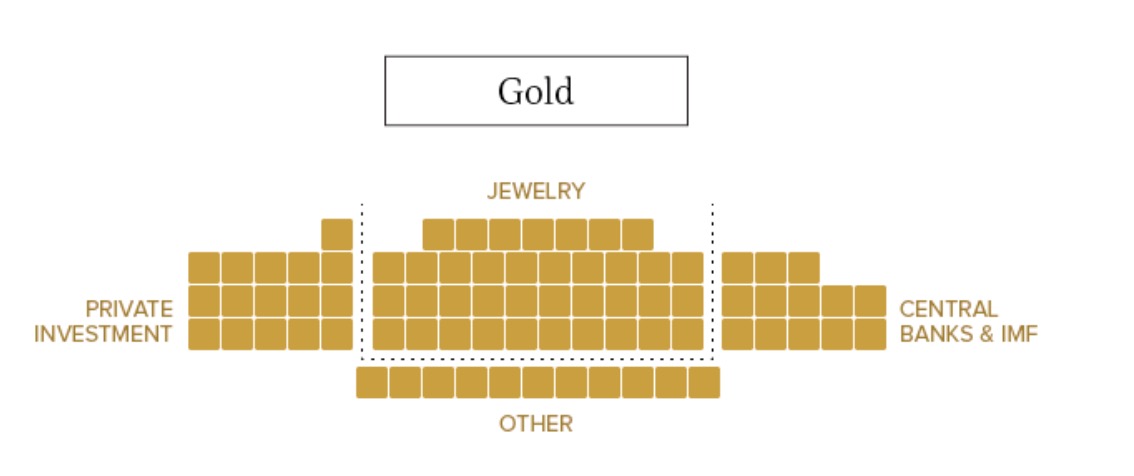
The World Gold Council estimated that the world’s total above ground gold reserves are 187,200 tonnes. Bitcoin has a maximum of 21 million coins.
We really have come a long way in the past decade. Do you think Bitcoin will surge over Gold? When? Leave your comments below.
Images via Shutterstock, Money.visualcapitalist.com
Do you like to research and read about Bitcoin technology? Check out Bitcoin.com’s Wiki page for an in-depth look at Bitcoin’s innovative technology and interesting history.
The post A Visual Comparison Between Bitcoin and Other Markets appeared first on Bitcoin News.
Kentucky Fried Chicken Canada Launches “Bitcoin Bucket”
Bitcoiners in the past few days have witnessed mainstream media spreading rumors about South Korea’s ban on cryptocurrency. This, as always, caused some panic selling. But hey, don’t be upset. Colonel Sanders is here to spread some fried chicken joy amid the crypto bloodbath. KFC Canada tweeted today they are accepting Bitcoin for the finger lickin’ chicken.
Also Read: Paul Krugman Is Excited to See Bitcoin Have Issues
Bitcoin Backed by Fired Chicken
Kentucky Fried Chicken Canada tweeted this Friday that customers now can pay for a bucket of the Colonel’s Original Recipe in bitcoin. Renamed the “Bitcoin Bucket”, the Canadian outlet has priced the chicken at 20 Canadian Dollars ($16), and that includes 10 original recipe tenders, waffle fries, a medium side, gravy and two dips.
The Canadian outlet posted on its website “Welcome to 2018, Canada.”
KFC Canada presents The Bitcoin Bucket. Sure, we don’t know exactly what Bitcoins are, or how they work, but that shouldn’t come between you and some finger lickin’ good chicken.
Showing awareness of bitcoin’s volatility, the company has set up a Facebook Live feed, displaying the number of bitcoins needed to pay for the meal. The video played for four hours.
“Despite the ups and downs of Bitcoin, the Colonel’s Original Recipe is as good as always. So, trade your Bitcoins for buckets and invest in something finger lickin’ good.”
How About Alt-recipes?
The post has a lot of comments suggesting KFC should accept altcoins over bitcoin.“Use XRP, ” wrote a Twitter user. “You should accept verge currency, much faster than BTC, ” wrote another.
Litecoin Creator Charlie Lee retweeted the post saying Litecoin would be a better option for KFC.
Still, many Twitter users are excited to see the fast food chain accepting bitcoin, with some customers buying only to have a bite of the crypto chicken.
Aware of Bitcoin’s long transfer times, the bitcoin bucket will be trading for a limited time, and only be available to be purchased through KFC Canada’s online portal. Once purchased, customers will have their bucket delivered to their home.
What do you think of KFC’s acceptance of Bitcoin? Which coin will be the next? Leave your comments below.
Images via Shutterstock, KFC Canada twitter.
Need to calculate your bitcoin holdings? Check our tools section.
The post Kentucky Fried Chicken Canada Launches “Bitcoin Bucket” appeared first on Bitcoin News.
Bitcoin Enthusiast Finds Undiscovered Cave and Names It Satoshi
Few people will ever encounter an undiscovered natural wonder, and then have the pleasure of naming it. That’s what happened to Guido Turricchia and his intrepid band of explorers deep within the Papua New Guinean jungle and deep beneath the earth. The speleologist found a new cave and had the honor of christening it. The epithet the environmental engineer and bitcoin enthusiast chose? Why, Satoshi.
Also read: Chinese Bitcoin Mining Giant Bitmain Establishes Branch in Zug, Switzerland
Blockchain meets Rockchain
For the past month, Guido Turricchia, Andrea Felici, and Maurizio Buttinelli have been AFK and thus divorced from bitcoin price moves and cryptocurrency drama. On December 10, the trio of experienced explorers left Italy to embark on their most ambitious trip yet through the dense rainforest of Papua New Guinea. The southwest Pacific nation, which lies north of Australia and to the east of Indonesia, is famed for its biological diversity.
Guido and his group witnessed many enchanting sights as they trekked through the jungle, but they were saving themselves for the beauty that lay within the earth. From Guatemala to Costa Rica, the speleologists have traveled the world, frequenting some of the most remote and exquisite underground caverns, caves, and rock formations these territories have to offer. After journeying for days, the group, led by a local guide, came to a cave formation in the heart of the Papua New Guinea jungle.
Guido explained to news.Bitcoin.com how locals used the entrance to hunt flying foxes, but hadn’t forayed any further. The explorers roamed deeper into the caves, descending a total of 2km, before coming to a huge cave system comprising a series of vaults, the greatest of which measured 120 x 80 x 50 metres, with extensive concretions and an underground river flowing through it. Due to the rocky formations, Guido dubbed it Blockchain Valley.
Enter the Cave of Satoshi
The trio, who now found themselves in one of the remotest places on earth and confronted by sights that had never been seen with the human eye, went deeper into the earth. After passing through Blockchain Valley, they came to the largest cave of all. “It’s common practice to name new caves after important people,” explained Guido, “but there was nothing for Satoshi”. There was only one name on his lips, and thus the cave of Satoshi was born.
Guido first learned about bitcoin and blockchain in 2013 and, like many people, was instantly hooked. In the years since, he’s balanced an interest in the technology with operating a crowdfunding platform, which provided relief to victims of last year’s Italian earthquake, and exploring with Circolo Speleologico Romano, a caving organization founded in 1904. The Papua New Guinea trip, aided by sponsors such as Powerfilm Solar, was the group’s most ambitious yet.
How do you think Satoshi would feel about having a cave named after them? Let us know in the comments section below.
Images courtesy of Guido Turricchia.
Tired of those other forums on the subject of Bitcoin? Check forum.Bitcoin.com.
The post Bitcoin Enthusiast Finds Undiscovered Cave and Names It Satoshi appeared first on Bitcoin News.
New Year, New Forks: World Bitcoin and Bitcoin Candy Expected Soon
The fork of Bitcoin Cash sparked a wave of airdrops and bitcoin-related fork projects in 2017. A new project, World Bitcoin (WBTC), is to fork at block 503,888 on or around January 12. Unlike other hard forks introducing new features to overcome Bitcoin’s limitations, WBTC will focus on building a ”global application infrastructure”, according to its website.
Also Read: Markets Update: Cryptos Look for Relief After South Korea FUD Causes Losses
Fork at Block 503,888
The total amount of WBTC is 2.121 billion, among which 21 million WBTC will be managed by the WBTC Foundation for the purpose of marketing and building a global ecosystem and developing new features. After the fork, Bitcoin users can get WBTC an the ratio of 1 BTC =100 WBTC.
The project has by far made their code available on Github, but wallet services are not launched yet.
Candy Only for Bitcoin Cash Holders
Another big block project called Bitcoin Candy (CDY) will fork Bitcoin Cash (BCH) at block 512,666. BCH holders can get CDY at the ratio of 1 BCH 1000 CDY.
The project aims to make bitcoin resistant towards a perceived growing threat of quantum computing. Although experts assert Bitcoin is already quantum-computing resistant, the team explained that:
As top technology companies like D-Wave, IBM and Intel are ramping up their investment in quantum computing research and development, the age of quantum computing will probably arrive in five to ten years. As such, ECDSA-based cryptocurrencies will become breakable by quantum computers. The CDY team will focus on experimenting with post-quantum signatures to secure cryptocurrencies.
According to its website, CDY will scale its block size to 8 megabytes featuring the Equihash algorithm and difficulty adjustment algorithm (DAA). And the CDY protocol will produce a new block, on average, every two minutes.
CDY’s supply available for mining is 21 billion units, among which 210 million are pre-mined to motivate early developers and for promotion. Only BCH users can get CDY at the ratio of 1BCH=1000 CDY. The project explained that they believe BCH has a better future as it better represents “a peer-to-peer electronic cash system.”
Wallet service Bitpie has promised that they will support all forked coins to ensure a ”freer” market. Coinex has announced they will list the forked coin and give whoever owns bitcon cash the corresponding CDY at the time of the split (around or after January 13).
Basically, everyone can have a forked coin. Fork mania is bound to continue in 2018. Some bitcoin-related projects will try to add new features while many others will simply be scams.
What do you think of WBTC and CDY? Are you going to fork a coin yourself? Leave your comments below.
Images via Shutterstock, wbtcteam.org.
Get our news feed on your site. Check our widget services.
The post New Year, New Forks: World Bitcoin and Bitcoin Candy Expected Soon appeared first on Bitcoin News.
Source: https://news.bitcoin.com/